Hi everyone! Welcome back. After three weeks, summer has now come to an end. How do I know that? It’s been pissing down with rain. We’re back to having that good ol’ British weather; when there’s rain, there’s slugs.
These boys/girls (we’ll get to that) are mostly seen as a scourge on British gardens and the plants grown in them. But I thought I’d give them a chance by writing a whole blog post about them. Why am I doing this? Good question. It started with an intruder.
Last Sunday, my housemates and I were all chilling in the living room — as you do. I was sat on the sofa when I noticed from the corner of my eye a big dark blob on the door. The door that leads out into the garden. When I got up to get a closer look, lo and behold, there was huge yellow slug (Limacus flavus) on the door.
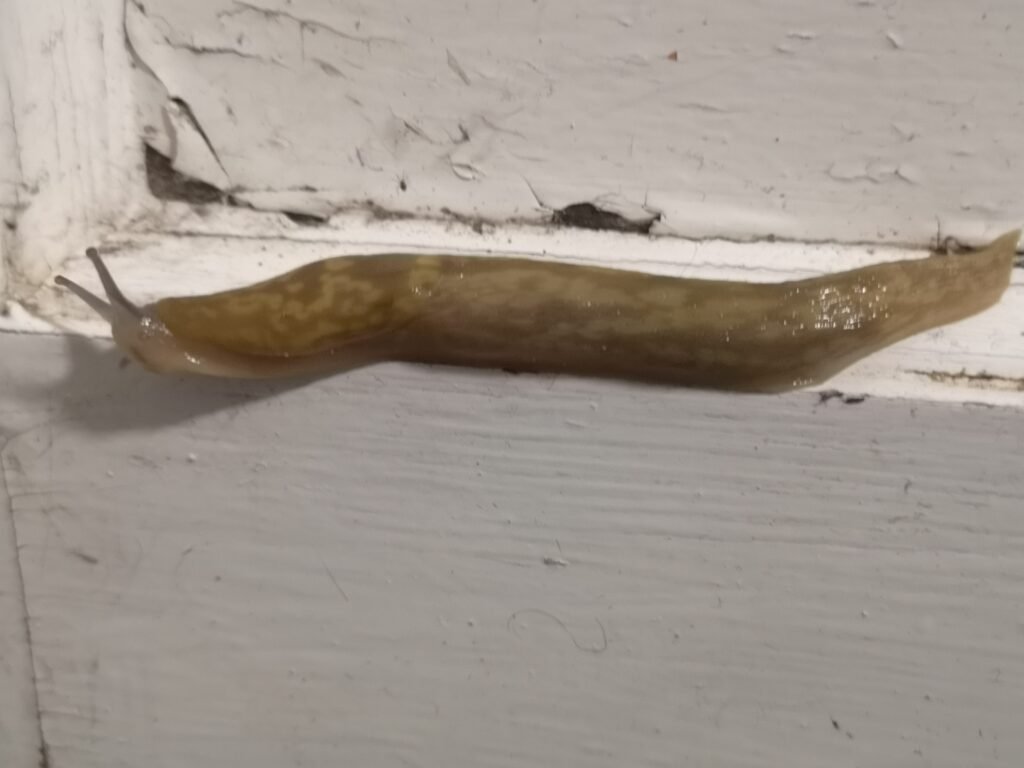
None of us appreciated it breaking into our house without an invitation. And since it wasn’t willing to pay its share in rent, I had to evict it and take it outside. It’s okay. I left it on a wall.
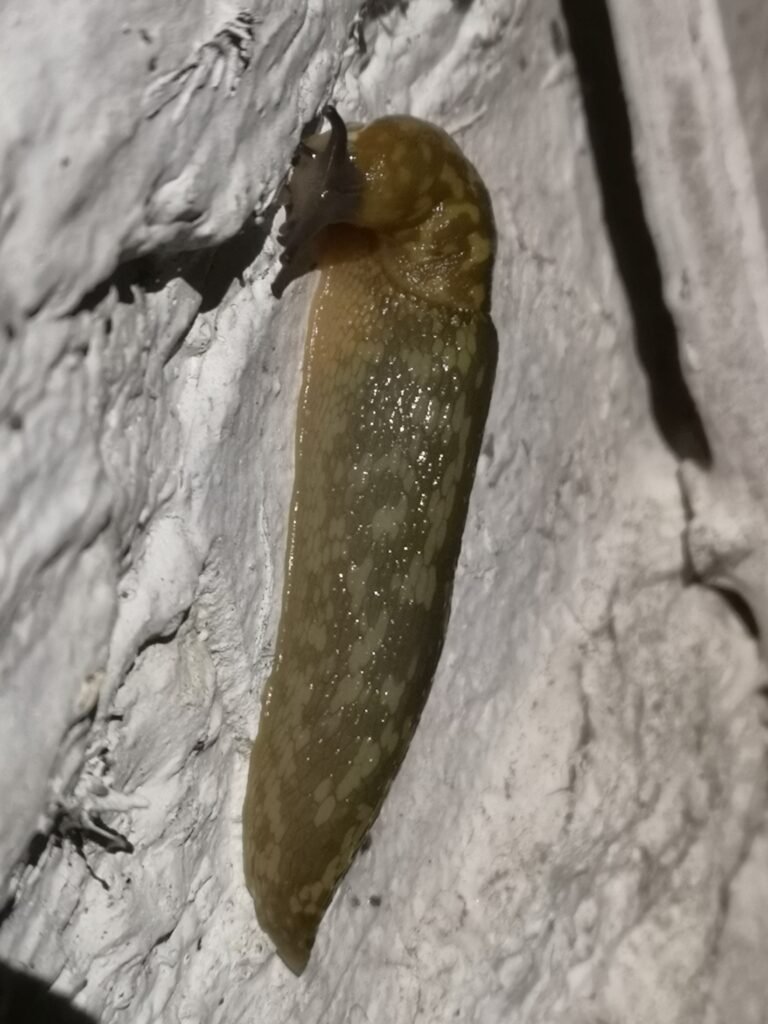
After that, we searched around the garden for more slugs. All while trying not to step on any. This is very normal for us.
Our little intruder made me want to read more on the slugs we have here. Half the time, curiosity is what fuels me. So in this blog post, I’ve written about the ‘Big Five’: the five most iconic species in the UK.
I didn’t write about every species because A) we have over 40 of them and B) I like sleeping.
Up first is one of the commonest. The black slug (Arion ater).
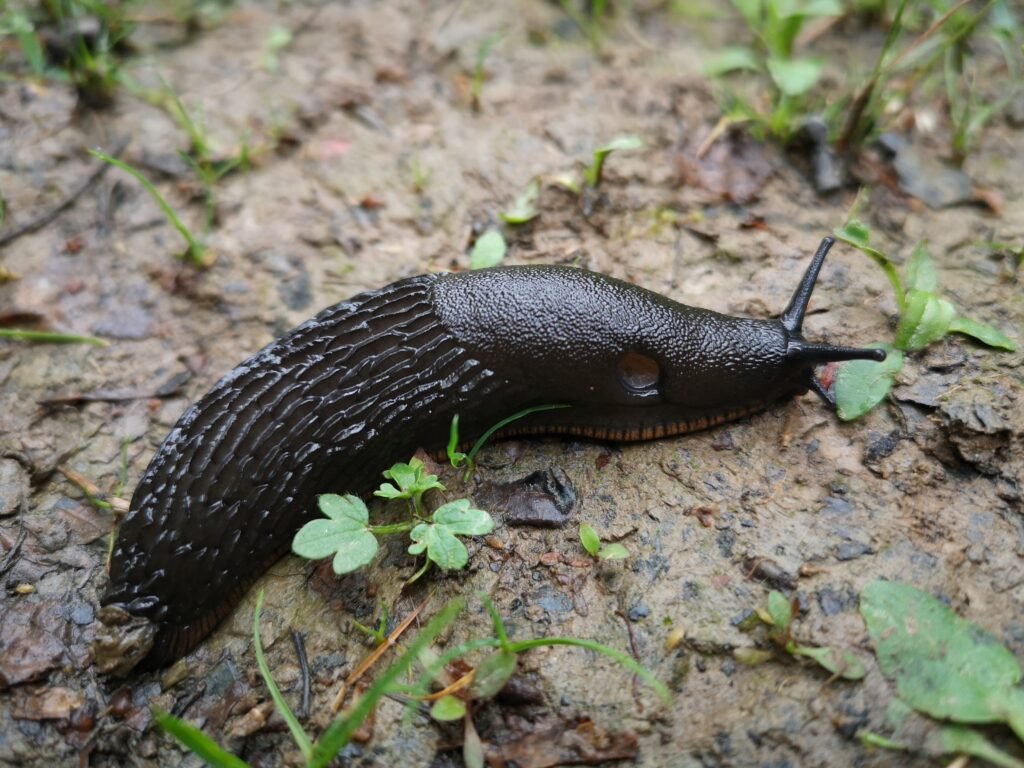
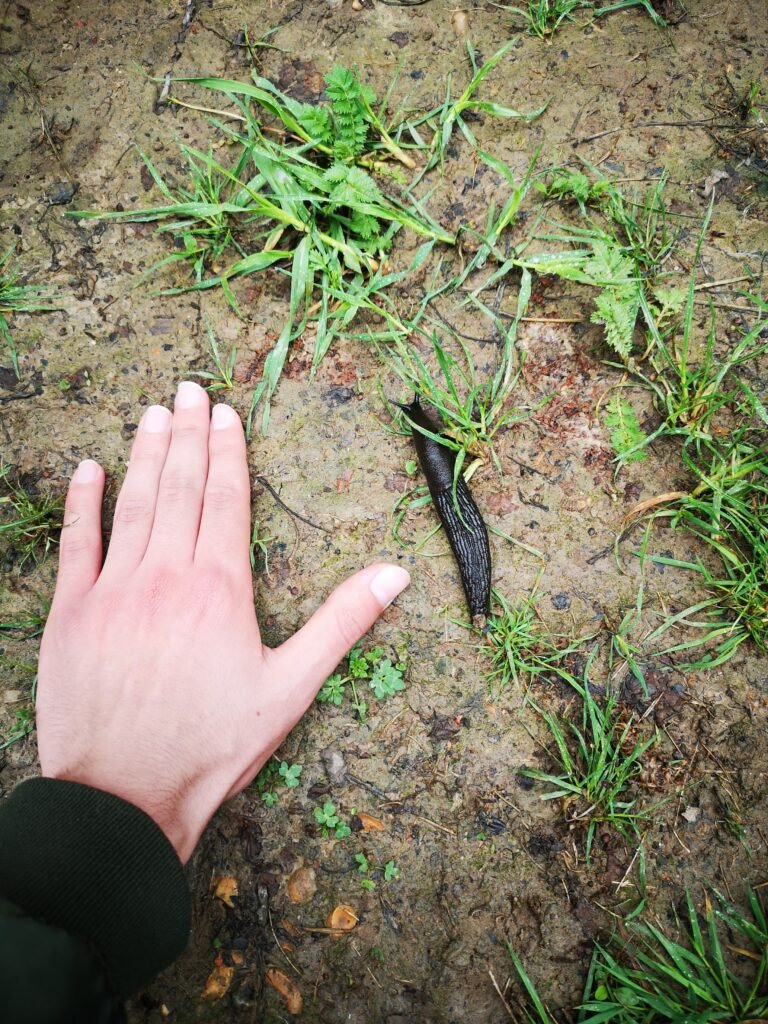
It grows from 4–6 inches long; I’ve found ones that reached nearly as long as my hand. Get your minds out of the gutter.
Black slugs are [for the most part] ink-black, hence the name. Annoyingly, they can also be brown, grey, and even orange. With these slugs, orange literally is the new black.
I should mention that a few of the slugs in the Arion genus (e.g. black, red, and Spanish) are torture to ID. For you and the slugs. Not only can they look the same, but behave the same too. If you touch a black or red slug, it’ll contract into a hump and wiggle side to side.
Remember that slug that broke into my house? It’s known by another name: the cellar slug. These slugs have a habit of hanging around people’s houses at night, especially in cellars. Where they go looking for some late-night booze.
The name “yellow slug” makes sense as well. They’re yellow with grey patches mottled over. Their tentacles are pale blue. Those are the sticky-outy bits on their face.
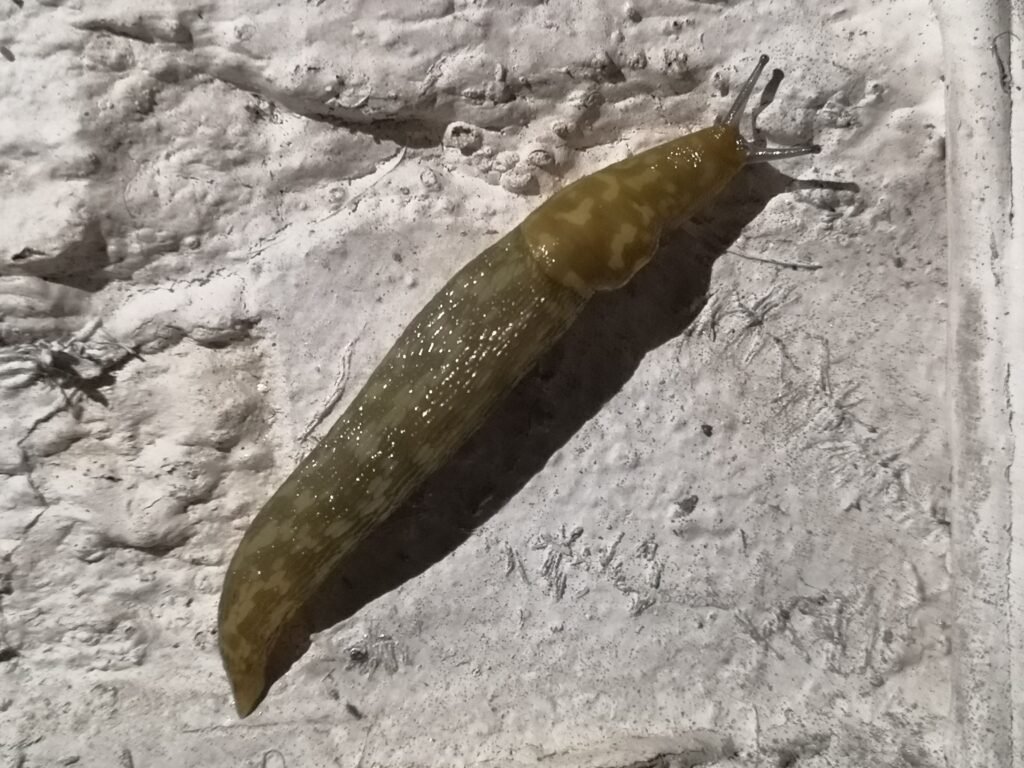
Both slugs and snails have two pairs of tentacles. The top pair are for seeing and smelling; the bottom pair for feeling and tasting.
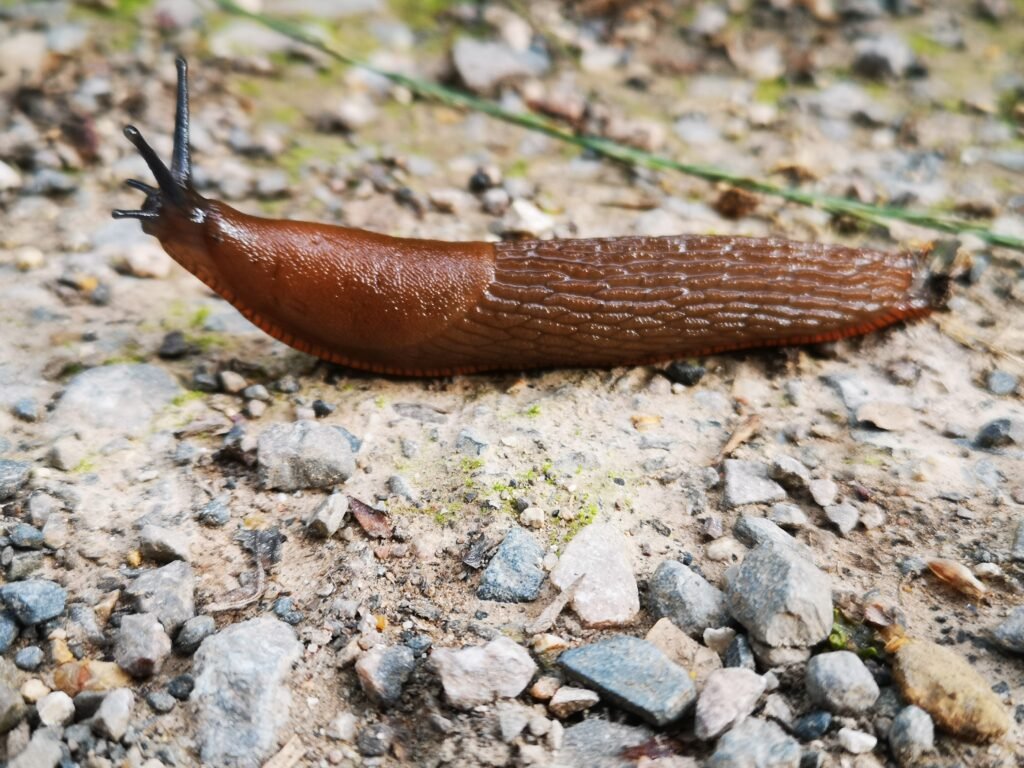
The leopard slug (Limax maximus) is the biggest of the Big Five. Moreover, it’s one of the biggest of all the UK’s slugs at up to 8 inches. Its scientific name — Limax maximus — literally means “biggest slug” in Latin. If the size doesn’t give it away, the markings that look like leopard spots should.
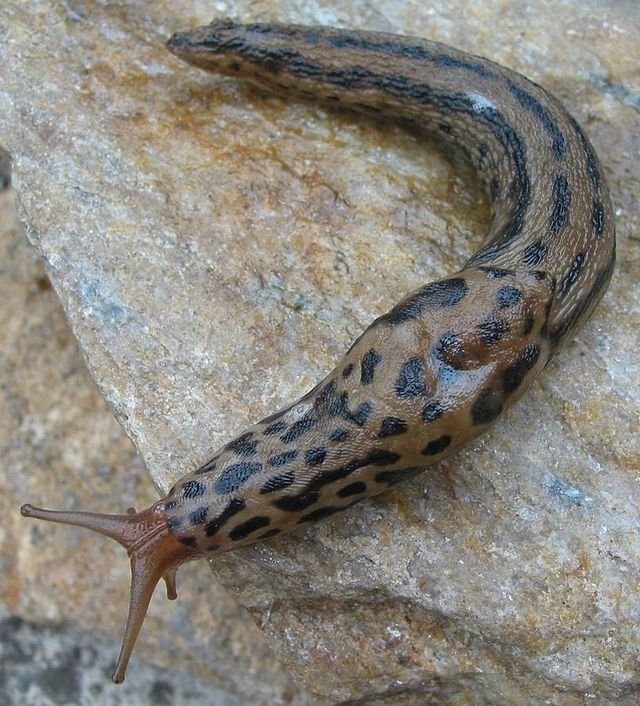
Their behaviour is an even bigger surprise. Like an actual leopard, these slugs are vicious predators. They hunt down and eat other slugs. What’s better is they don’t tend to eat living plants. Our gardens are safe from these guys. Speaking of which.
Sex is when s*** gets wacky. All slugs (and most snails) are hermaphrodites. You’re probably wondering what the hell that even means. Basically, they have both boy and girl bits. So they can fertilise each other’s eggs at the same time. Either by mating (the fun way) or through self-fertilising.
And when leopard slugs mate, it’s like the freakiest gymnastics you’ve ever seen. Two slugs will encircle each other and then intertwine while hanging upside down. They’ll hang together in mid-air from a line of slime. The gravity will help them release their giant penises…from their heads. Giant penises as big as their whole bodies. Oh, and they’re blue.
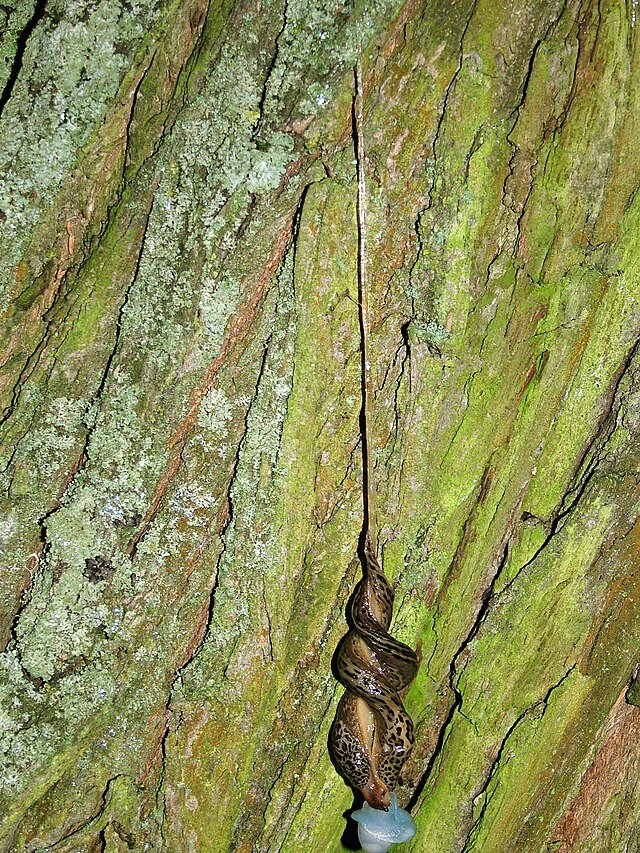
I’m so annoyed I don’t have any leopard slug photos.
In any case, one of the species hunted by leopard slugs is the red slug (Arion rufus). Like a lot of its relatives, it’s not always the colour in its name.
The red slug is native to the UK, but it’s more endangered than the others. Because it’s in direct competition with the last of the Big Five. The Spanish slug (Arion vulgaris), which isn’t native; it’s invasive, and a major pest to crops across the country. Unlike Spain’s ships, these slugs actually pulled off an invasion of England. Big L for Spain.
Now we could try and get rid of these hungry invaders. There’s just one problem. The red and Spanish slug look exactly the same. It’s almost impossible to tell which is which without dissecting and examining their sex organs.
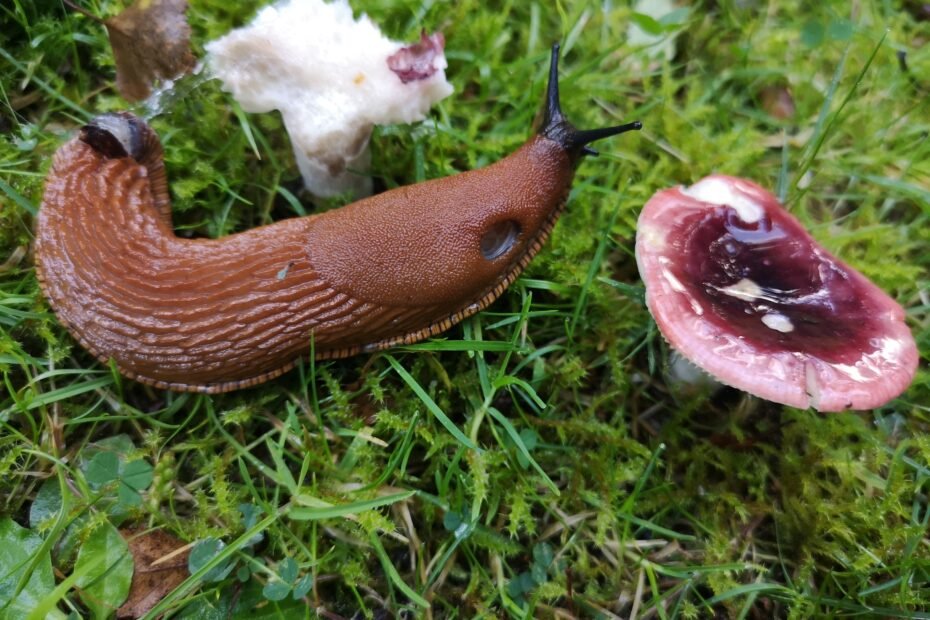
Take this fudge-coloured slugzilla:
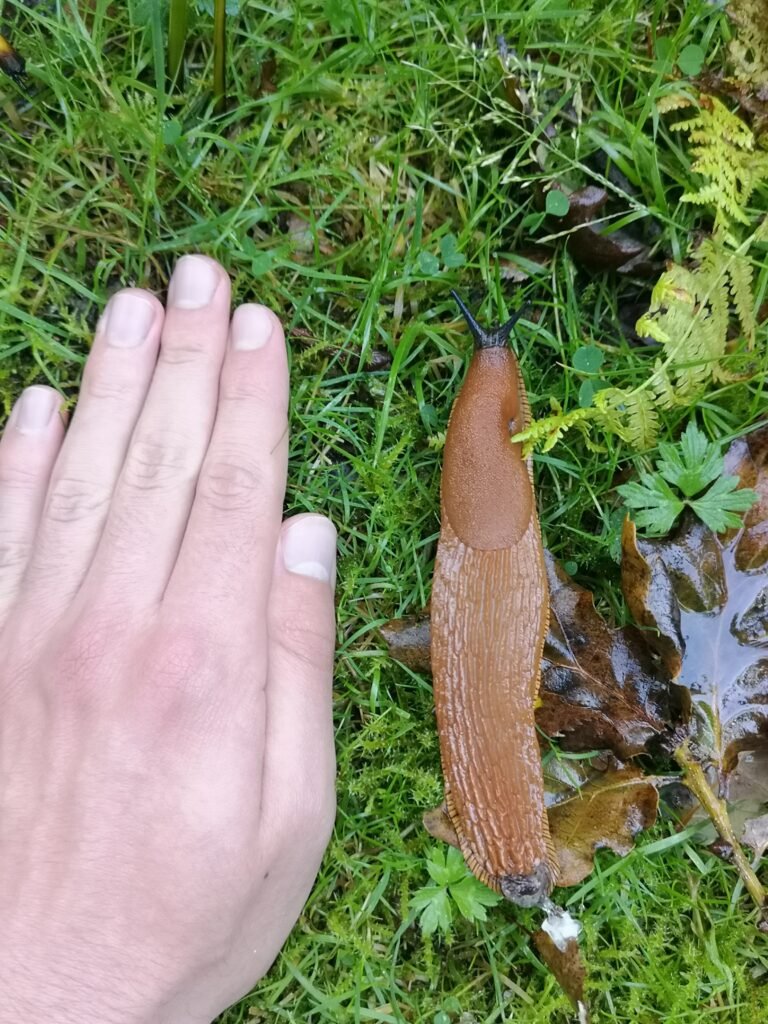
I didn’t really wanna be chopping up slug ****s, so I’ve got no idea if it’s a red or Spanish slug. I know it eats mushrooms, though.
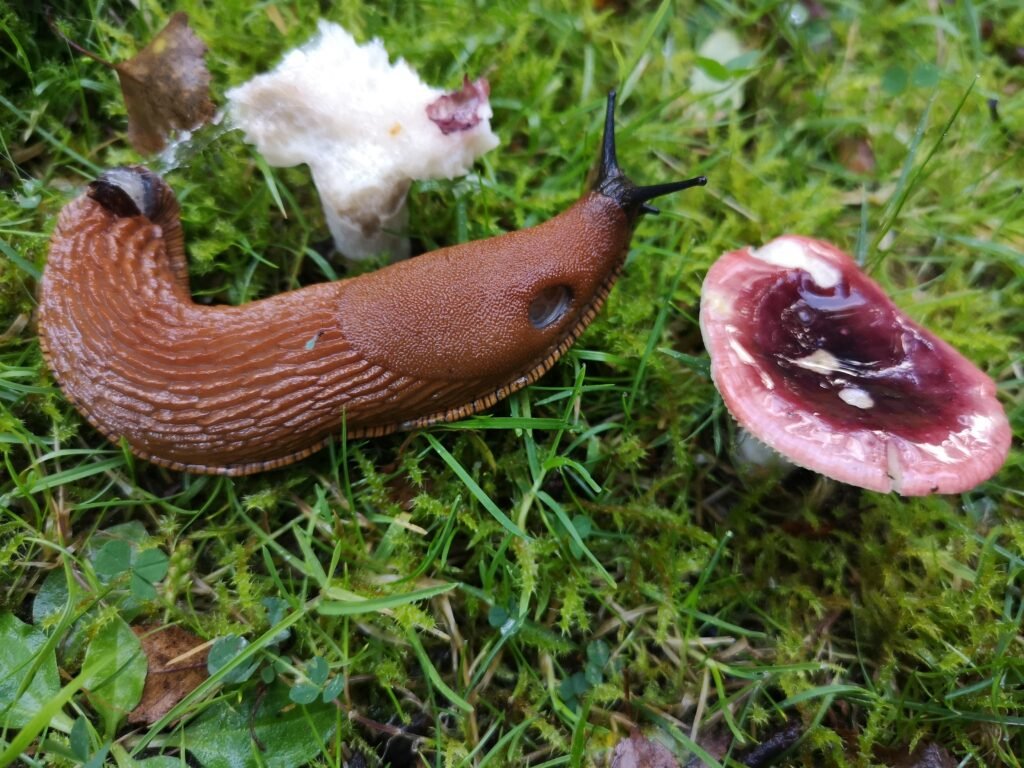
That’s another thing about slugs. They LOVE mushrooms. One of the tell-tale signs of slug activity is any holes or munched edges on mushrooms.
They did a number on this giant funnel (Aspropaxillus giganteus):
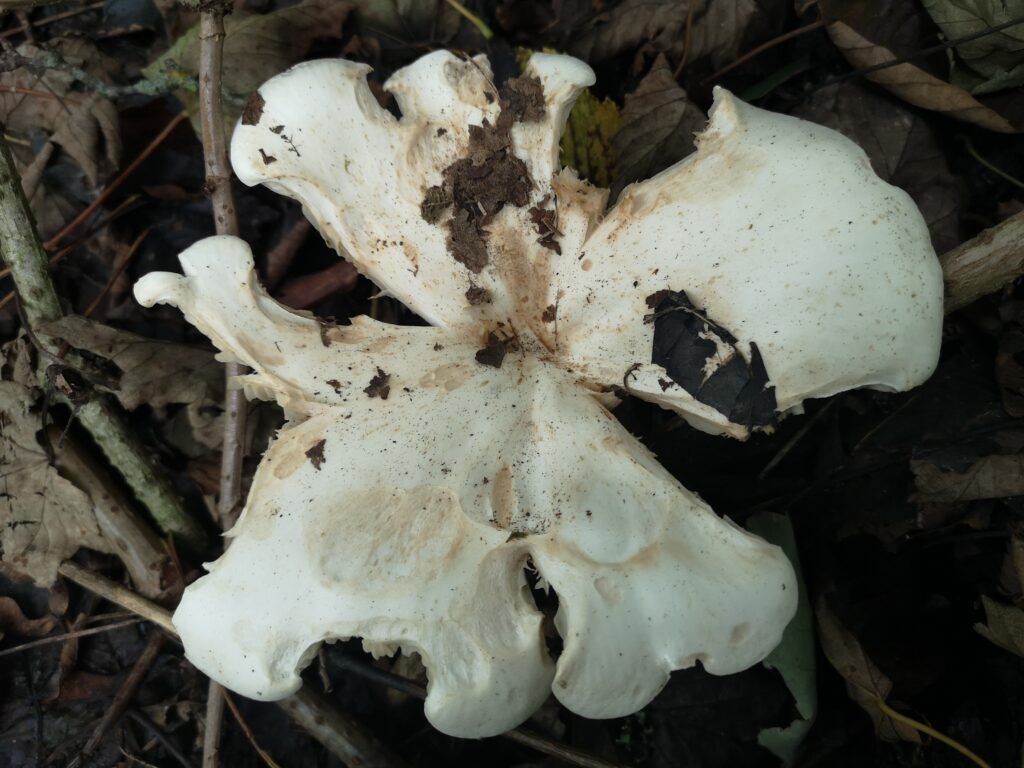
That fudge-coloured one I found in the New Forest was having a field day. And I took some up-close photos of it, including one of its pneumostome. The gaping hole on the right side that looks like it’s been shot. Slugs use that hole to breathe.
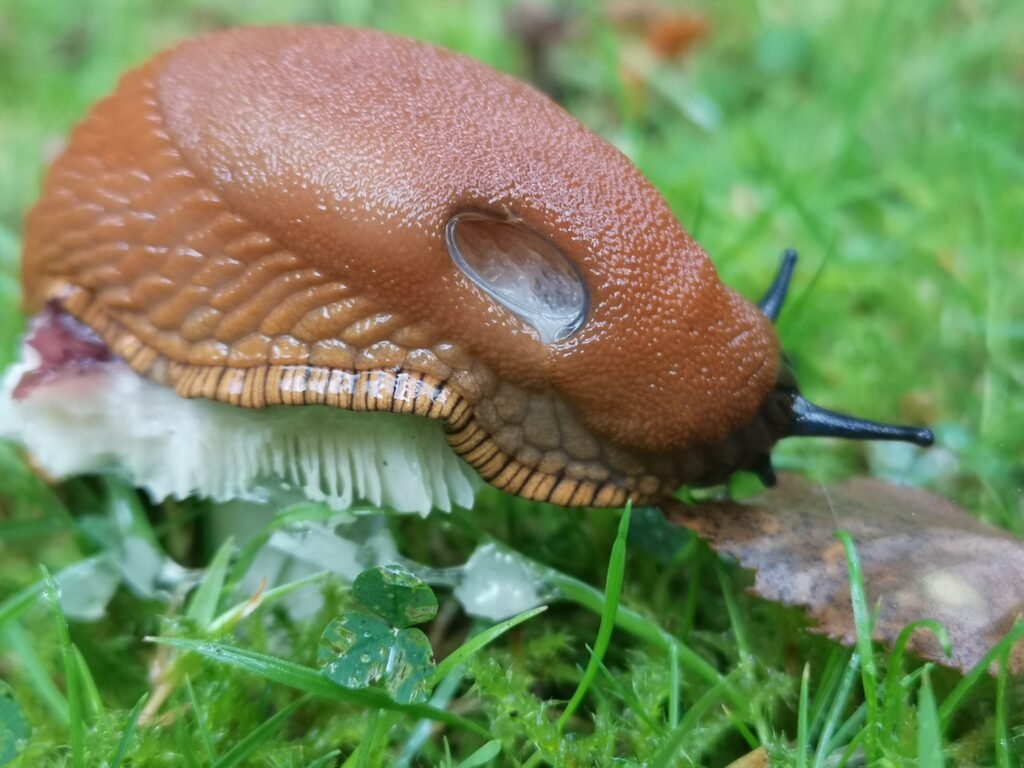
Also, watching this slug eat was mind-warping. More than the mushroom it was eating. It was like an a**hole that takes in food.
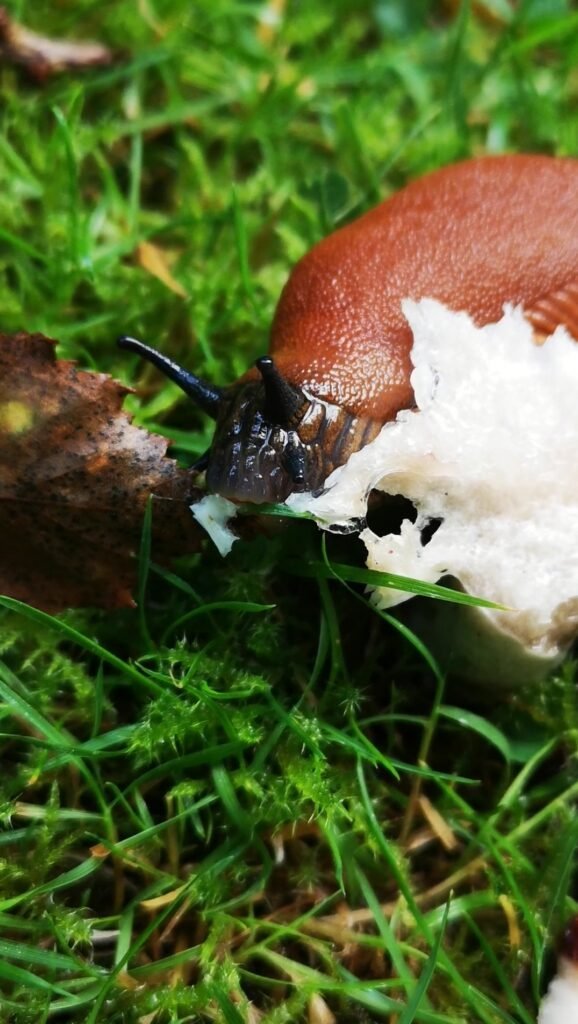
But slugs don’t have teeth like you and I do…they have over 2,000. On a tongue. Kinda. All these thousands of tiny teeth are on a ribbon-like structure called the “radula”. Slugs and snails use it for rasping away at food. It’s like having a cheese grater for a tongue.
Moral of the story: don’t always judge a book by its cover. Sometimes even the most boring animals can make you question what Mother Nature smokes.
I hope you guys enjoyed this weird and wonderful post. Link and share it or I’m putting slugs in your nan’s garden. See you in the next one. Stay straying!