Hi everyone! Welcome back. Now we’re in autumn, the days are getting wetter, cooler, darker, and then even wetter. And there’s one group who’s partying it up in this autumn weather: mushrooms.
October is the best month to go out mushroom hunting. But a lot of us are scared s***less about eating mushrooms — for good reason. Many of them are poisonous; they can be confused for edible species, which sometimes makes eating feel like playing Russian roulette.
The UK has over 15,000 species. One of the only good things about our piss-poor weather. Some have horrific sounding names. There’s one literally called the destroying angel (Amanita virosa). Others sound delicious like the penny bun (Boletus edulis).
Thus I’ve made a guide — a tutorial if you will — for 10 of the UK’s most famous mushrooms. It covers both edible and very inedible ones for beginners to ID. Bear in mind I’m still trying to get better at IDing. If you wanna practice with me, here are 10 mushrooms to look out for this autumn!
NOTE: I shouldn’t have to write this, but DO NOT pick and eat a mushroom until you’re 100% sure what it is.
1. Fly agaric (Amanita muscaria)
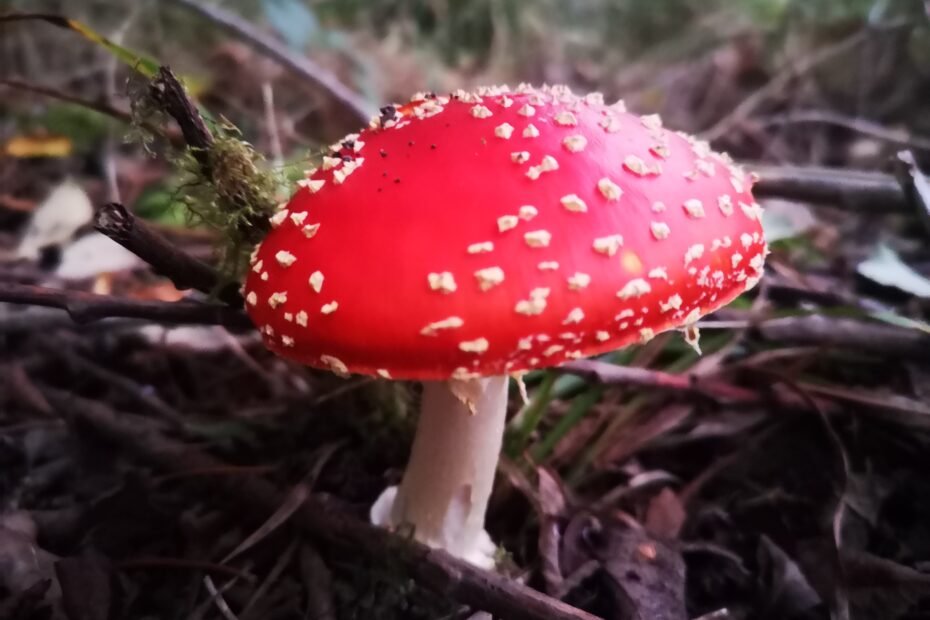
This first mushroom is probably the most famous (or infamous). It’s what Mario eats, and where the Smurfs all live. The fly agaric (Amanita muscaria). Its bright red cap and white wart-like spots make it instantly recognisable. So the chances of you misidentifying are lower than an anti-vaxxer’s IQ.
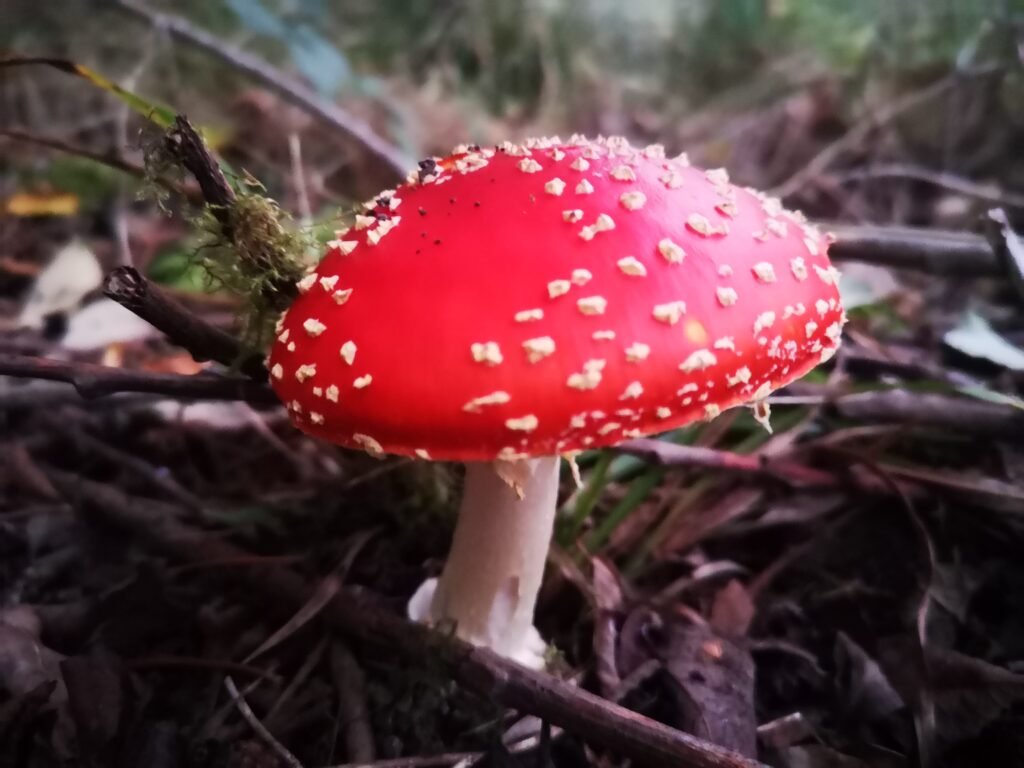
If the colours aren’t screaming it at you, the fly agaric is poisonous. While deaths are rare (not never), it can cause stomach cramps. Oh, and it’s a psychoactive shroom. If you’re brave or stupid enough to eat it, you could experience hallucinations and psychotic reactions.
The Sami people in the Arctic drink reindeer piss (after the reindeer munch on mushrooms) to get high. Someone might’ve thought of Santa’s magic flying reindeer while tripping and that’s how the legend began. My advice? Don’t eat this shroom or you might see Rudolph…or god.
2. Panther cap (Amanita pantherina)
This next mushroom is like an angrier sister of the fly agaric, the panther cap (Amanita pantherina). General rule of thumb: if a species of mushroom belongs to the Amanita genus, don’t eat it. This group has got some of the most toxic species known to man, and the panther cap is one of them.
It’s got a white stem that’s about 8–12 cm tall, and smooth above the skirt (or ring) but shaggy below it. Don’t take this out of context.
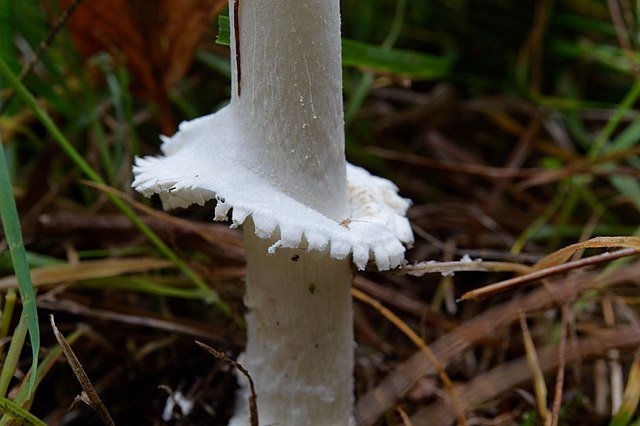
This a photo taken of a young panther cap:
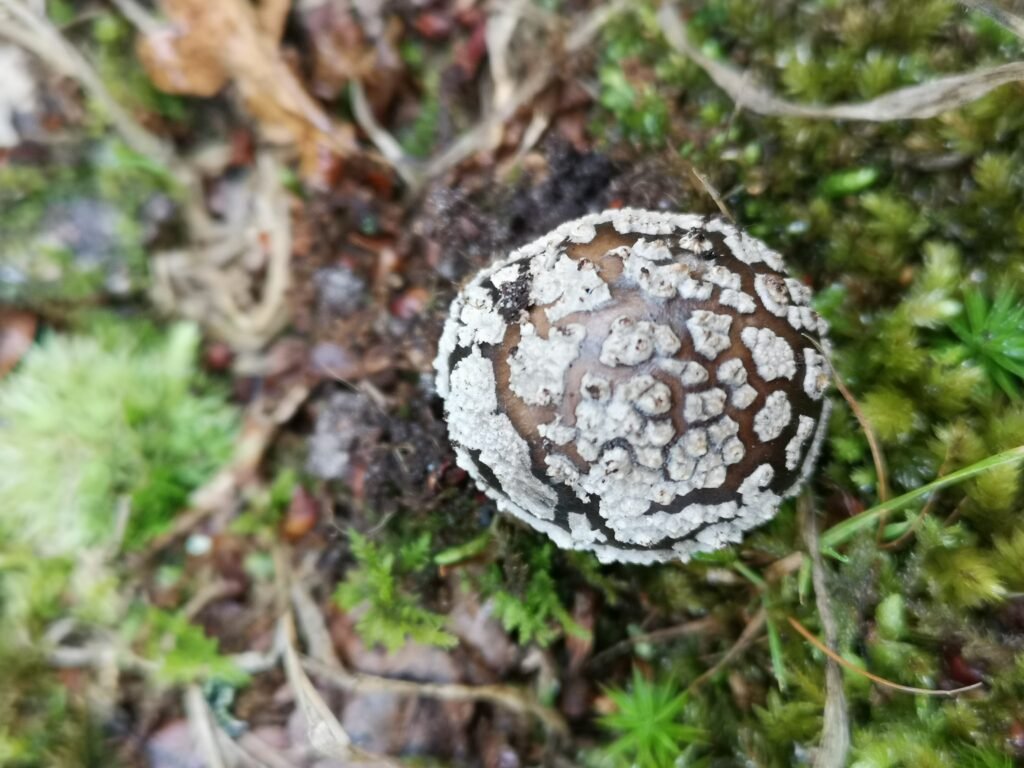
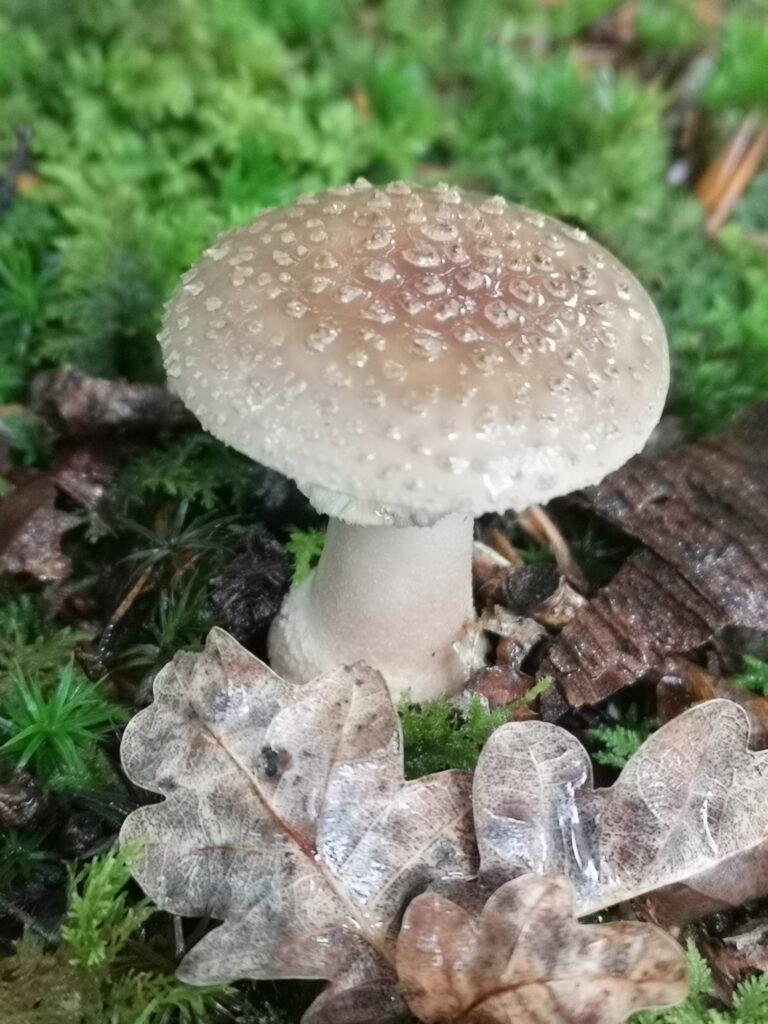
It looks really similar to the related grey spotted amanita (Amanita excelsa) and the blusher (Amanita rubescens). But both of these species have striations or grooves on the upper side of their skirt. The panther cap doesn’t have these. Moreover, its spots are white while the grey spotted amanita’s are…grey.
3. Dryad’s saddle (Cerioporus squamosus)
The dryad’s saddle (Cerioporus squamosus) is a gigantic bracket fungus. Bracket fungi are also called shelf fungi because they kinda look like living shelves. If you’re already on shrooms. The irony.
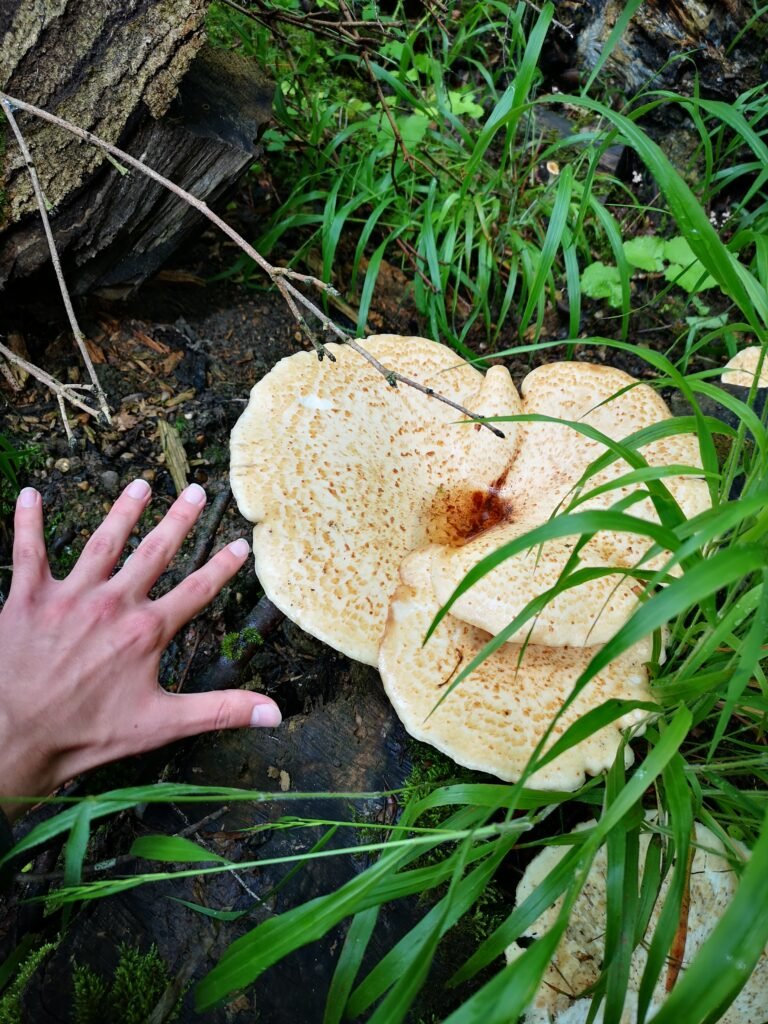
This species is pretty easy to ID no matter which angle you’re looking at it. If you look at its underside, you won’t see gills like other mushrooms. Bracket fungi don’t have true gills. Instead you’ll see hundreds of tiny pores shaped like honeycomb which is kinda cool.
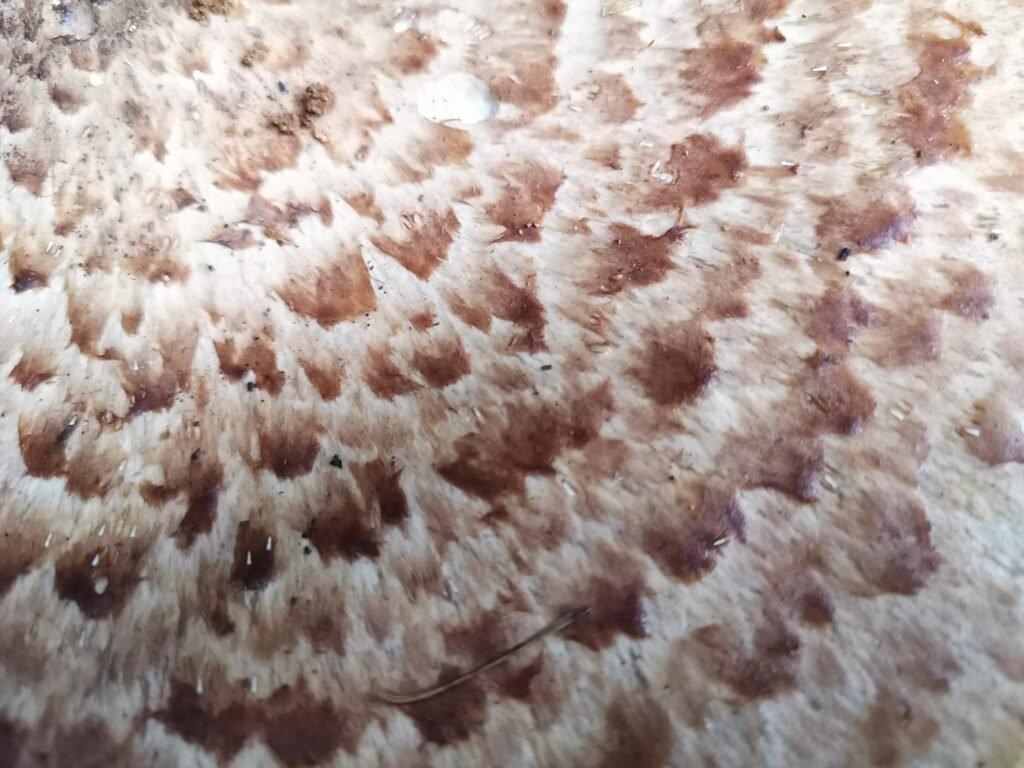
And if you look at its topside, you’ll see why it’s also nicknamed “Pheasant’s back”.
You can ID certain mushrooms just by their smell. And weirdly, fresh dryad’s saddle smells like watermelon. Why? Haven’t got a scooby. But I know it smells nice. Not as much when it’s rotting.
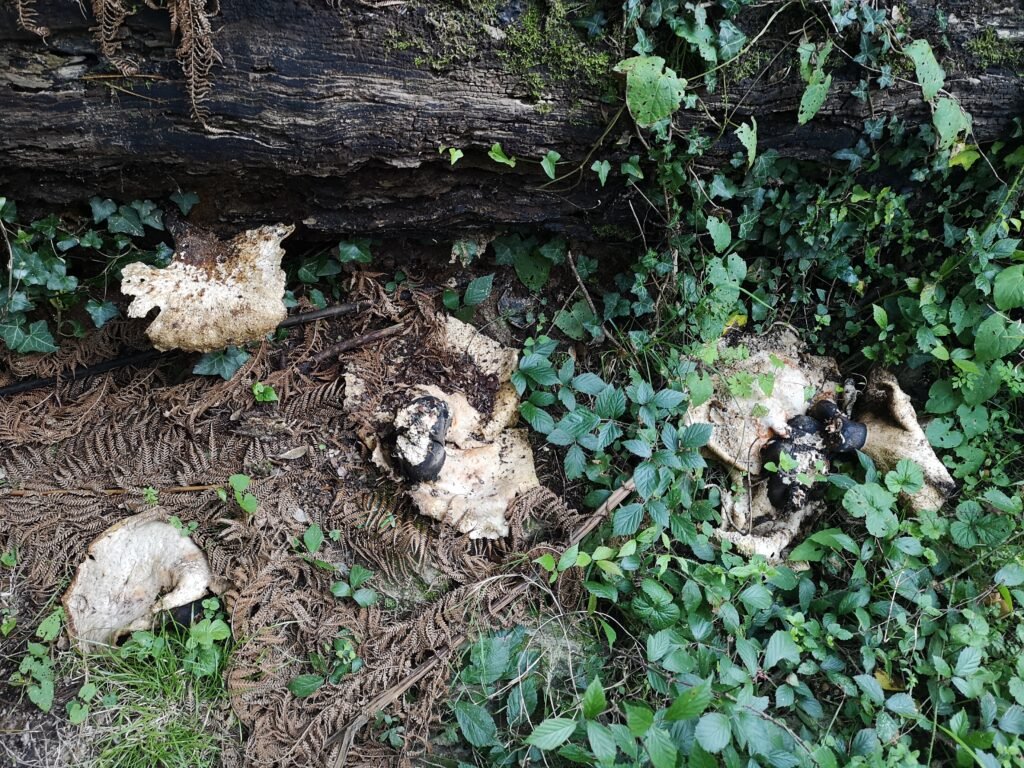
What happens is it gets so big that it collapses like a neutron star and falls off the tree to rot. The bigger they are, the harder they fall. And the more flies they bring.
4. Beefsteak fungus (Fistulina hepatica)
Now this mushroom is a personal favourite of mine: the beefsteak (Fistulina hepatica). This is another…interesting bracket fungus. Let’s just say it really lives up its name.
It starts off pink and looking like a tongue sticking out of a tree; as it matures, it reddens. Then it starts to look more like someone glued a piece of liver or a raw steak to a tree.
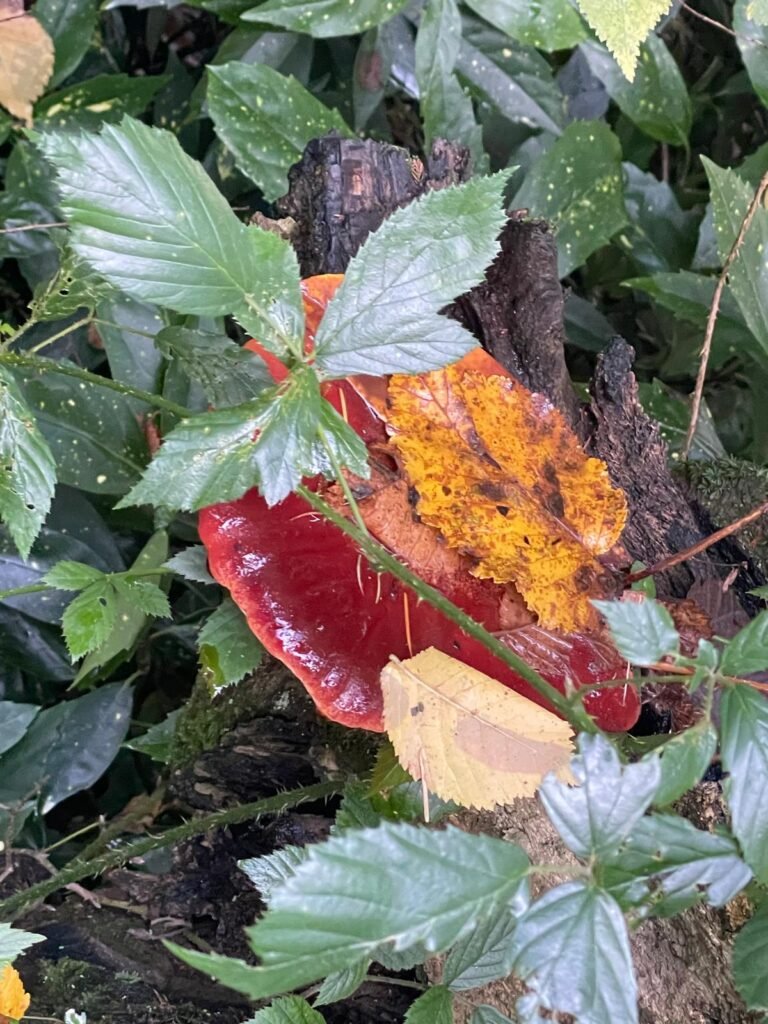
This is an immature beefsteak (the big mushroom, not the little one):
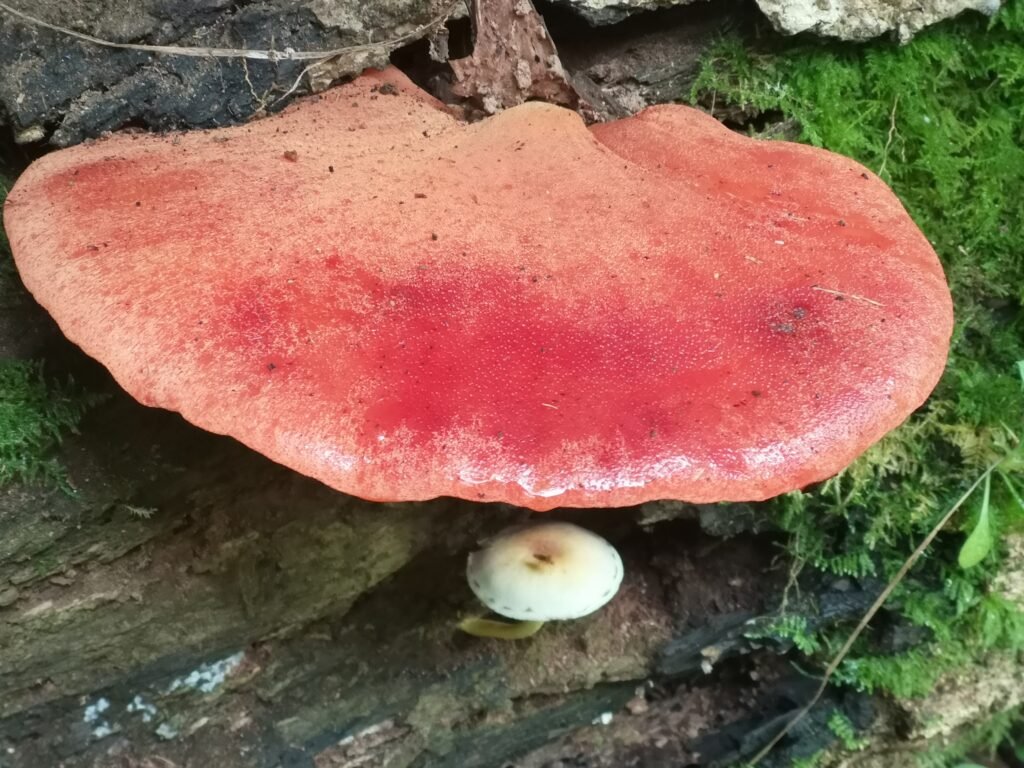
Notice how it’s semi-circular with a pink topside that’s turning redder. Being a bracket fungus, the underside hasn’t got any gills. The pores are tiny and cream-coloured.
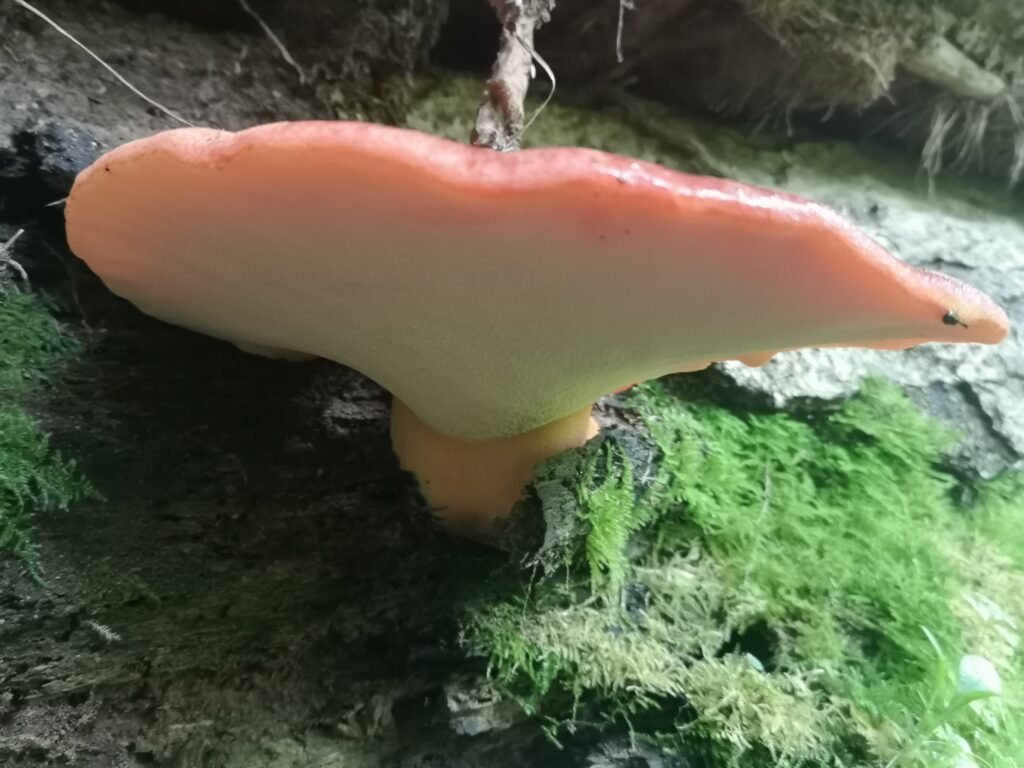
To play the part, it even oozes out a liquid that looks just like real blood when it’s cut. Phenomenal actor.
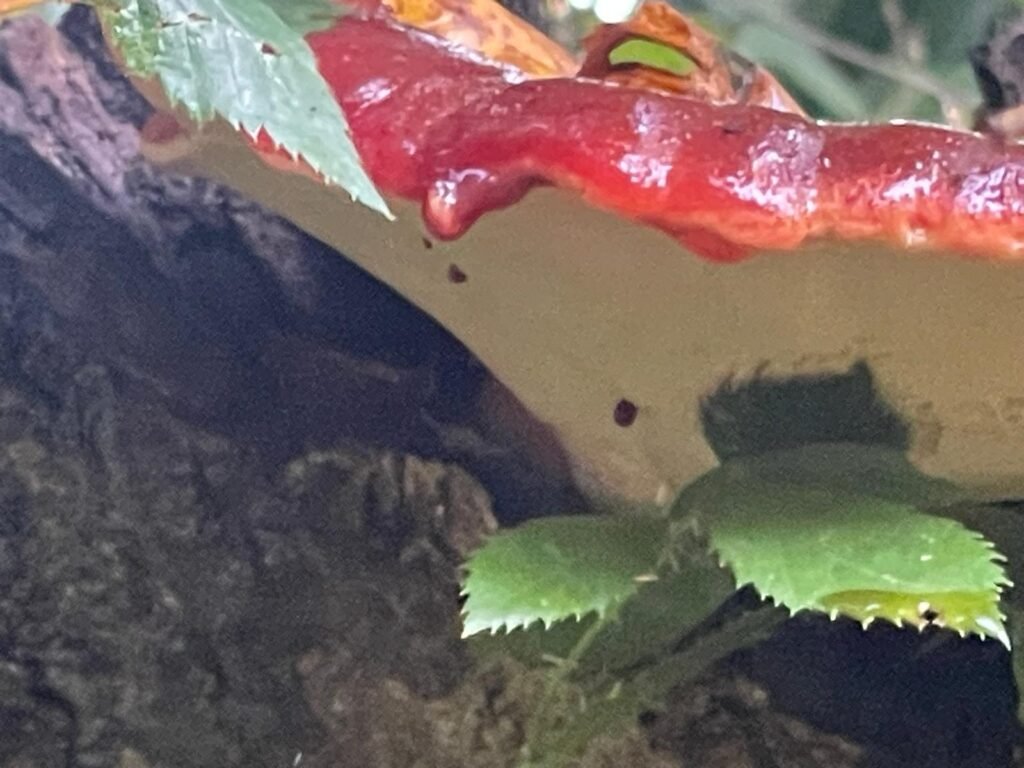
It’s an edible actor as well. I’ve never eaten a beefsteak myself, but apparently it does not taste anything like steak. It has an acidic flavour (like a lemon) and a rubbery texture.
That’s why it’s best to slow cook it in a creamy stew: to help reduce the acidity and soften its texture. If you ever wanna try, you can find it growing on dead oak trees and oak stumps.
5. Artist’s bracket (Ganoderma applanatum)
Up next is the artist’s bracket or artist’s conk (Ganoderma applanatum). While it isn’t poisonous, that doesn’t mean it’s edible. So I wouldn’t try eating it. Unless you like chewing wood. It’s got a really tough and woody texture that makes the beefsteak feel like Wagyu.
But like the beefsteak, it’s a bracket fungus that grows as a single semi-circle shaped bracket/shelf. The top layer is a hard crust that’s wrinkly or knobbly and a brown to brownish-grey colour. On the underside, the youngest layer is white.
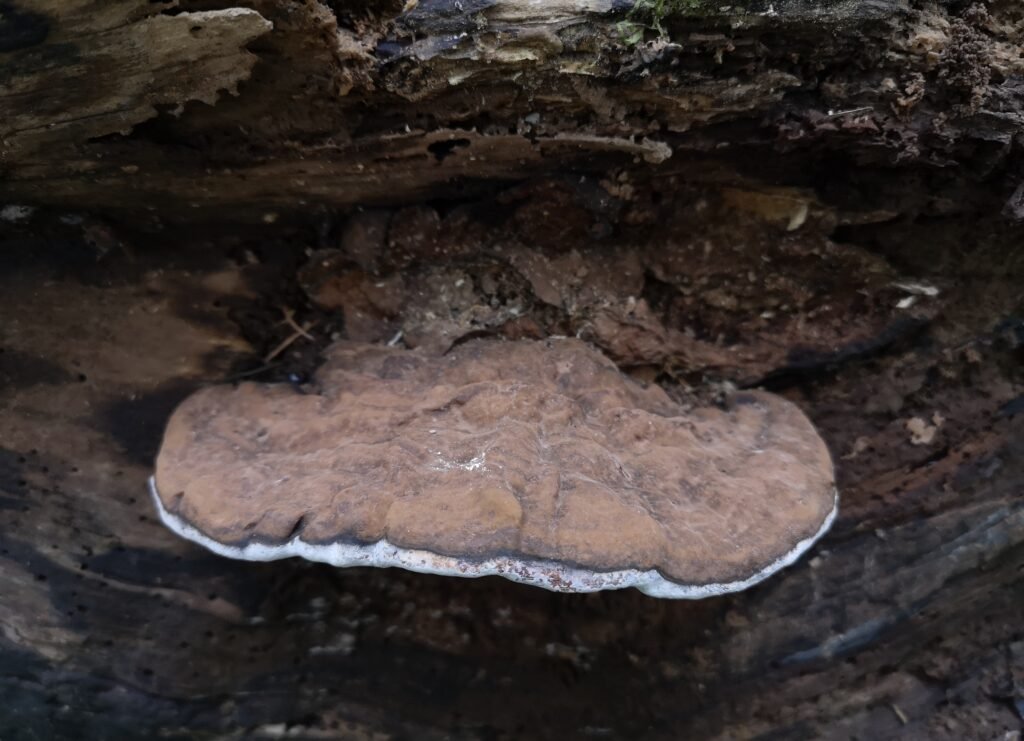
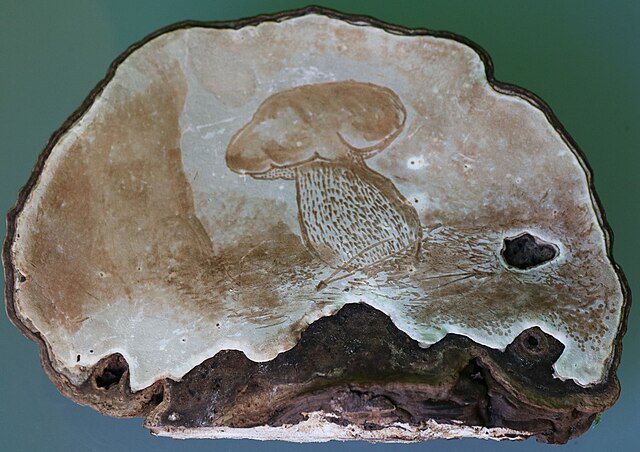
This young white layer darkens as it ages, and when it’s pressed. And this is where the artist’s bracket gets its name. Artists have used this mushroom as a medium for their drawing.
When you rub or scratch the fresh white layer, the dark brown tissue underneath is revealed. So artists can create beautiful drawings that become permanent after the mushroom is dried.
6. Chicken of the woods (Laetiporus sulphureus)
Going back to edible species, this mushroom is a favourite of foragers. It’s chicken of the woods (Laetiporus sulphureus). I’ll call it COTW for short.
Unlike the two previous bracket fungi, COTW grows in several thick, overlapping brackets/shelves. When young, it’s a bright creamy yellow with orange bands. It fades to cream as it matures.
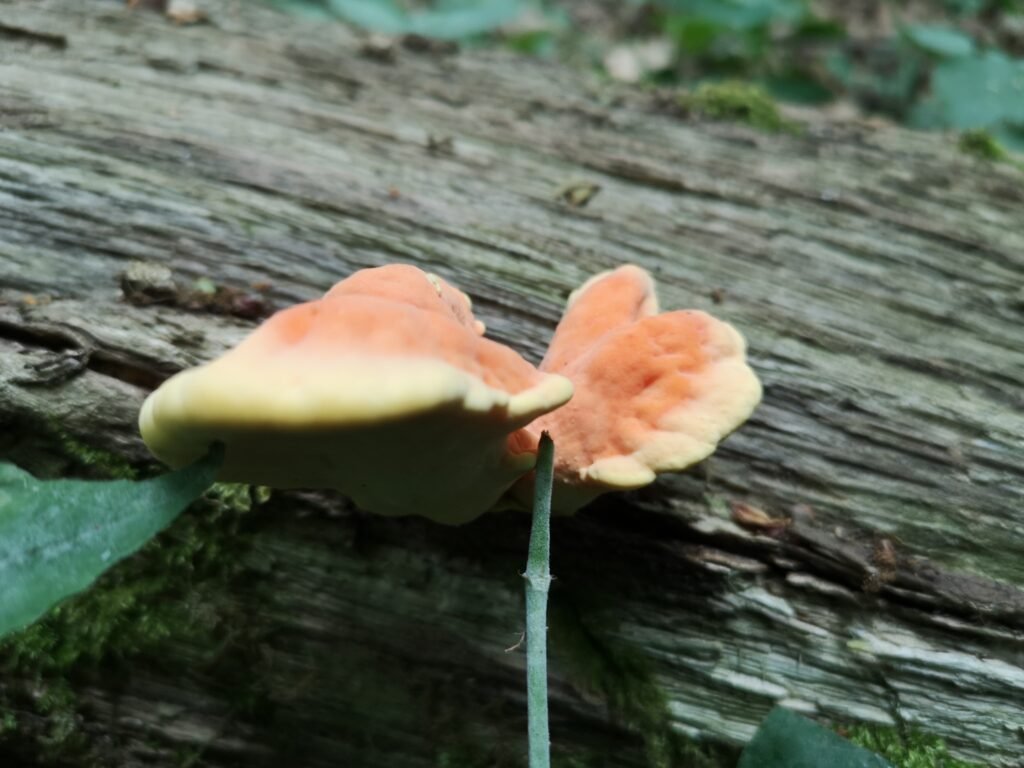
The only species you could confuse it for is the giant polypore (Meripilus giganteus), which I cooked and wrote about in this blog post.
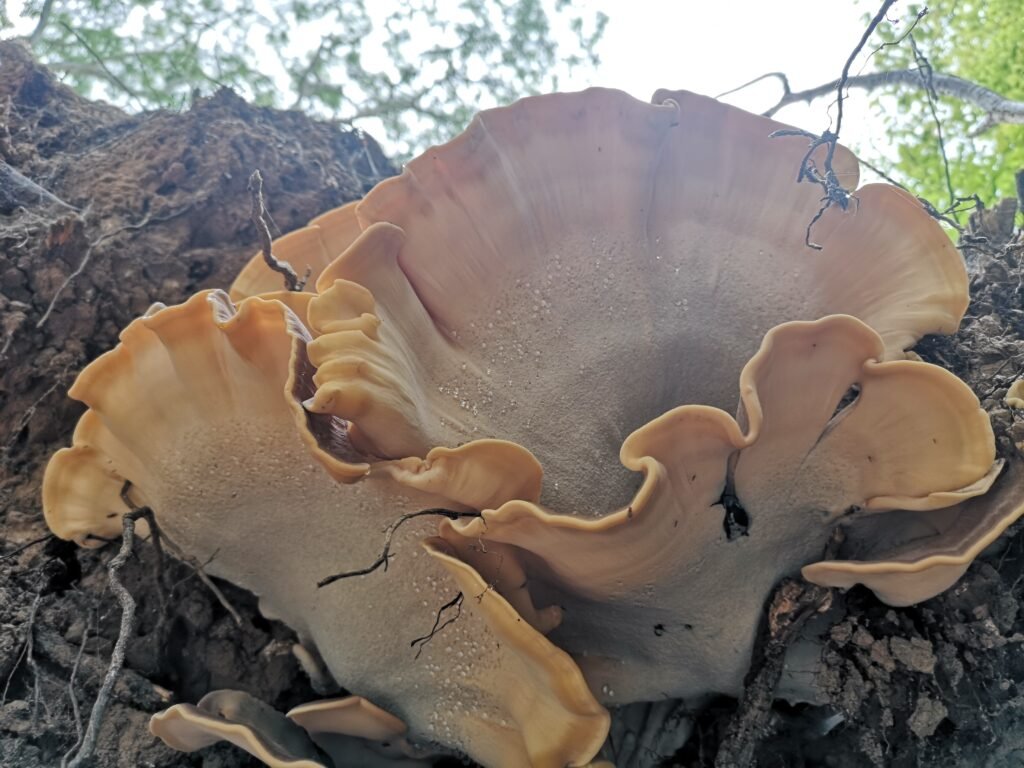
But the top of the giant polypore is brown, not orange. It’ll also bruise black if you pick it.
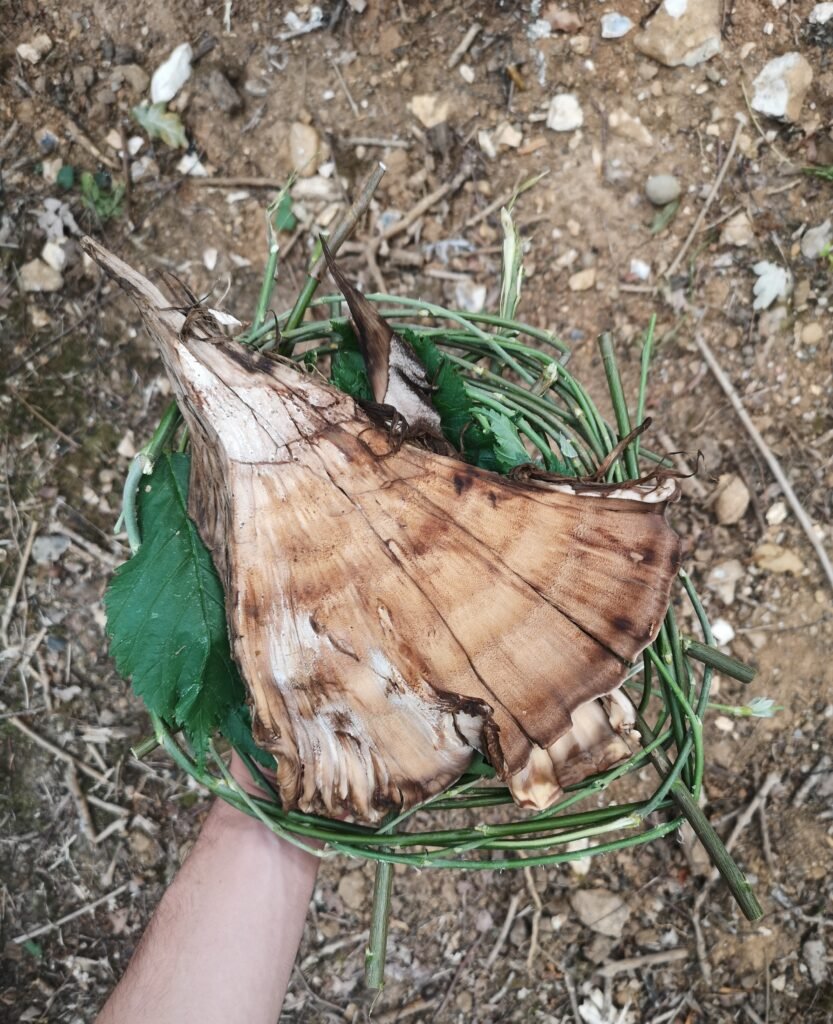
In contrast of the beefsteak, it doesn’t look much like the thing it’s named after; it does sorta taste like chicken. It’s got the same meaty texture of chicken.
When I first tried it, I thought it actually felt more like tofu. But chicken is an apt comparison too. So it’s great to cook in casseroles, stews, and even stir fries.
You can find it growing mostly on oak trees, but also cherry, sweet chestnut, willow and yew. Pro tip: don’t pick COTW when it’s growing on a yew tree because it’s super poisonous and the mushrooms could absorb the tree’s toxic alkaloids. And COTW could hide yew needles in its folds.
I’ll cover yew trees more in a future post.
7. Pestle puffball (Lycoperdon excipuliforme)
Another edible species (albeit less known) is the pestle puffball (Lycoperdon excipuliforme). It’s closely related to the common puffball (Lycoperdon perlatum) that’s edible too. But the pestle puffball is bigger by comparison. 6–20 cm tall compared to ~8 cm.
As the name suggests, it’s normally a pestle shape with a defined “head” held up by a stem-like structure. The outer layer/skin is covered in small, spiny granules.
Here’s a photo of a pestle puffball I picked:
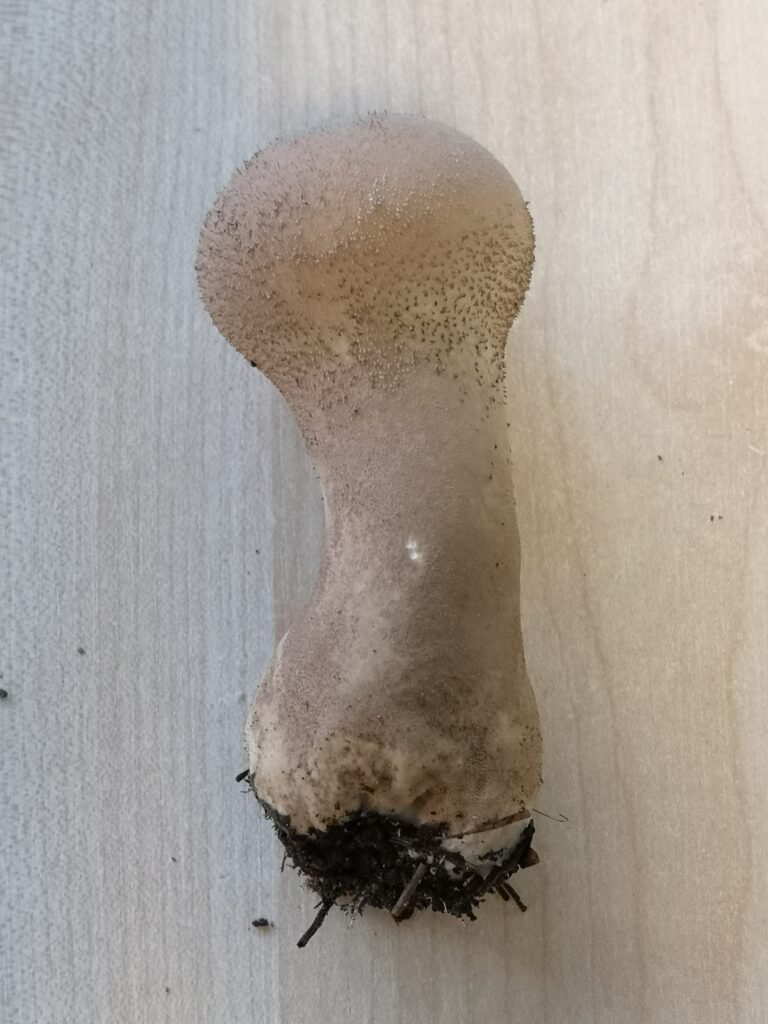
You can tell it’s an older mushroom by its size, thickness, and colour. Pestle puffballs go from whitish to greyish-brown as they age. Lucky for me and my stomach, the flesh was still white inside. Called “gleba” in the head section, the flesh of fresh puffballs is white but goes green to olive-brown as their spores develop.
Spores are sex cells that can develop into a new individual without another sex cell (i.e. they aren’t gametes). Almost all fungi produce spores. Like other puffballs (and unrelated species), it literally puffs out clouds of its spores. Its genus name — Lycoperdon — means “wolf’s flatulence” or “wolf’s fart”.
Be careful with picking puffballs because they can look like young mushrooms from the Amanita genus (e.g. the death cap). To really know what you’re dealing with, always slice the mushroom vertically to see if the flesh is pure white and there aren’t any gills. Remove the skin before cooking.
8. Oyster mushroom (Pleurotus ostreatus)
Keeping with the theme of edible species, the oyster mushroom (Pleurotus ostreatus) is a widely popular one. Both for foraging and commercial selling.
These are big meaty mushrooms that grow in clusters and have a cap shaped like a fan or an oyster (hence the name). These caps can be lobed or wavy. Usually they’re white or grey but sometimes tan in parts.
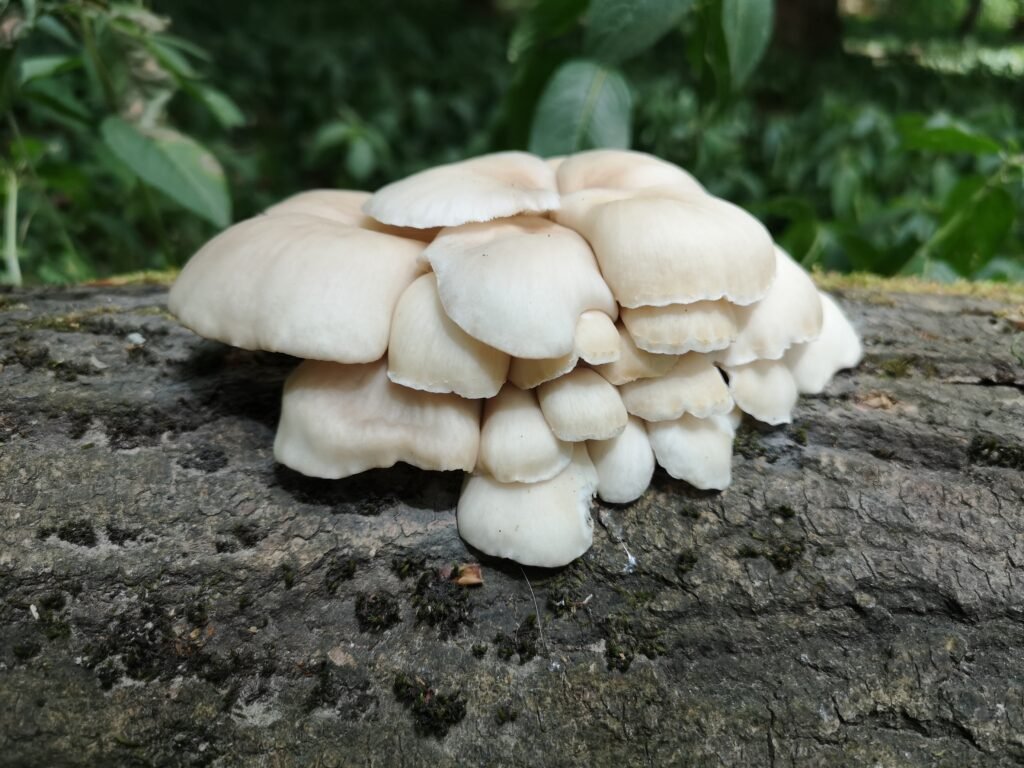
Because the oyster mushroom isn’t a bracket fungus, it’s got gills underneath that are cream to pure white.
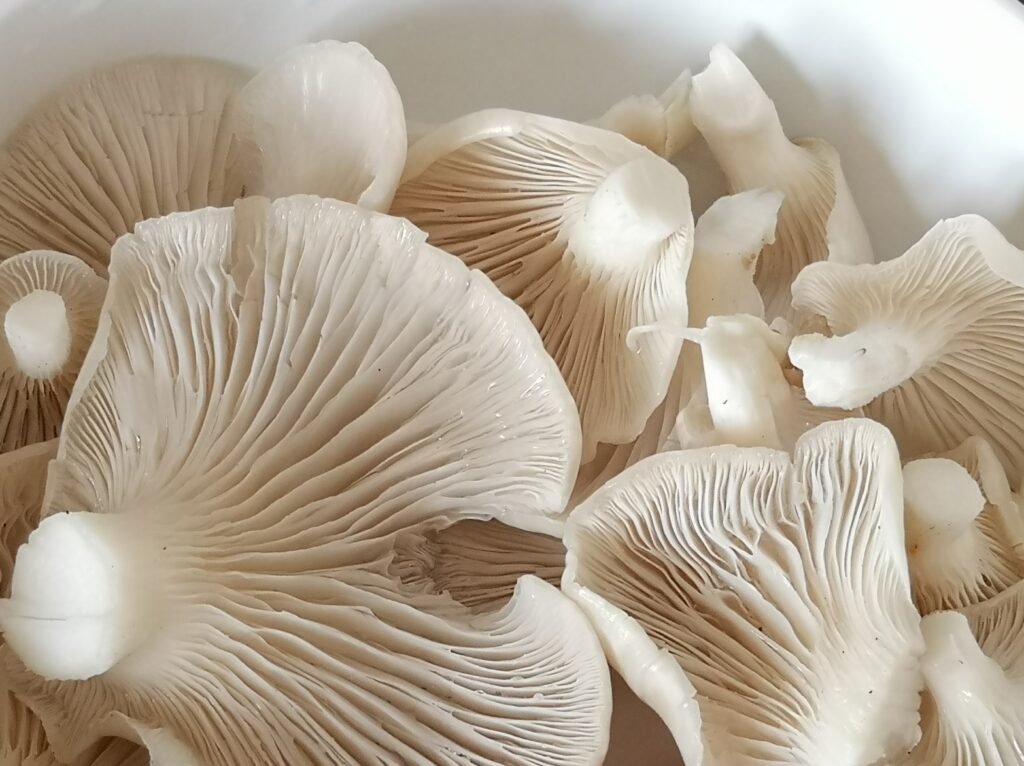
You can easily confuse it for a mushroom known as angel’s wings (Pleurocybella porrigens) — which is a bracket fungus — that’s got pure white caps of the same oyster shape. But they’re less fleshy.
And these species grow on very different wood types. The angel’s wings grows on conifer wood (e.g. pine) in Cumbria and the Scottish Highlands, while the oyster mushroom grows on hardwood (e.g. beech).
If you’re still unsure, the smell might just give it away. Like the dryad’s saddle, it’s got a unique fragrance. It smells a little bit like aniseed. If you didn’t grow up in the 1940s, aniseed smells really similar to liquorice. Oyster mushroom doesn’t taste like liquorice though.
Speaking of tasting, this species eats animals. That’s right, it’s a carnivorous mushroom. You see, mushrooms need nitrogen.
9. Common earthball (Scleroderma citrinum)
Now breaking the theme of edible species is the common earthball (Scleroderma citrinum). Looking like a mutated potato with warts, it’s about as edible as a potato grown in Chernobyl.
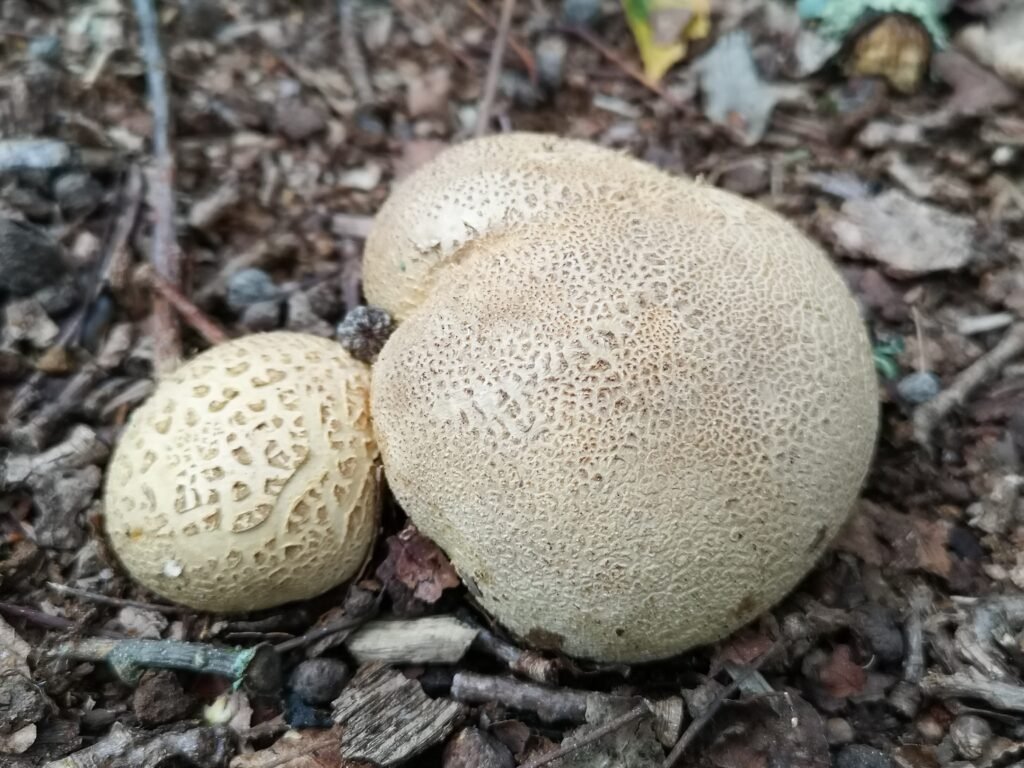
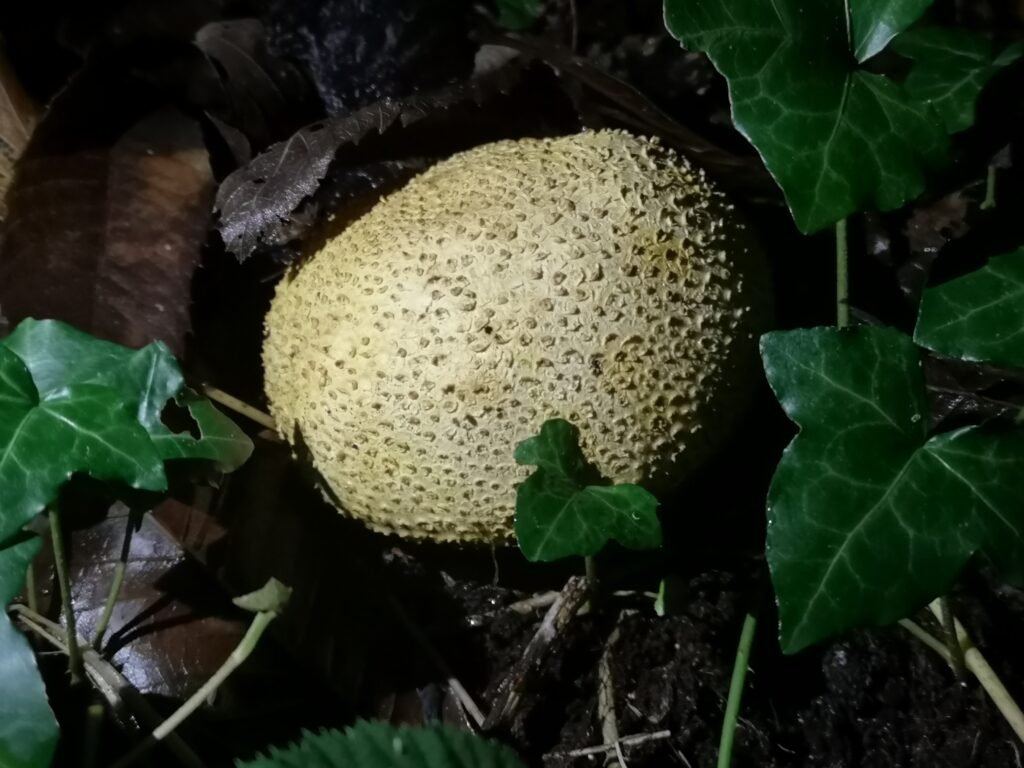
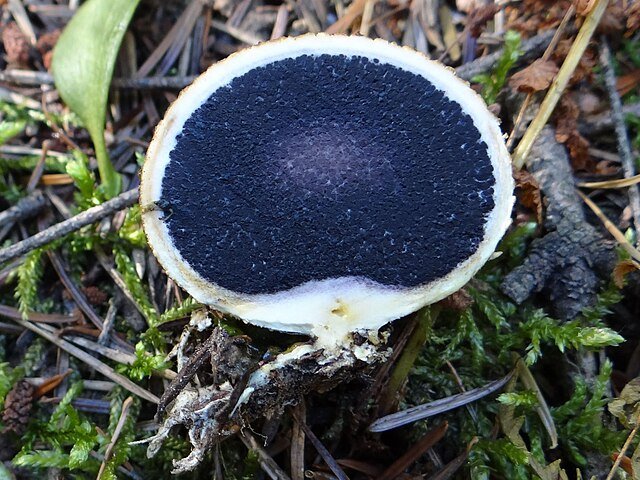
Earlier, I went over what spores are and how puffballs release them. The earthball took a page out of the puffballs’ book because it releases its round, spiky spores in a similar way. Their spores explode out in a black, powdery cloud. It looks like what you’d find inside a smoker’s lungs.
When it’s young, the inside is off white with a pinkish tinge sometimes. Then it goes from purple-brown to black. So if in doubt, just tear it open. Whatever you do, don’t breathe in the spores.
10. Turkeytail (Trametes versicolor)
Last but certainly not least, the turkeytail (Trametes versicolor). This beautiful bracket fungus grows its semi-circular caps in several layered shelves or tiers. It’s a small bracket fungus, the caps just being 4–10 cm in width.
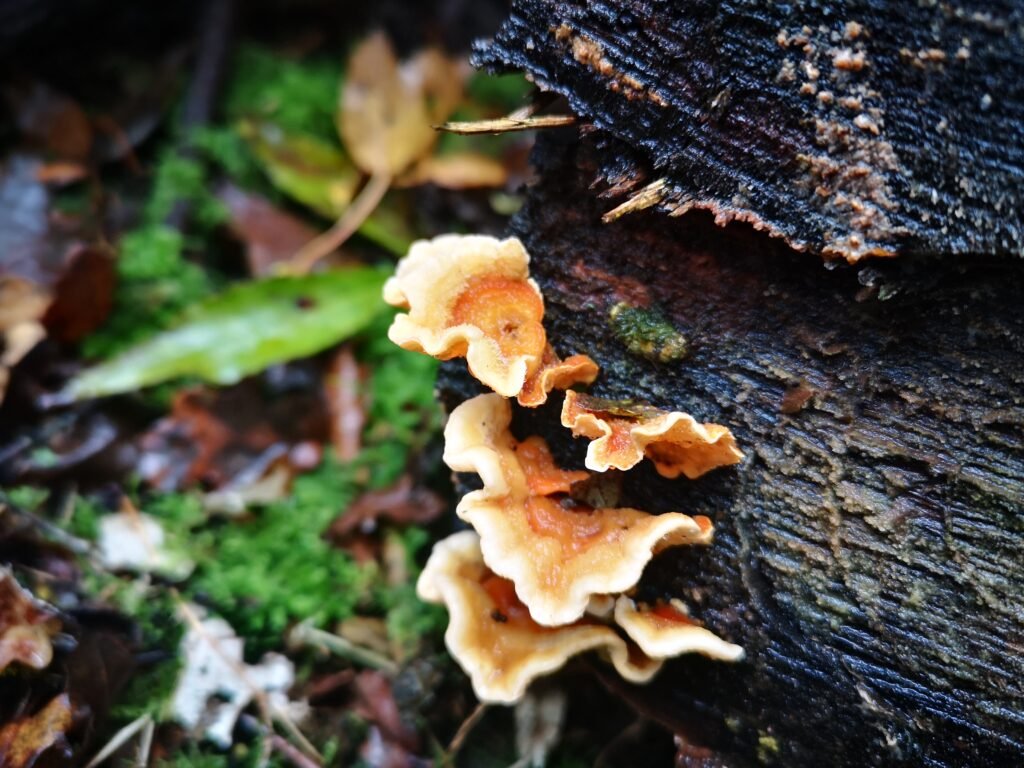
But what it lacks in size, it makes up for in style. Its caps have these clearly layered rings of colour like little rainbows on a tree. The colours can be various shades of browns, greys, greens, purples, yellows, and black. The outer edge is always cream or white.
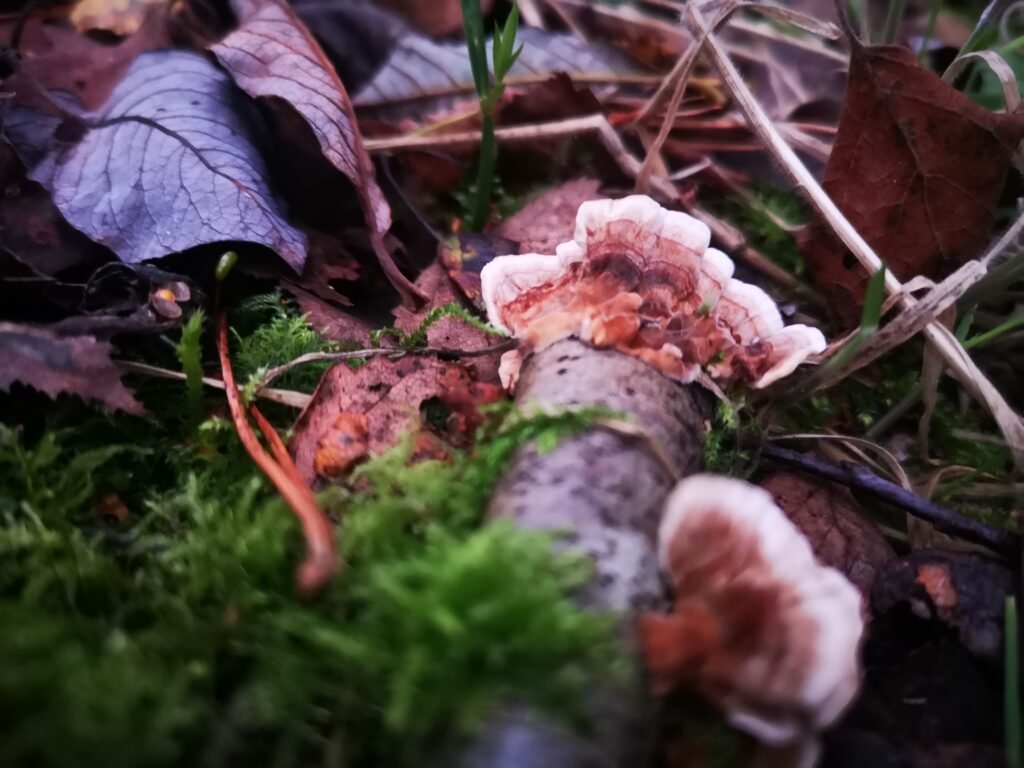
The turkeytail used to be popular as a decoration on tables, and even for decorating hats. Told you this shroom’s got style. It’s not an edible one. But why would you wanna eat it anyway? Just look at it. Plus it’s too tough to chew.
If you wanna observe its beauty in person, you’re in luck. It’s very common. You can find it pretty much anywhere where there’s dead hardwood (e.g. beech, oak, etc).
Outro:
Well, that was a lot of words about a lot of mushrooms. I hope this guide helps you with your IDing as we both continue practicing this autumn. Remember to only pick shrooms you’re absolutely sure about and don’t take too much. They’re a very important part of their environment. Forage, don’t damage.
Have fun, and try not to poison yourselves. See you guys in the next one. Stay straying!