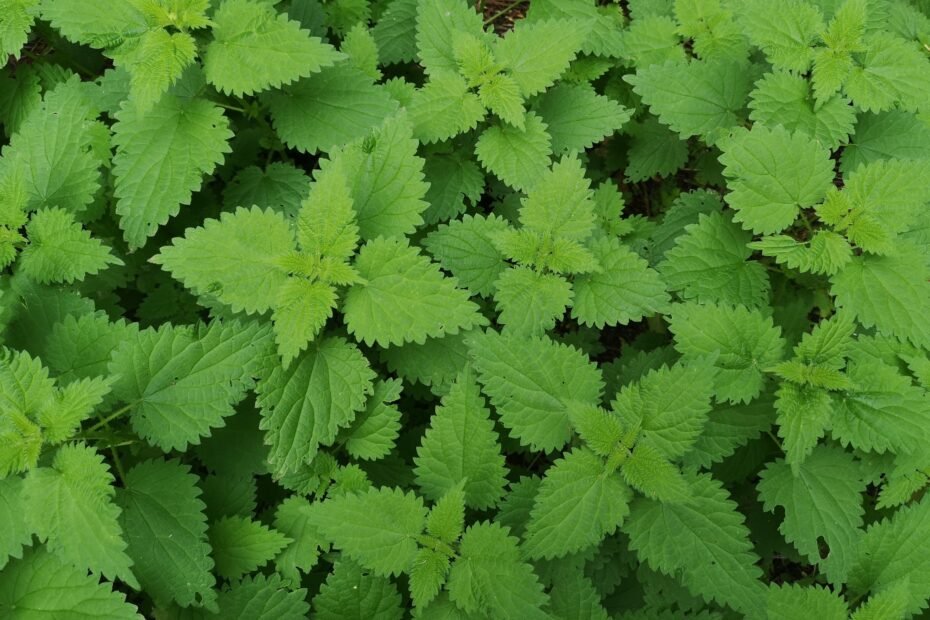
Hello everybody! Welcome back. I finally managed to go outside on Monday and not get drenched. Monday the 17th marked the end date of Storm Claudia, after over a week of heavy rain and strong wind. I hope you all made it through the storm okay. So what did I decide to do on this blessed day? Picking stinging nettles.
The stinging nettle (Urtica dioica) is one of the most common plants you’ll encounter in the UK. Ask any good brit and they’ll tell you the first experience they had with this plant. Spoiler alert: it wasn’t a fun one.
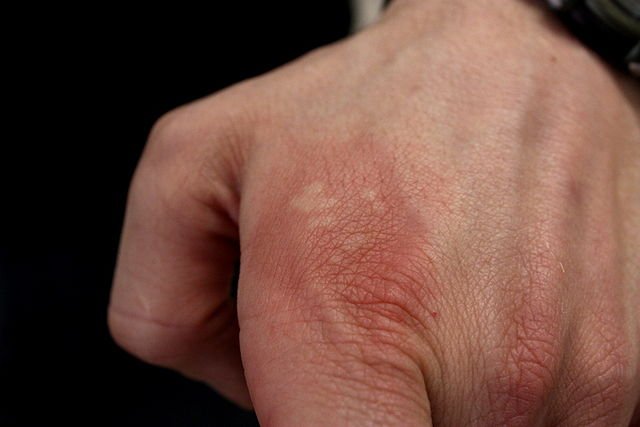
As a small naïve child, you’d curiously reach out to touch this seemingly harmless plant. All of a sudden, your hand feels like you’ve been bitten by a dozen mosquitoes. You feel a burning, prickling itch. Then you develop a rash with raised bumps. What happened? You got stung…by the stinging nettle.
You may think it’s just an a**hole of a plant that stings people, which it does; it has many uses as well. It’s been used in food, herbal remedies, and other things (e.g. war camo in WW2) for hundreds of years. Bet you didn’t know you could make tea with it. Or maybe you did…but if you didn’t, here’s how!
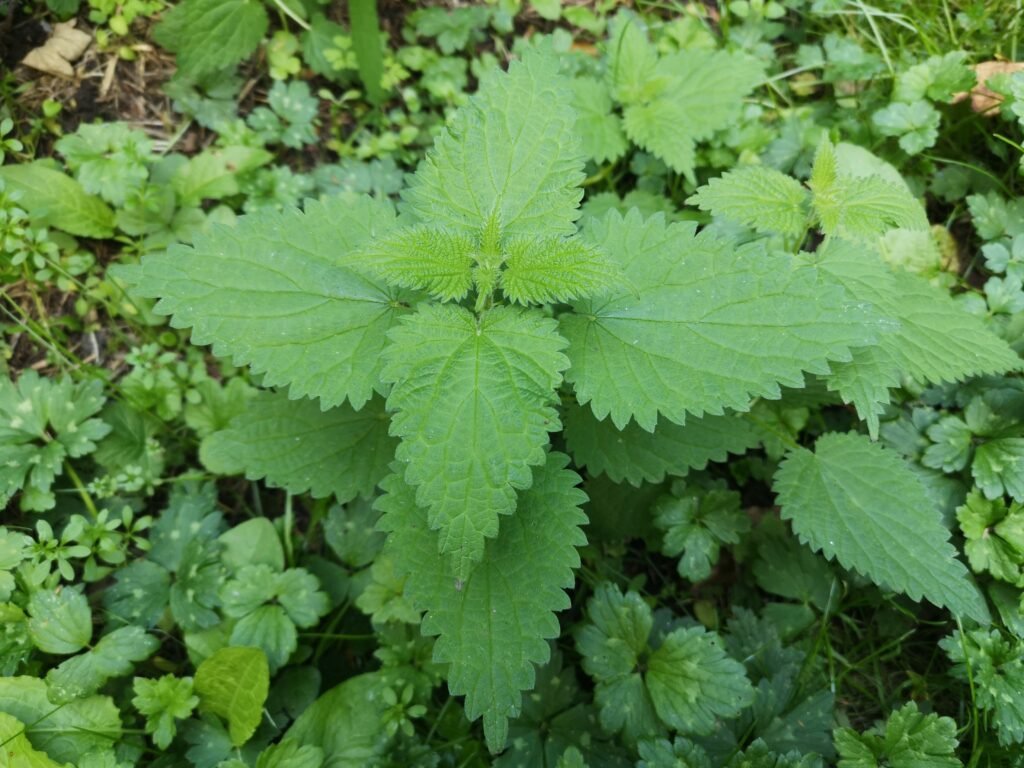
You can’t make stinging nettle tea without stinging nettles. Now there are two ways you can ID this plant: the painful way, and the unpainful way. The first way is kinda self-explanatory — if you touch it and it stings you, it’s most likely a stinging nettle. The second way is hands-off IDing. 100% sting-free.
The stinging nettle is a type of herbaceous plant, meaning it doesn’t have any woody parts. In summer, it can reach up to two meters tall; only if the soil is fertile.
The flowers are catkins that droop down like miniature bunches of grapes. Flowers on females can be green and white, while ones on males can be purple or yellow.
I’m assuming this is a female then:
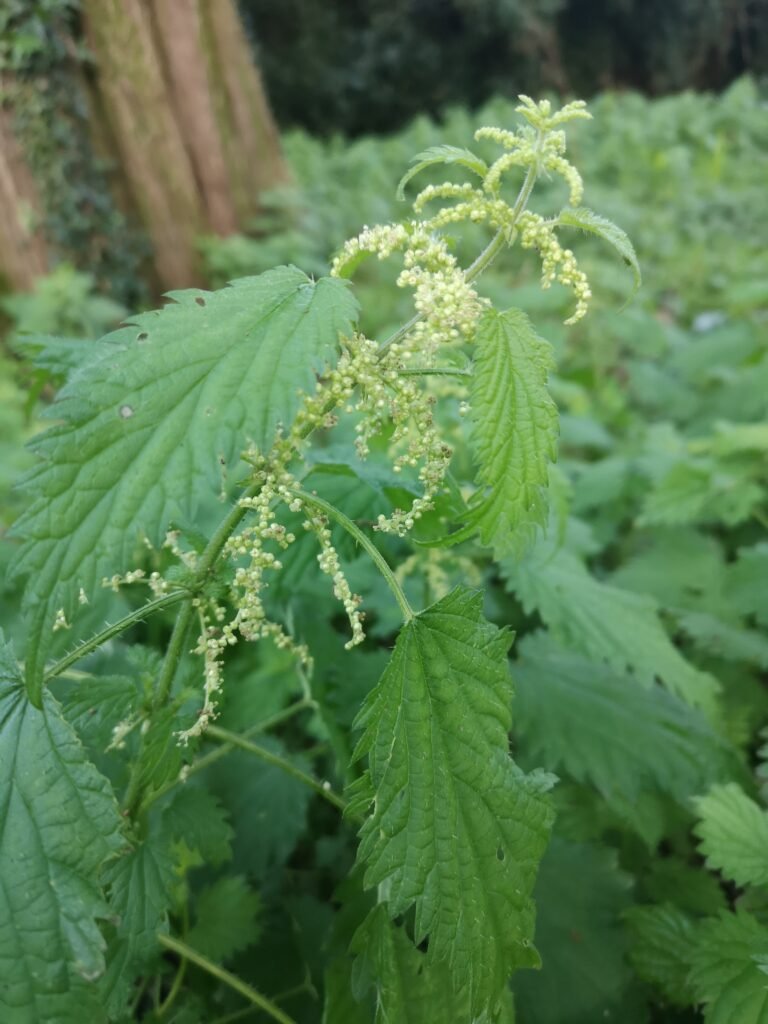
The leaves grow in opposite pairs and are oval-shaped with pointed tips and toothed edges. Sorta like the leaves of a…certain illegal substance.
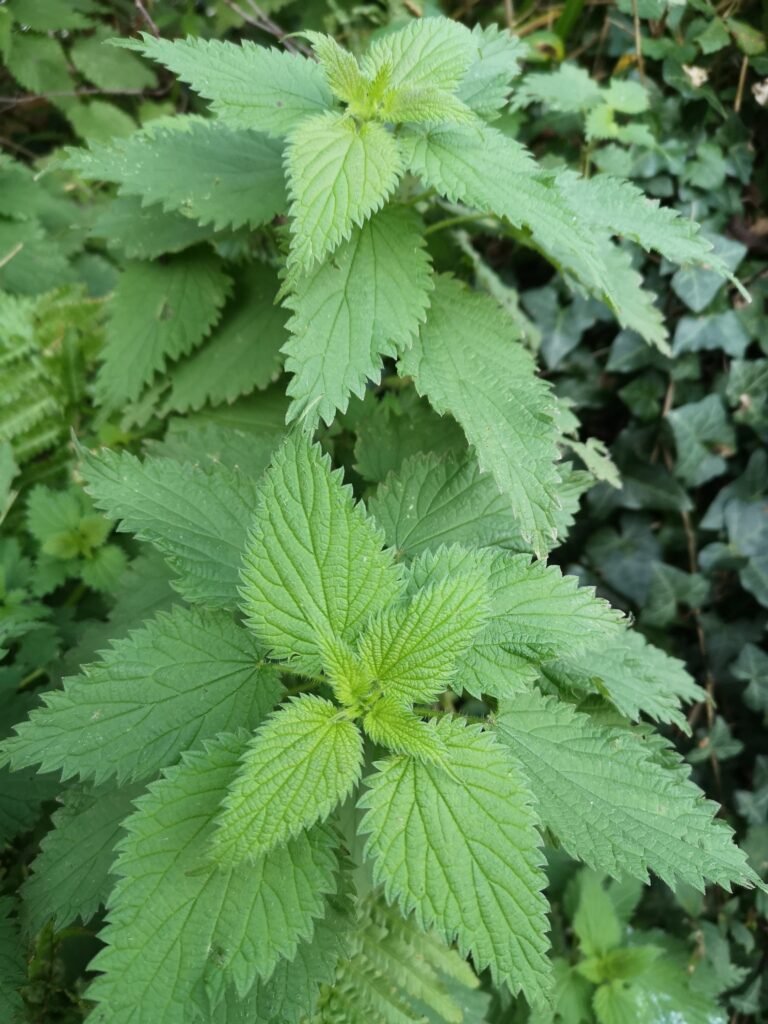
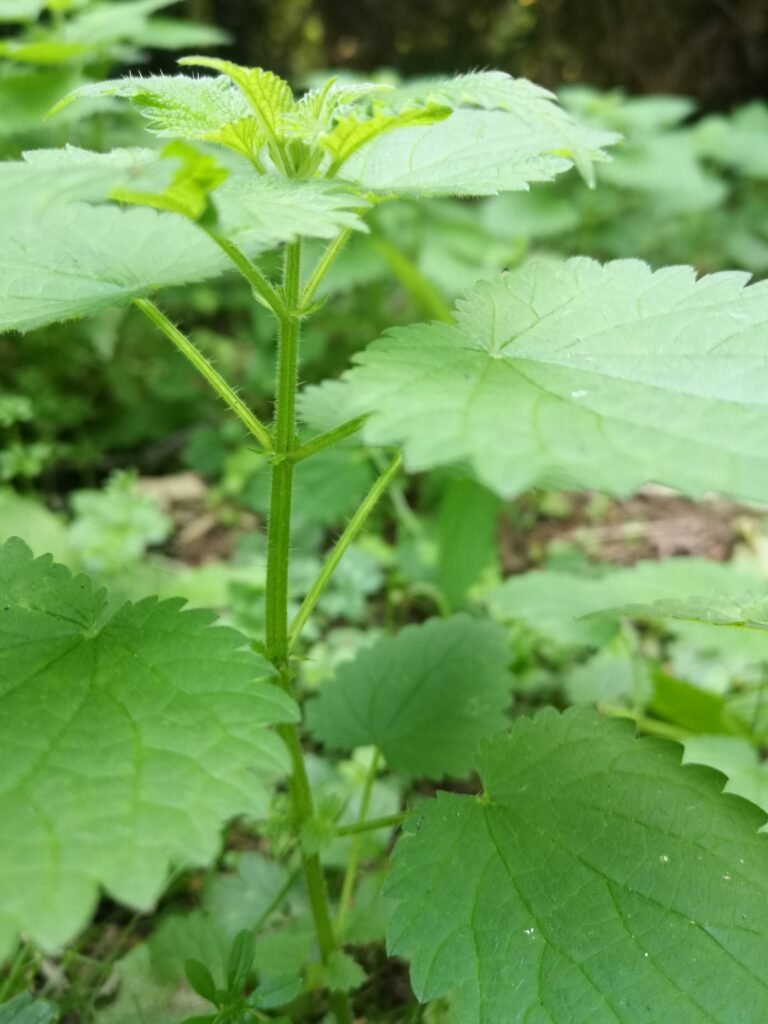
Covering the leaves and stems are these fine hairs that look (and feel) like fiberglass.
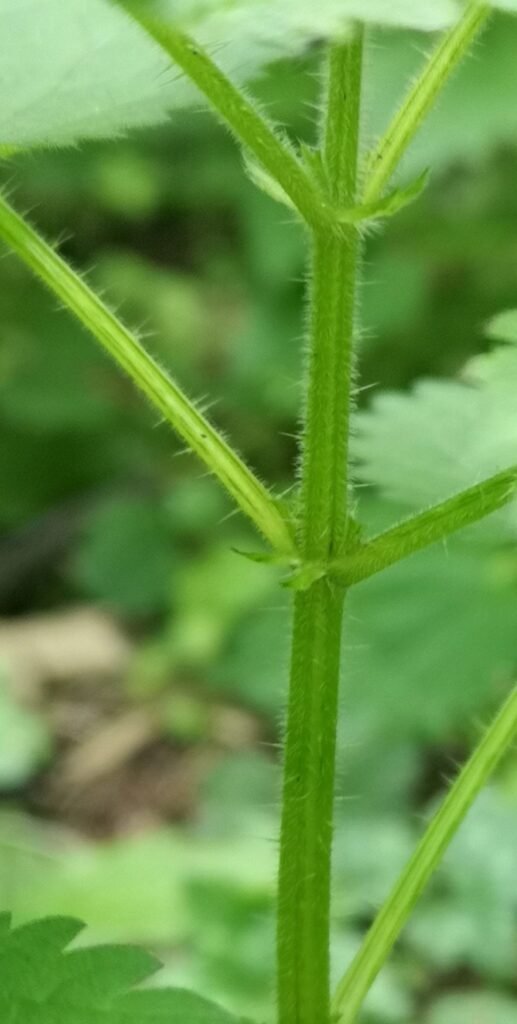
Not all of them are stinging hairs though. Many of the smaller ones don’t sting. But beware of the bigger hairs. These are the ones that cause those itchy bumps when touched. Upon contact, the tips break off and basically become tiny needles in your skin that inject histamine and other chemicals. Great stuff.
But as Master Oogway probably said, “To every yin there’s a yang”. What the hell does that mean? For every problem there’s a solution. If you get stung by a stinging nettle, using dock leaves from the broad-leaved dock plant (Rumex obtusifolius) could work.
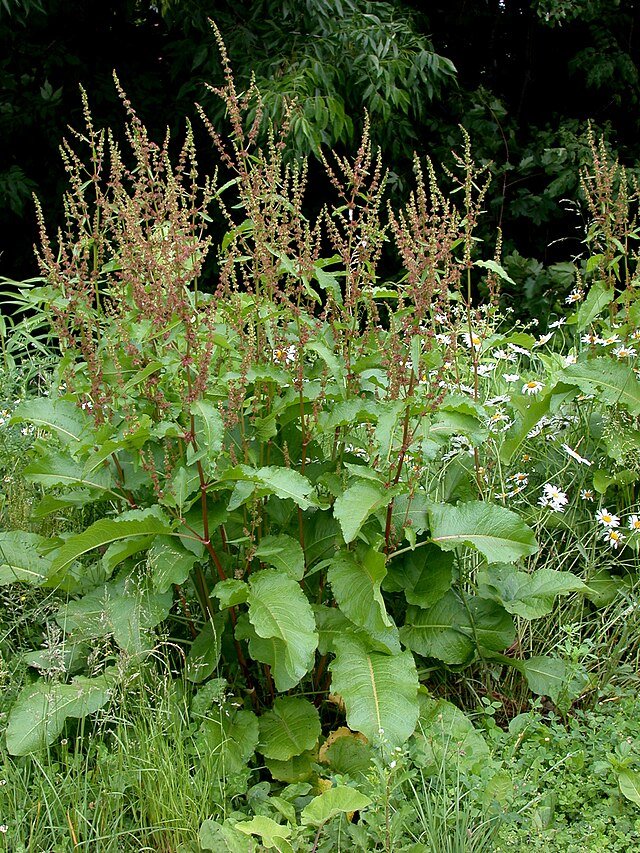
There’s a popular belief that rubbing a dock leaf onto a stung area can help relieve it. This could be because the sap evaporating creates a cooling affect on the skin. Or it’s a load of horses*** and we’re falling for a placebo.
Either way, dock plants tend to grow in the same places as stinging nettles. And they’re free. So it’s worth a shot!
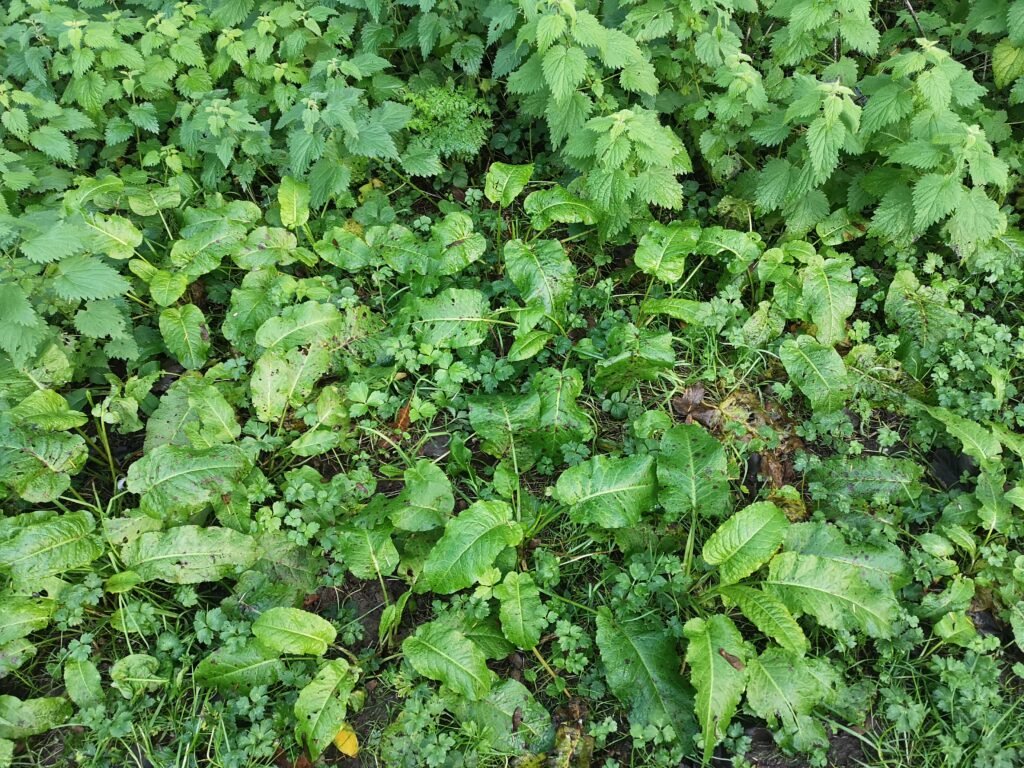
Keep that in mind when you go out foraging for nettles, which you’ll wanna do wearing a glove. Wear a glove on the hand you’re going to be touching the nettles with. Remember guys: protection is important.
I got this brand-new pair of gardening gloves for just under £2:
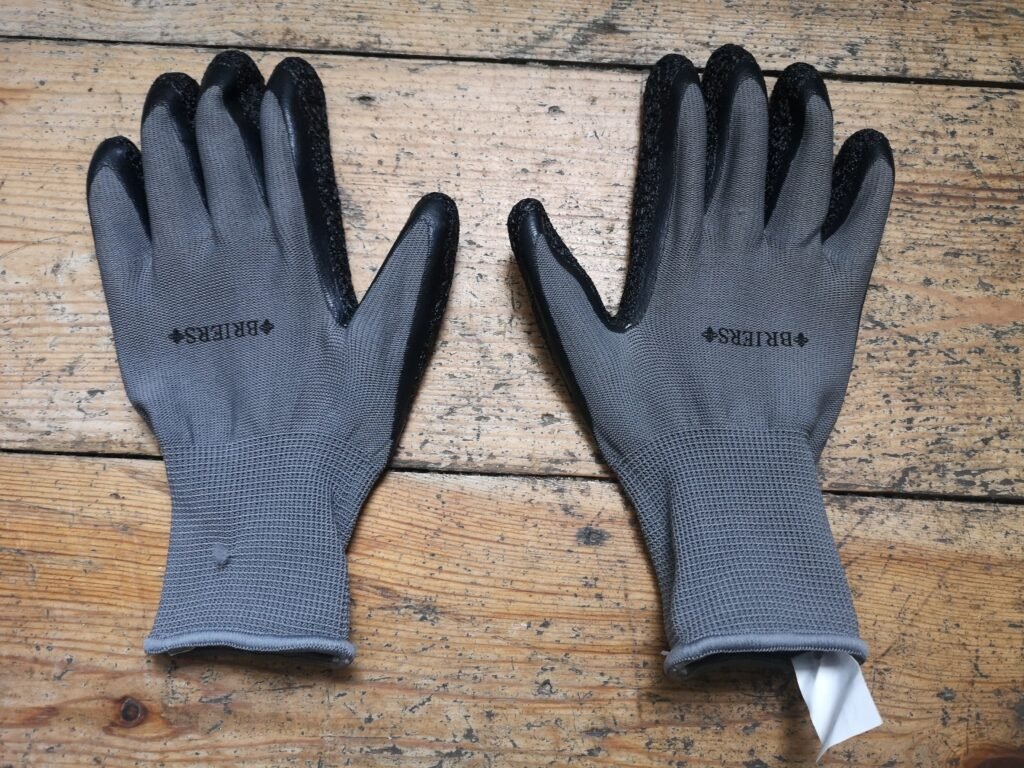
Minimal cost; maximum protection.
While I was walking around the town I noticed how there aren’t that many stinging nettles growing. Even in places like the local park and such. It’s weird because stinging nettles are normally everywhere. Very strange. That being said, I did find a decent spot where some nettles were growing.
As you’re looking at the nettles, you’ll notice some of them have big gaping holes. What made them? Insects.
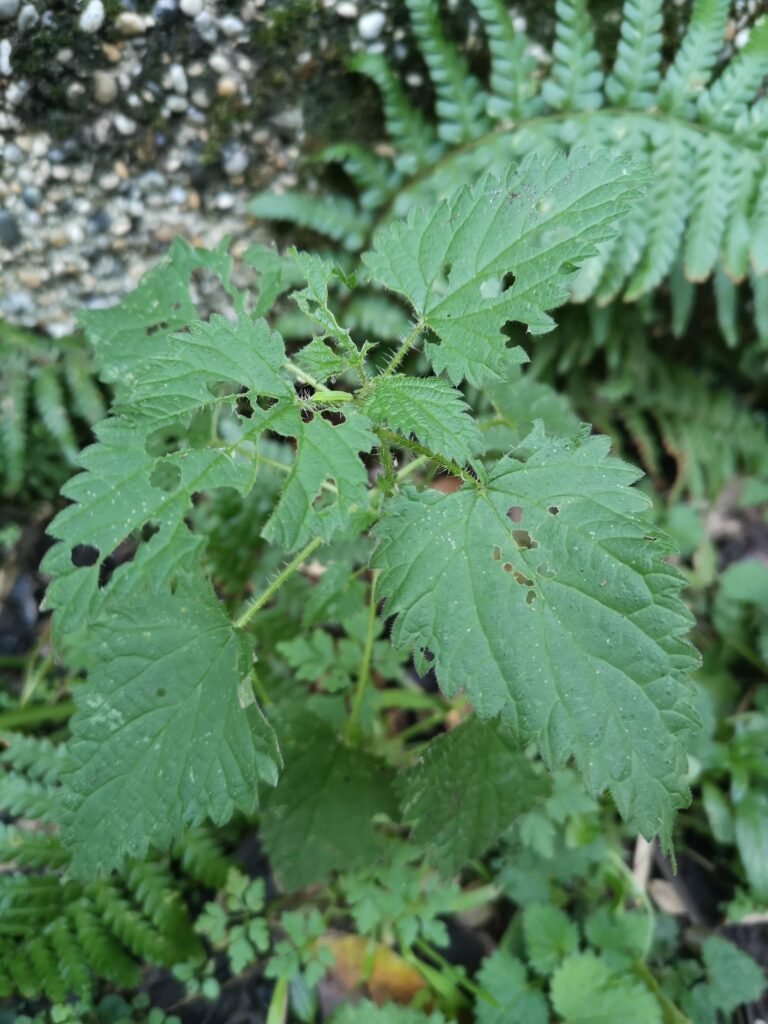
Lots of insects feed off stinging nettles. The caterpillars of the European comma (Polygonia c-album), European peacock (Aglais io), red admiral (Vanessa atalanta), and small tortoiseshell (Aglais urticae) butterflies all love to feast on the leaves.
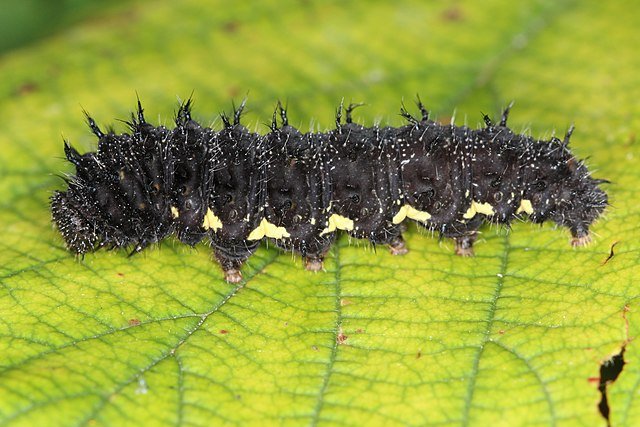
They’re all awesome in their own right, but the peacock’s looks the most like a goth. It’s jet black with tiny flecks of white and short stud-like spines. It’s a big badass-looking caterpillar that turns into one of the least scary insects you’ve ever seen.
Look at this guy:
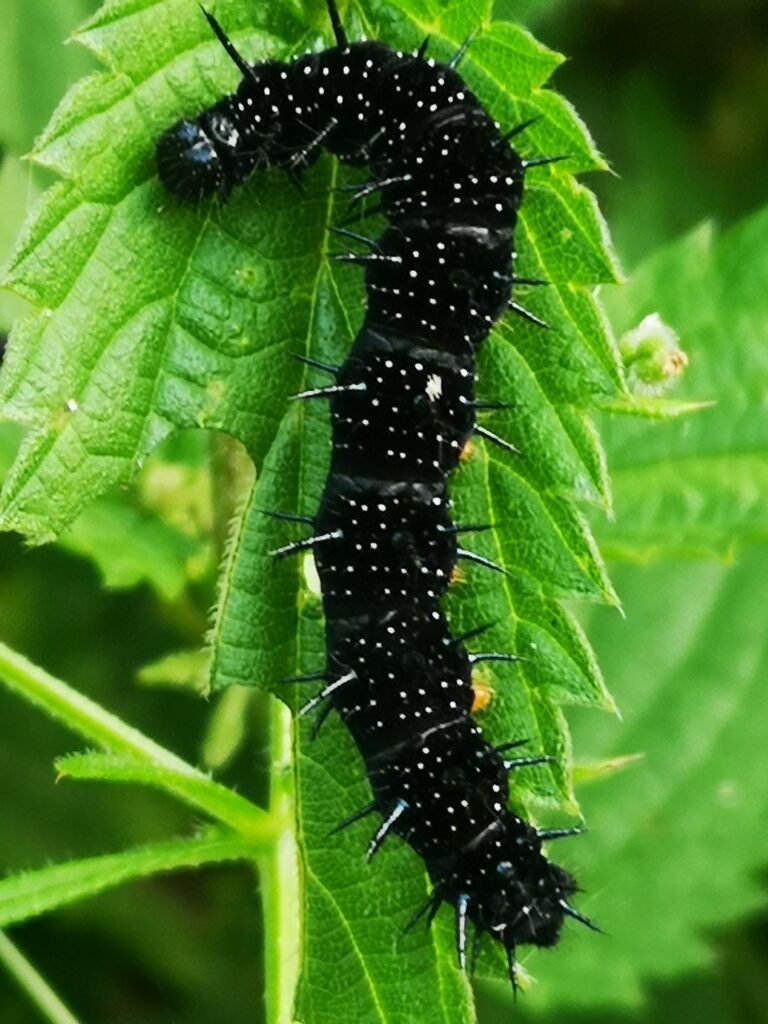
One day, that guy will turn into this:
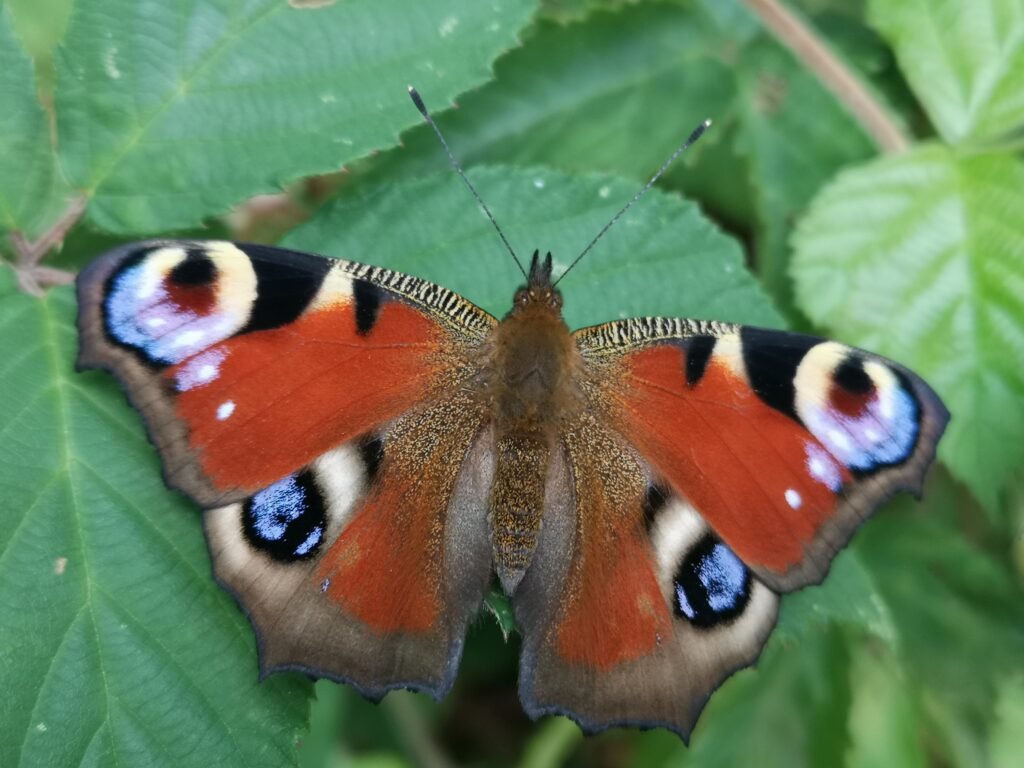
Unsurprisingly, these butterflies prefer to lay their eggs on the plant species their larva feed on (i.e. stinging nettles). It makes sense. If you know your kids are only gonna be eating McNuggets, you dump them at a McDonald’s.
This is a red admiral laying her eggs on a stinging nettle leaf bud:
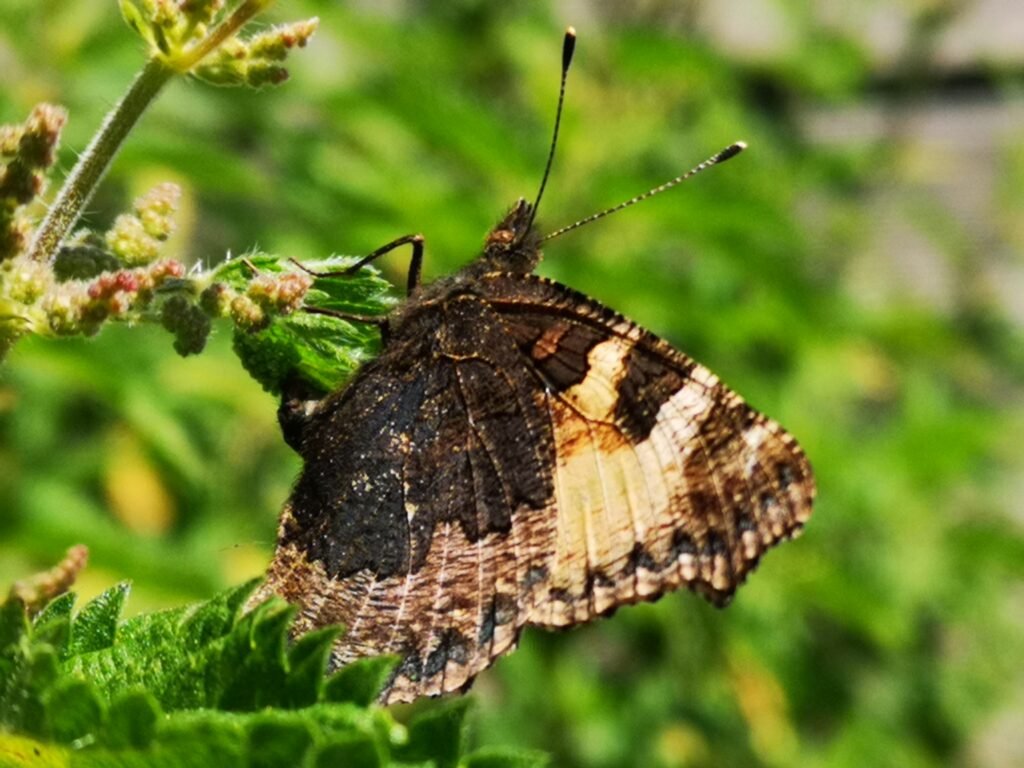
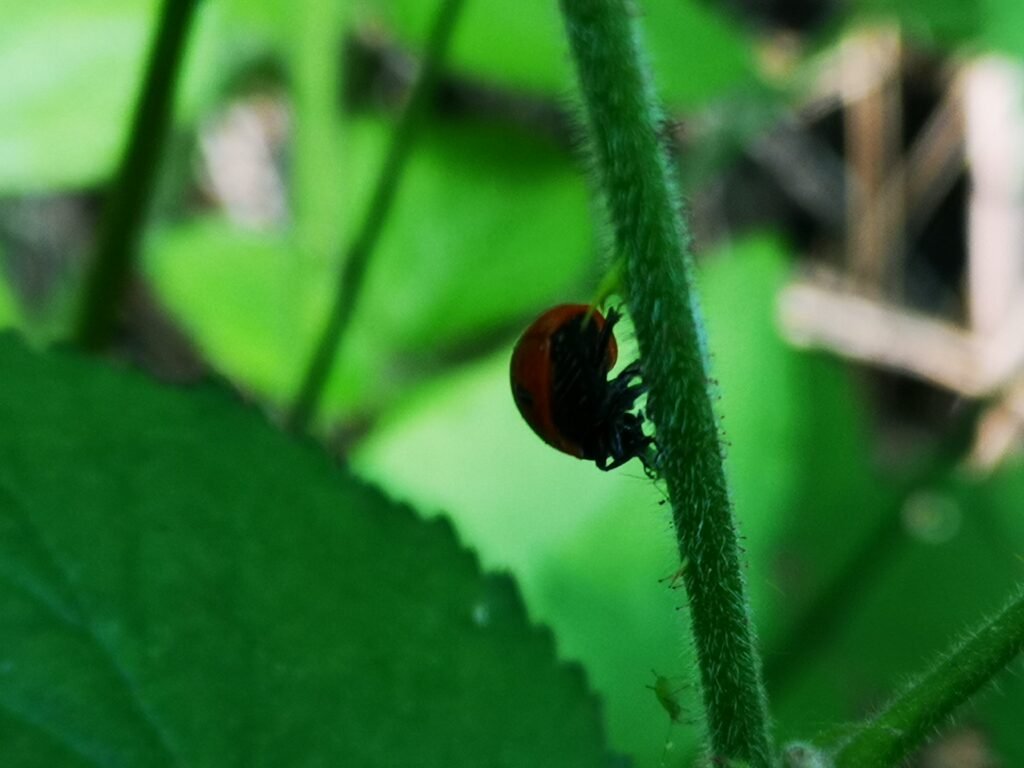
Aphids also feed and shelter on nettles, which in turn get devoured by ladybirds.
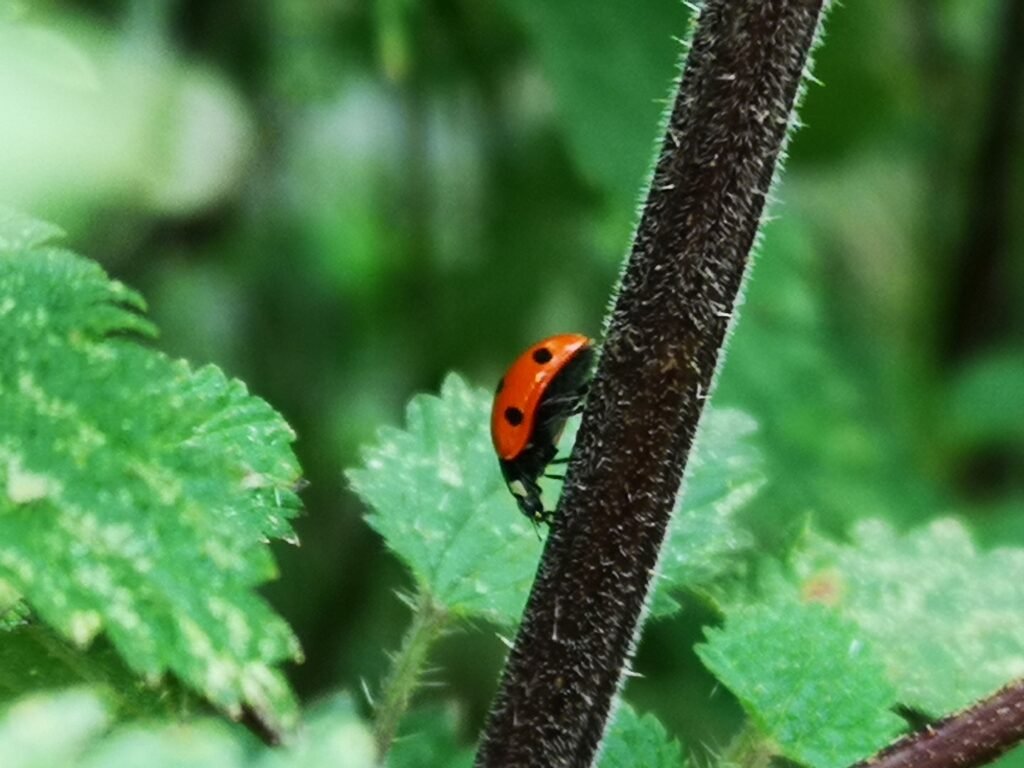
Enough side-tracking — back to foraging.
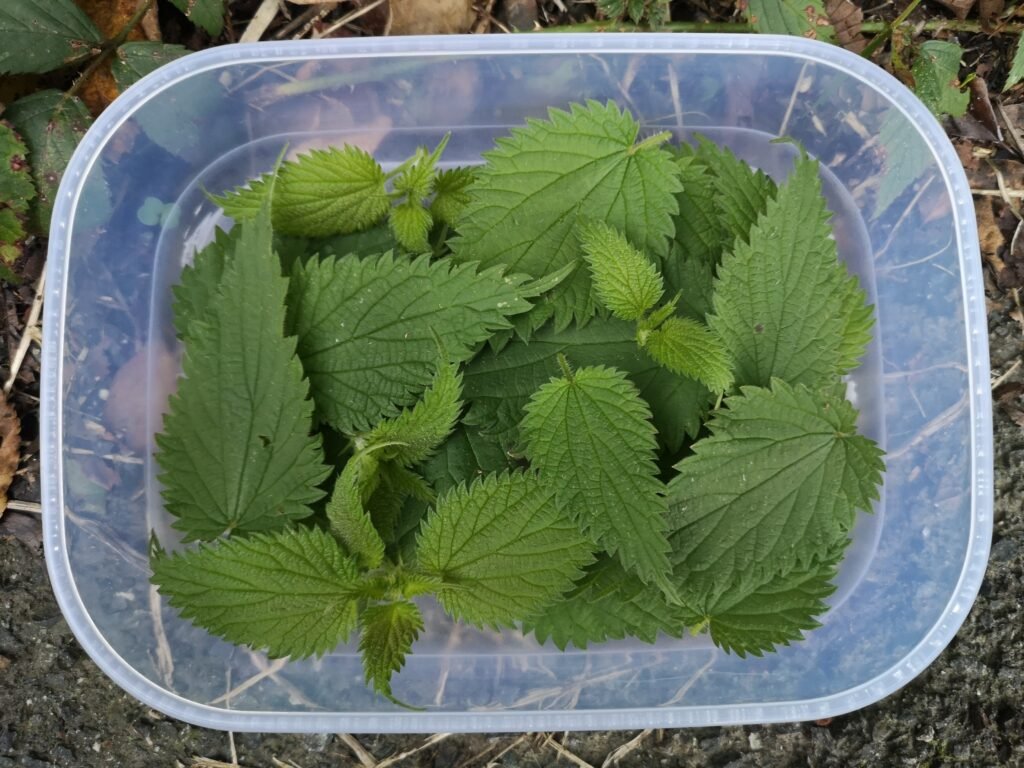
You can wear both gardening gloves if you like, but I just wore one. With my right hand — my dominant one — I picked a few leaves off each plant. Trying not to yank the whole thing out of the ground. Only pick the fresh, green leaves. Avoid ones that aren’t green, have insects/eggs on them, and are full of holes.
I only got enough leaves to make one or two cups of tea in case I didn’t like it.
It was half past 4 PM when I started making my way back home. So on my way I got to see a beautiful sunset. The colour gradient was gorgeous: a soft transition from pale blue to a warm pinkish-orange.

After spending over a week in a windstorm, you see something like this and it reminds you that nature isn’t always brutal. Sometimes it has moments of beauty and calm. Moments like this.
Also, sorry to anyone who lives in those houses. The sunset was too beautiful not to take a photo.
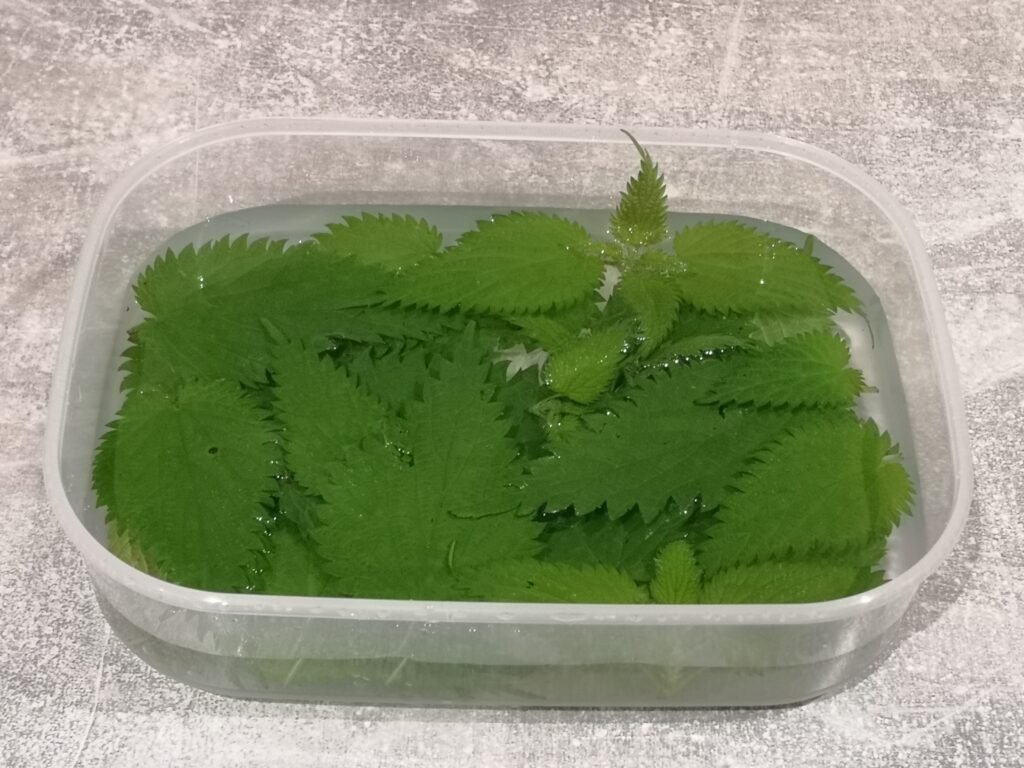
At home, I let the nettle leaves soak in cold water. You wanna soak them, rinse them, and repeat as many times as necessary to wash off all the dirt and grime. Don’t soak the leaves in hot water or you’ll boil them too early.
Now although I tried to only pick bug-free leaves, they still had some stowaways.
I found this little guy crawling along the edge of the Tupperware:
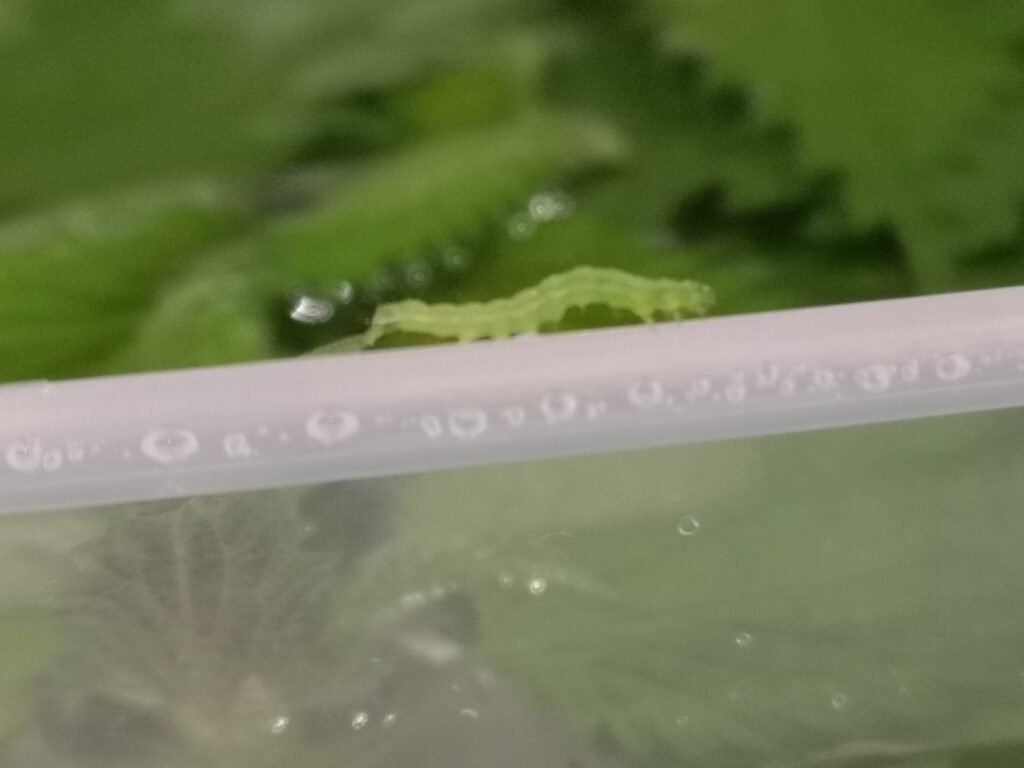
Don’t worry, I released him/her into the garden.
As the leaves soak, fill a pot of water and leave that on high heat. You can always tell water is ready for tea (or coffee) when it’s bubbling like a fart in a bath.
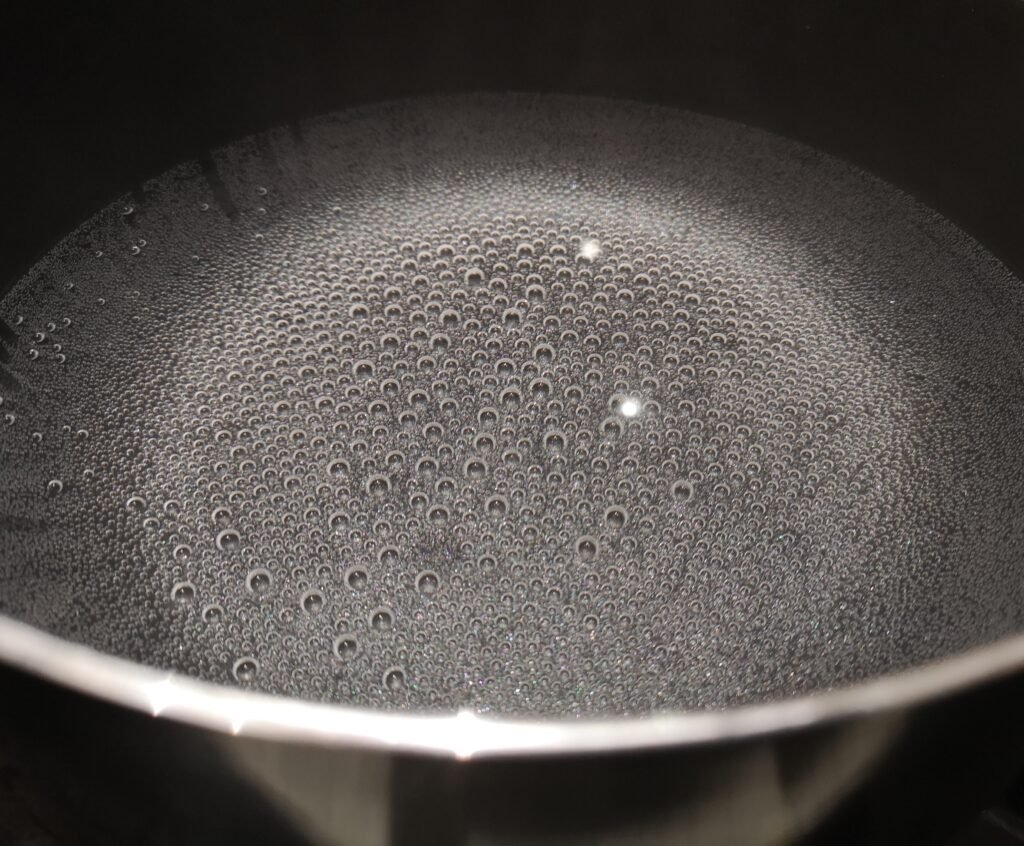
After one last rinse, dunk the leaves in the boiling water and watch the magic happen. According to this WikiHow article, they should take between 10–15 minutes. Or until the water starts turning light green.
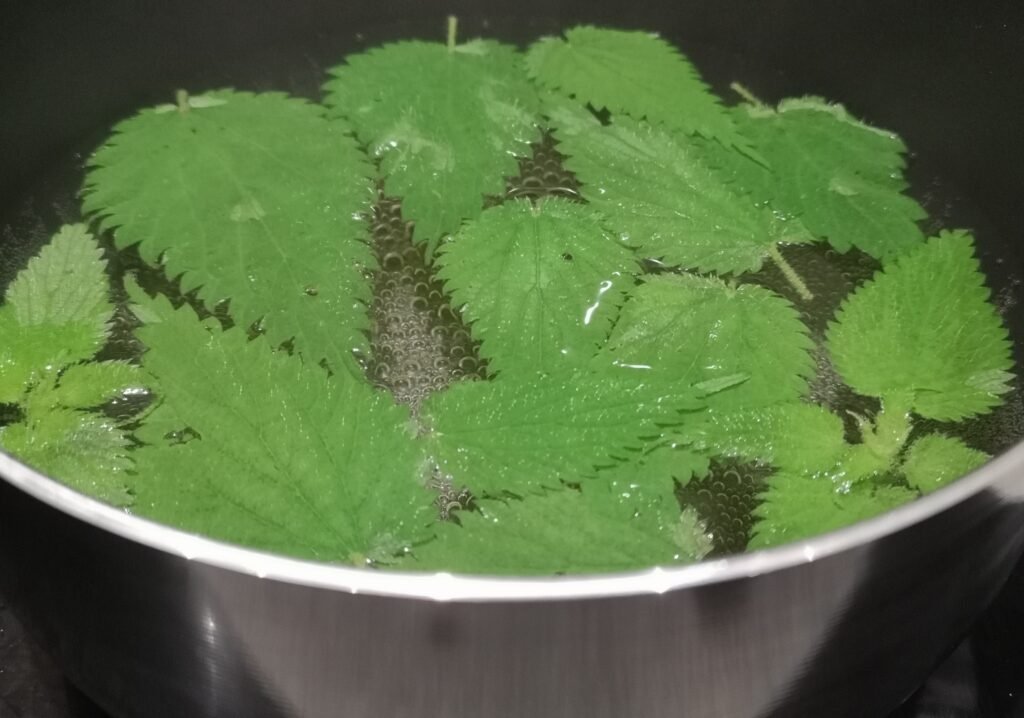
If you wanna test how well boiling them actually works, you can fish out one of the leaves using a fork or spoon. If you can hold it without any stinging, that’s when you know it’s tea time.
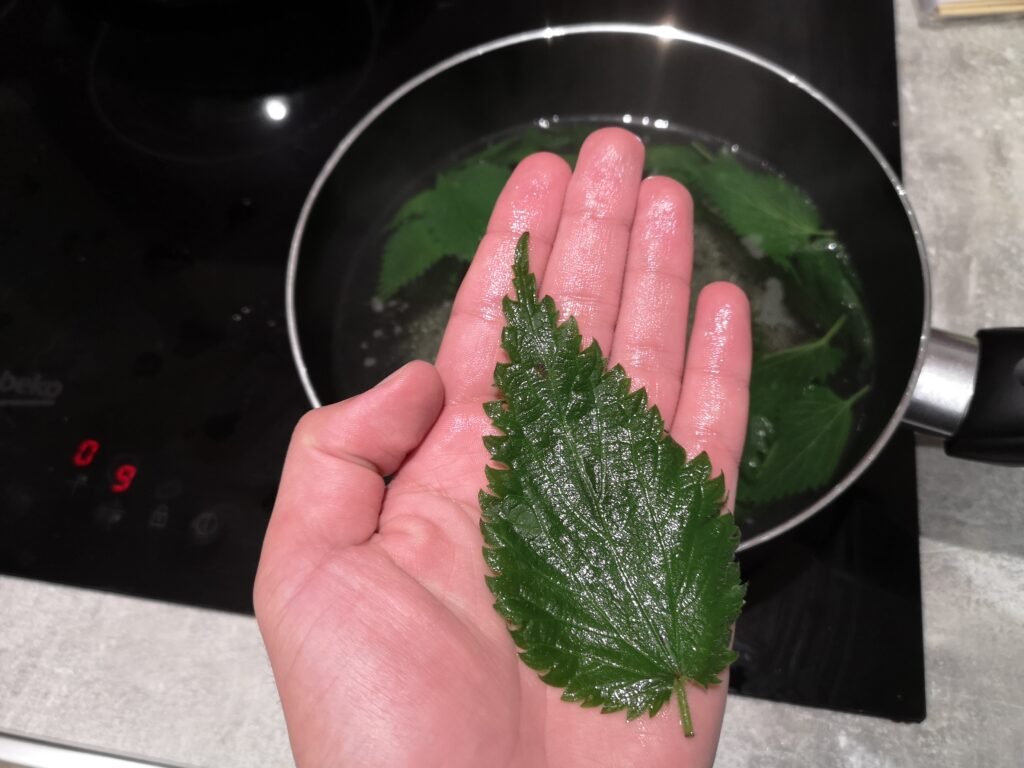
Before making myself a cup, I wanted to try a leaf. And even though it wasn’t stinging my hand, I was s****ing bricks. Remember that horrible itch? I imagined it would feel like you deep-throated house insulation…on fire.
I don’t think I’d enjoy choking (not one of my kinks but I’m not shaming), so I first slowly rubbed it on my fingertips. Next on my lips and then my tongue. Since it hadn’t stung my tongue, I knew it was safe to swallow.
Because heat neutralises all the chemicals, you can just drink the tea straight without the leaves stinging you. But you might still wanna strain it through a sieve for an easier drink. You don’t have to keep the leaves but I chose to have mine on hand to put into the tea.
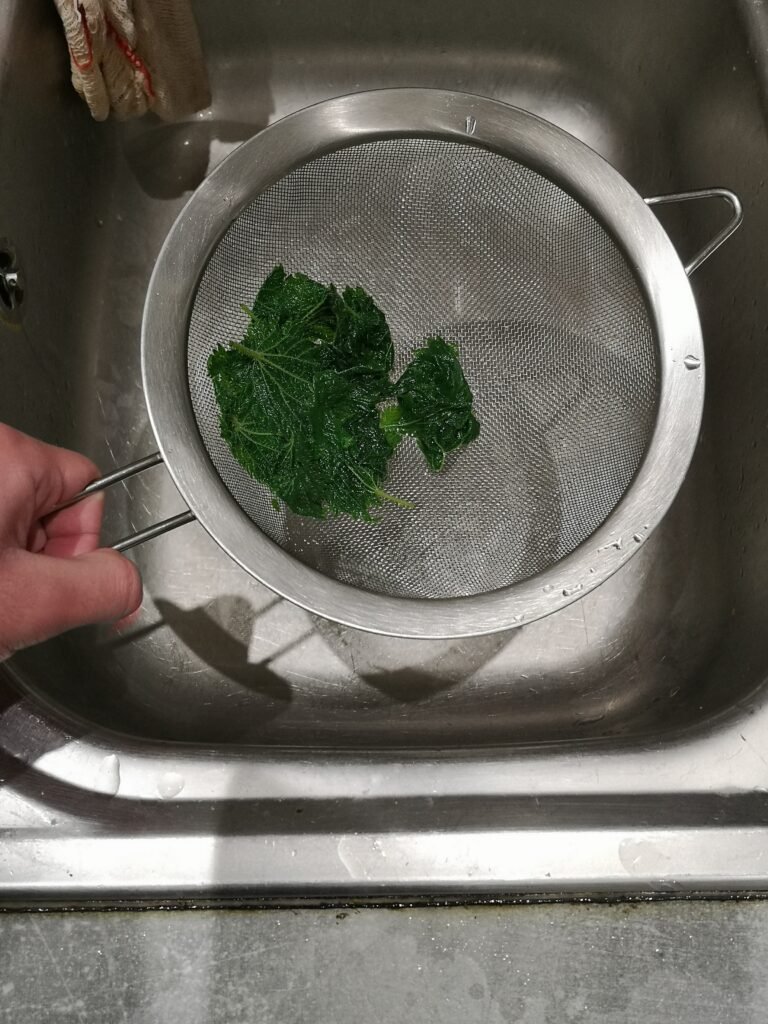
First goes in the boiled leaves, then the tea water, and boom — you got yourself a cuppa.
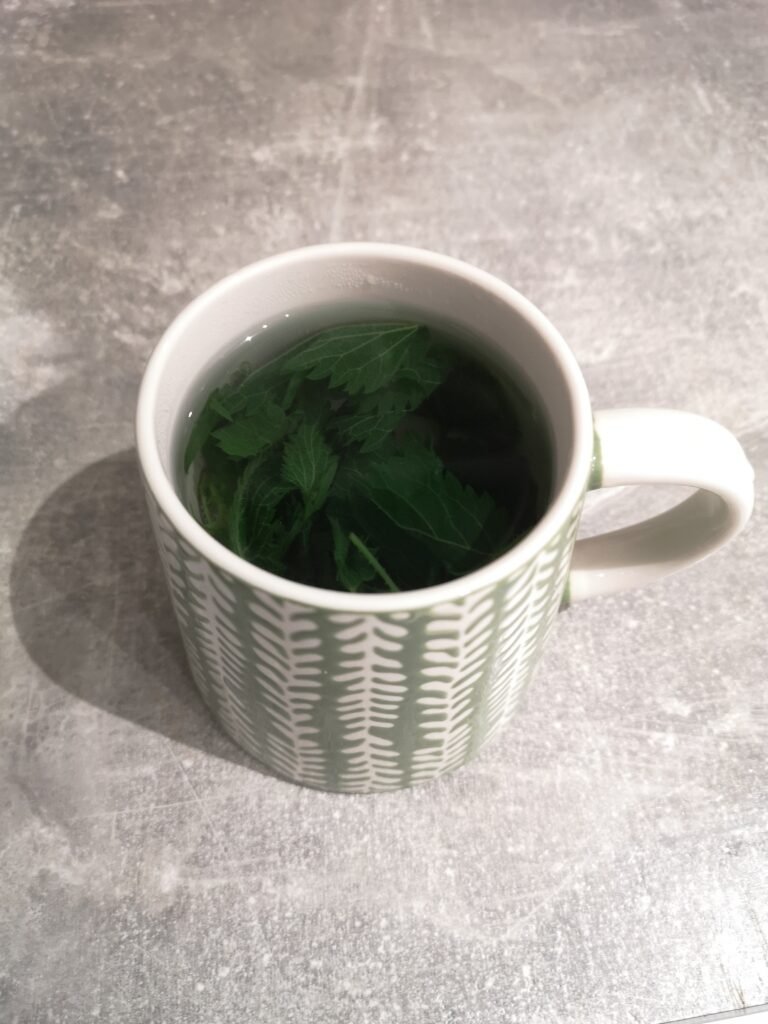
To start with, I wanted to try mine by itself (i.e. no added flavours). It smelt faintly herby; it’s taste was much milder. I don’t know if it’s because I boiled slightly too long or whatnot, but it wasn’t very strong.
I read online that stinging nettle leaves have a flavour similar to spinach. Honestly, that’s not too far off from what I thought. I mean it tastes exactly like how you’d think a plant would taste. Not yet satisfied with my drink, I put a couple teaspoons of honey to help sweeten it. It’s a lot better once you add the honey.
Now this may come as a shock to you — as someone who’s lived the last 18 years of his life in the UK — but I don’t usually like tea. I know, it’s a shocking confession for any Brit to hear or read. But this stinging nettle tea isn’t so bad. And it’s healthy. It’s got several vitamins (e.g. A, C, D, K and some of the Bs) and it’s rich in calcium, iron and magnesium.
But you shouldn’t drink it if one of the following applies to you: a child, pregnant, breastfeeding, taking certain medications, or are allergic. Your health should always come first; definitely before a cup of tea.
I know it’s been a little while since I’ve uploaded an actual post onto the blog but I hope you guys liked this one. Link and share it or I’ll swap your bog roll for nettle leaves.
I’ll see you in the next one. Stay straying!