Hi everybody! Welcome back. Halloween is upon us; everyone’s been getting ready for spook season. The holiday is associated with many things: candy, costumes, criminal damage, and ‘scary’ animals. Bats, cats, owls…and spiders.
But unlike these other animals, people seem to be especially terrified of spiders. Did you know at least 3–15% of people suffer from arachnophobia?
I did — half my family has it. Every time my mum sees one in the kitchen she acts like Freddy Kruger is cooking. Or Nigel Farage. The amount of spider-related horror films doesn’t help. The spiders or the arachnophobes.
Personally, I don’t think spiders deserve as much of the hate they get. Sure, the eight legs can look a little unsettling and their speed can throw you off. And it is pretty creepy when they hide at the bottom of your bath tub like a pervert.
But they also have their good sides. They provide one of the best pest control services, and it’s 100% free. Everything from cockroaches to flies to mosquitoes are on their radar.
Without spiders, we’d be well and truly screwed. And so would our wallets. We’d be spending more money on insecticide instead of candy. Who wants that? So I’d like to dedicate this blog post to appreciating spiders. Not just for Halloween, but in general.
I’ve listed eight of the UK’s spooky (but important) spider species to spot for Halloween!
1. Garden spider (Araneus diadematus)
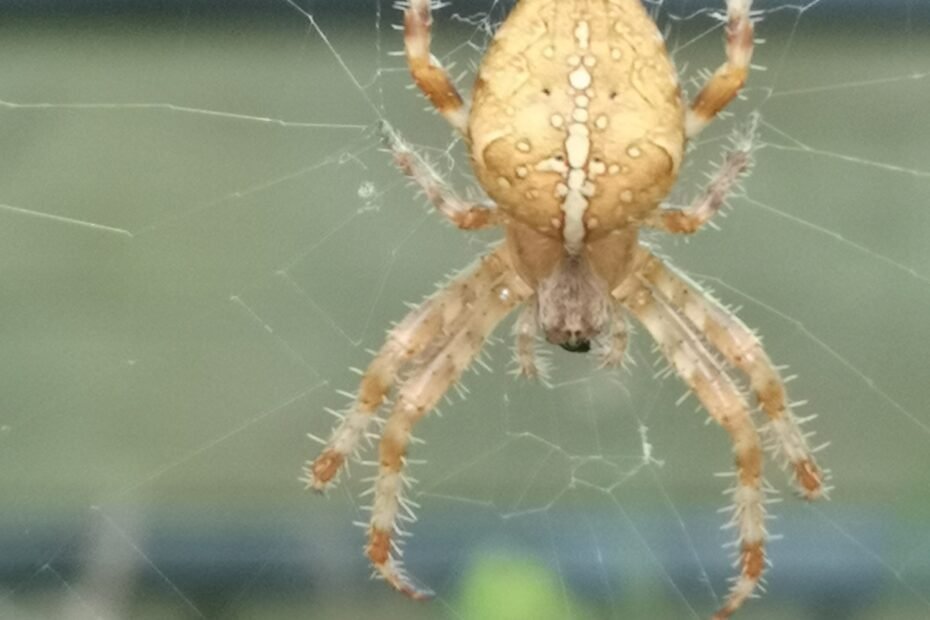
First is a spider you would’ve definitely seen if you’ve walked around outside in the UK. European garden spider, cross orbweaver, crowned orb weaver, diadem spider, and sometimes pumpkin spider. It goes by many names.
Most of us just call it the garden spider (Araneus diadematus). The most common type of orb web spider we have. And you’ll never guess where you can find it…gardens.
Its other name “cross orbweaver” comes from the white “cross” over its abdomen (the second main segment that looks like the ass). I mean, it hardly looks like a cross but semantics aside. Usually, the garden spider is greyish-brown or reddish-brown. Sometimes you see a nice reddy-orange one.
This one’s a young female (and what a beauty she):
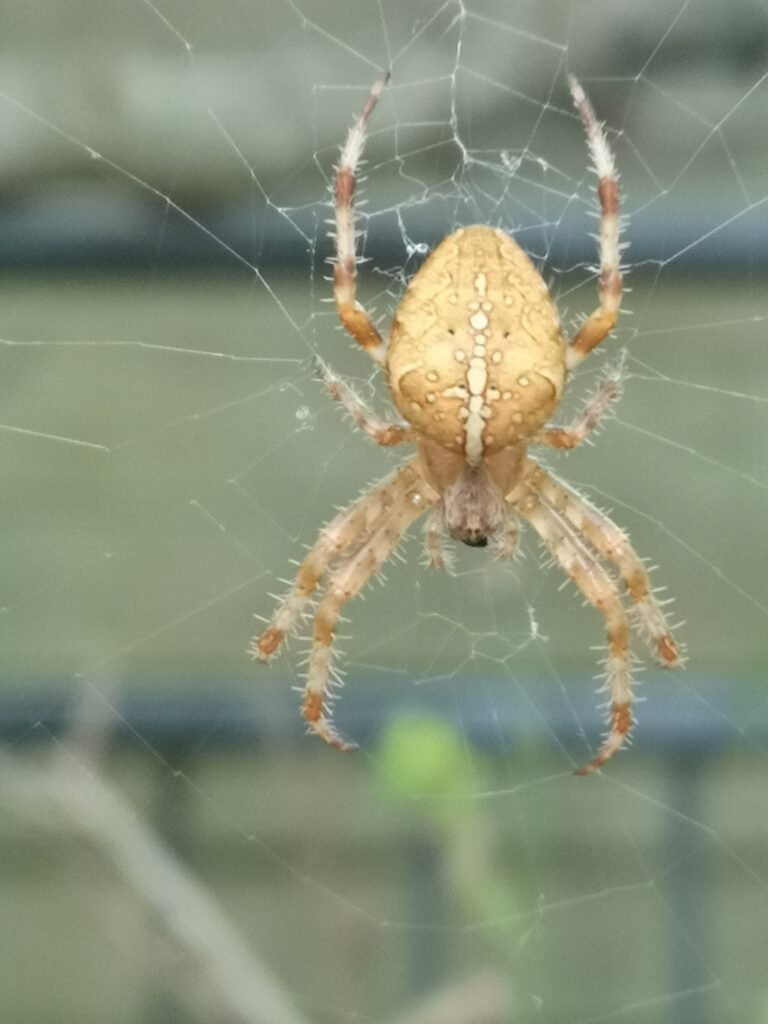
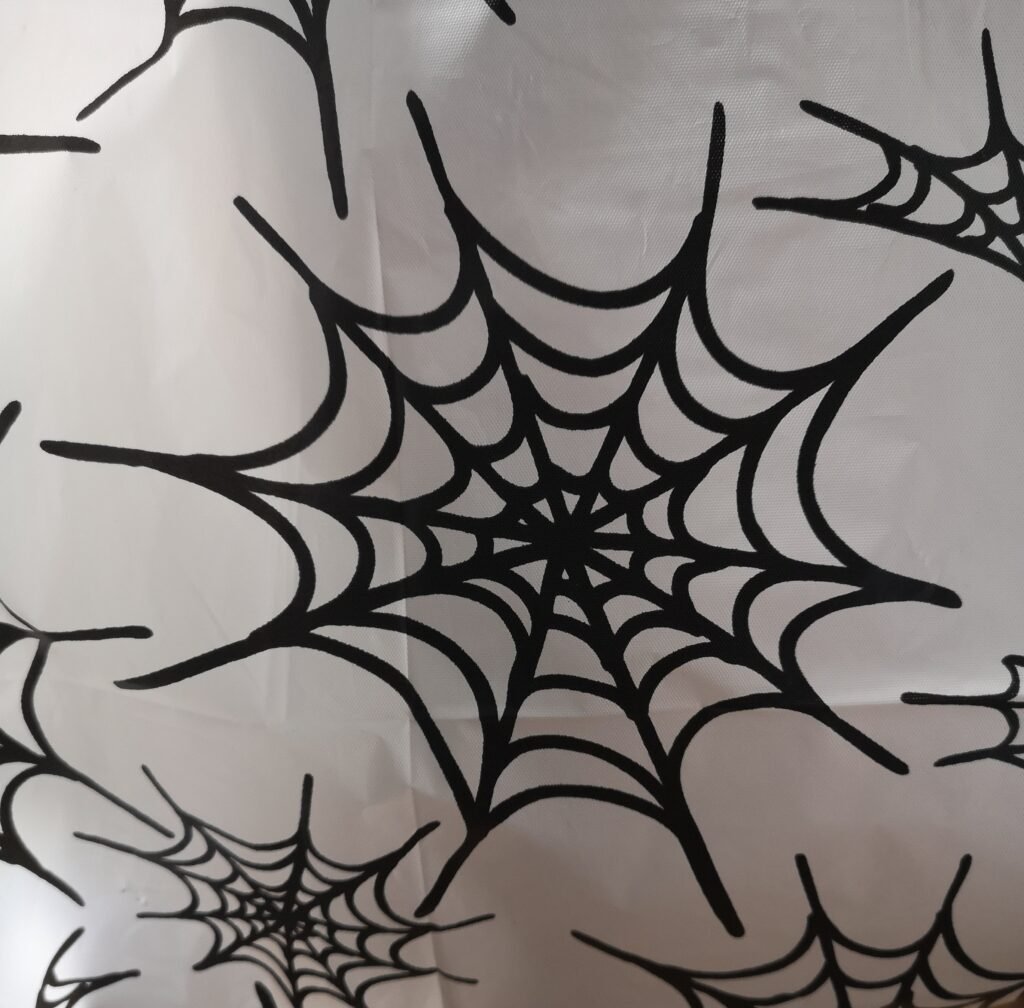
Females like this are twice as big as the males. And twice as hungry. Being an orb web spider, it spins a spiralled web. This is the classic spider web you see in Halloween decorations.
Spiders like the garden spider use silk to make their webs, and they produce it using special organs called “spinnerets”. Silk is stored as liquid in the spider; it thickens as it passes through like a s*** that’s brewing. It passes to the spinnerets under the abdomen, which sorta act like microscopic icing nozzles. Then the spider pulls it out with one of its back legs.
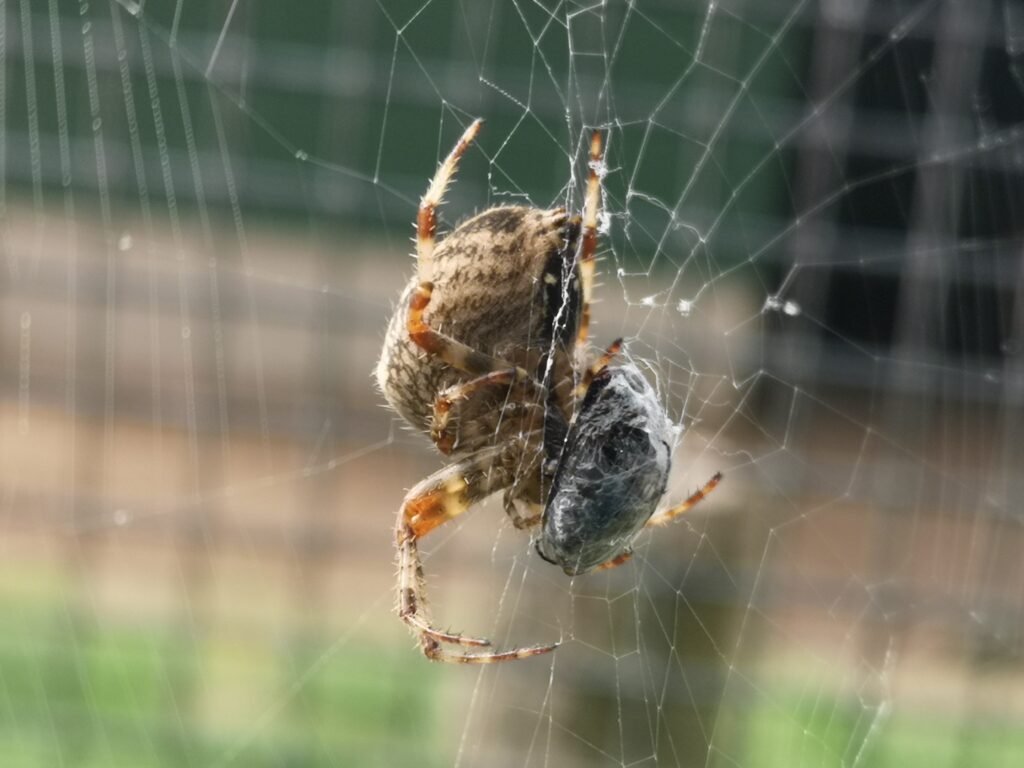
Real pros can weave a new web in just 30 minutes. Once the web has been built, anything that gets caught is fair game. Flies, mosquitoes, even wasps. The more they struggle, the more tangled up they get and the more vibrations they create.
To the spider, these vibrations are like when I hear Domino’s ringing my doorbell. And like me, the spider comes rushing down to collect its ‘delivery’.
2. Woodlouse spider (Dysdera crocata)
The woodlouse spider (Dysdera crocata) doesn’t weave webs and wait on them like the garden spider. It enjoys the thrill of the hunt so it actively chases down its prey. Wanna guess what the prey is? That’s right, woodlice: its only natural prey.
It’s like a Reddit mod. During the day, it sits around in its private bunker waiting for night-time to assert dominance again. The bunker can be built anywhere where there are woodlice. Even better if it’s warm and damp with lots of cracks and crevices to hide. Inside, the bunker is lined with silk. Like a sleeping bag that came out the spider’s ass.
That’s why you rarely see the woodlouse spider out in the open. And because it only hunts at night.
I ran into this one at 10 PM on my way to Asda:
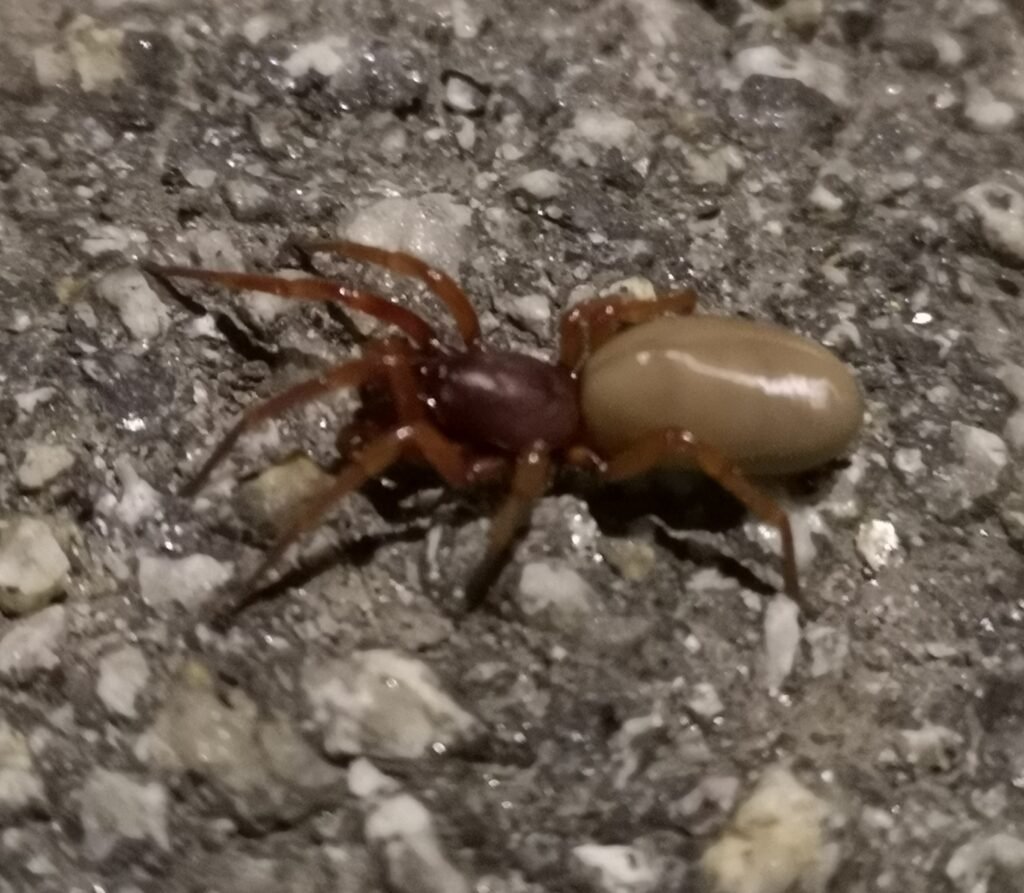
Although you don’t see it much, it’s a pretty easy species to ID. It’s bald and shiny (no hair like other spiders) with a long, greyish abdomen; the head and legs are reddish or orange. But it’s the “jaws” that make it stand out. Its long fangs and strong jaws are designed to pierce through the protective armour of woodlice. Crunchy.
3. Giant house spider (Eratigena atrica)
Next is the giant house spider (Eratigena atrica). It doesn’t eat giants or houses (though it very well could). No, this species is named after its gargantuan size, and habit of showing up in people’s houses.
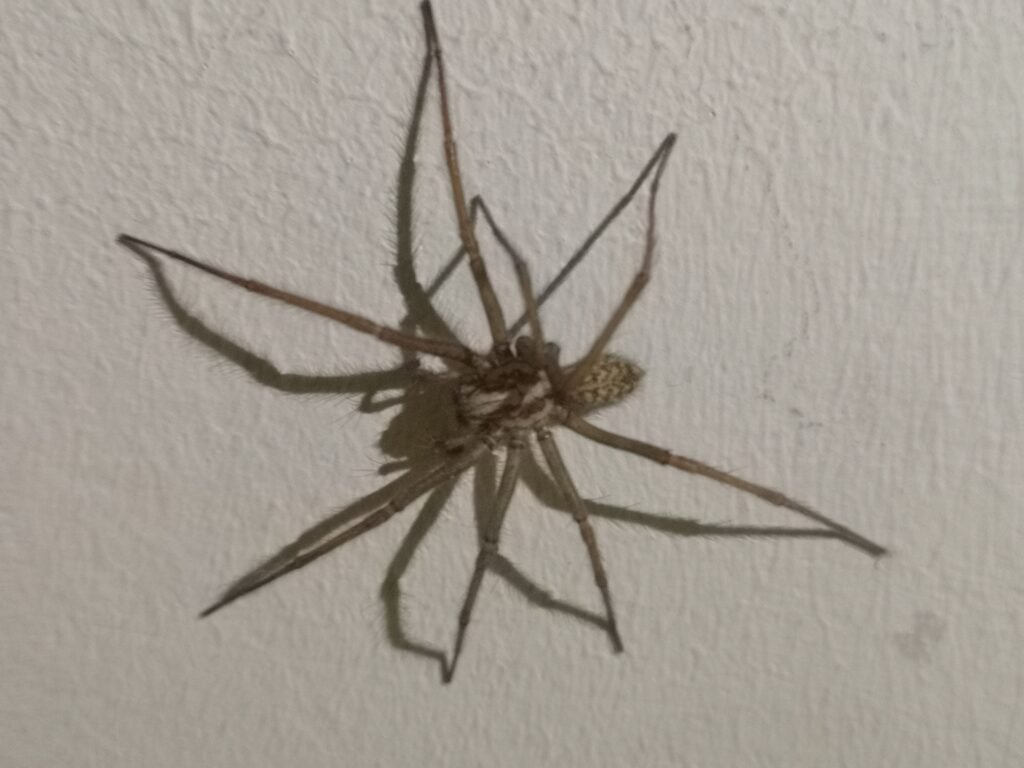
Now I’ve had countless experiences with capturing and releasing these. The biggest one I’ve ever seen was so big I caught her wearing my jacket. But seriously, it’s crazy how big they can get.
Take this poor crippled guy, for example:
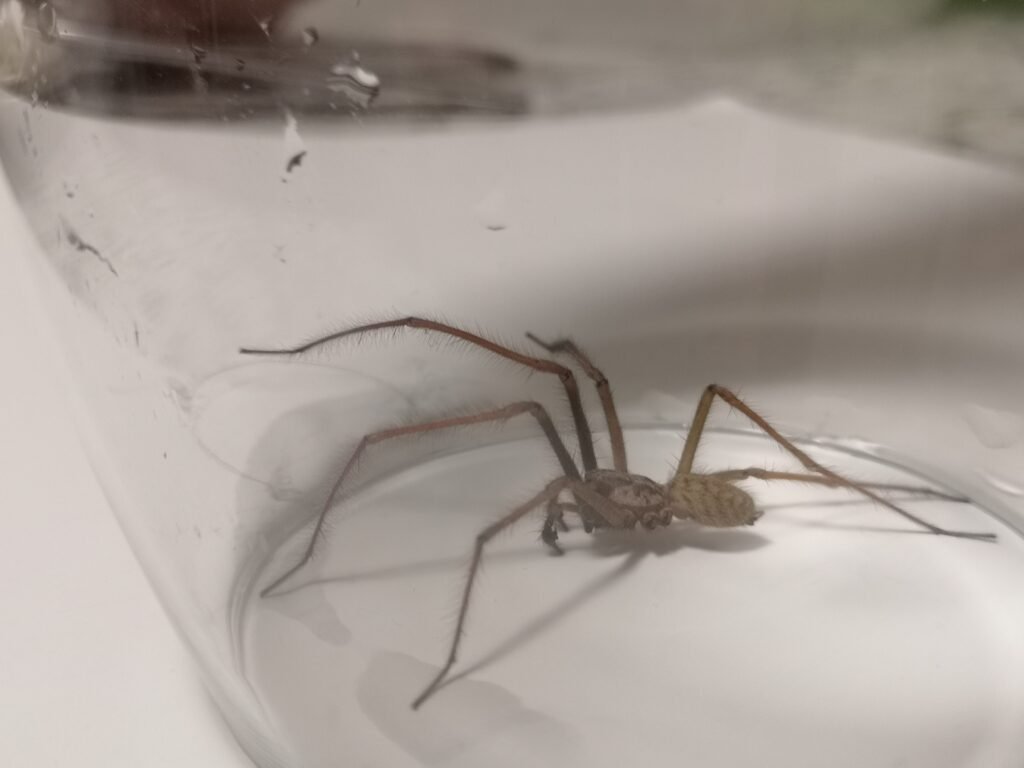
Amy and I found him in the living room. How do I know it’s a guy? The months of September and October are what’s known as “spider season”. Horny males wander into houses and apartments to look for available females. Your house basically turns into a Tinder meet-up place for these spiders.
Here’s how you ID them: if you find a spider in your house that’s brown, hairy and palm-sized, it’s probably a giant house spider. You’d think it would have the convenience of being slow like a tarantula. Haha no. This spider is supersonic, moving at half a meter per second.
The good news? The giant house spider is a gentle giant. It prefers keeping to itself in its own dark, quiet corner. And if you do encounter one, it’ll try to run rather than bite you. I’ve seen Amy handle some with her bare hands…she’s never once been bitten. Like I said, a gentle giant.
4. Goldenrod crab spider (Misumena vatia)
This next spider is a master of blending in. The goldenrod crab spider (Misumena vatia). Otherwise known as the flower crab spider. It doesn’t weave webs like the garden spider. And it doesn’t chase its prey like the woodlouse spider either. This spider is an ambush predator.
The goldenrod crab spider is actually able to change colour to match its background. The background being flowers. Perfectly camouflaged, it lies in wait for pollinating insects to come to the flowers.
Insects like bees, moths, and this unlucky fly:
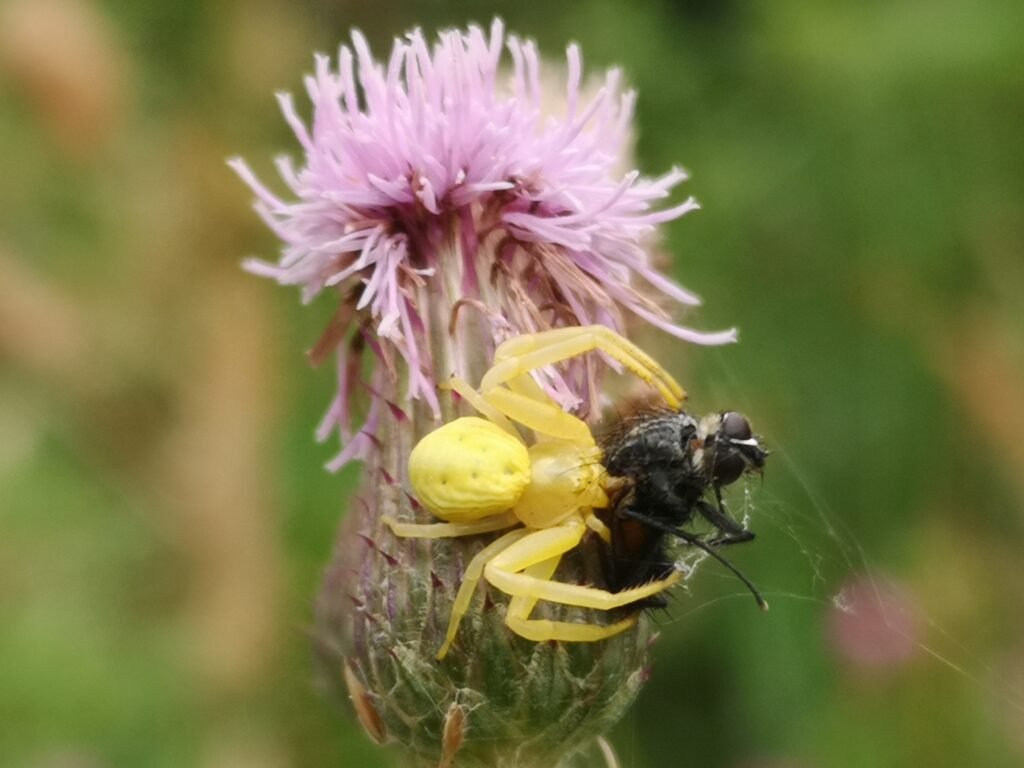
Unlike the previous spiders I’ve covered, crab spiders are mainly active in the daytime; that does not make them easier to find. So beautiful yet so well-hidden, they’re nearly impossible to see by themselves. Pro tip: check for dead insects that look like they’re hanging off the flowers.
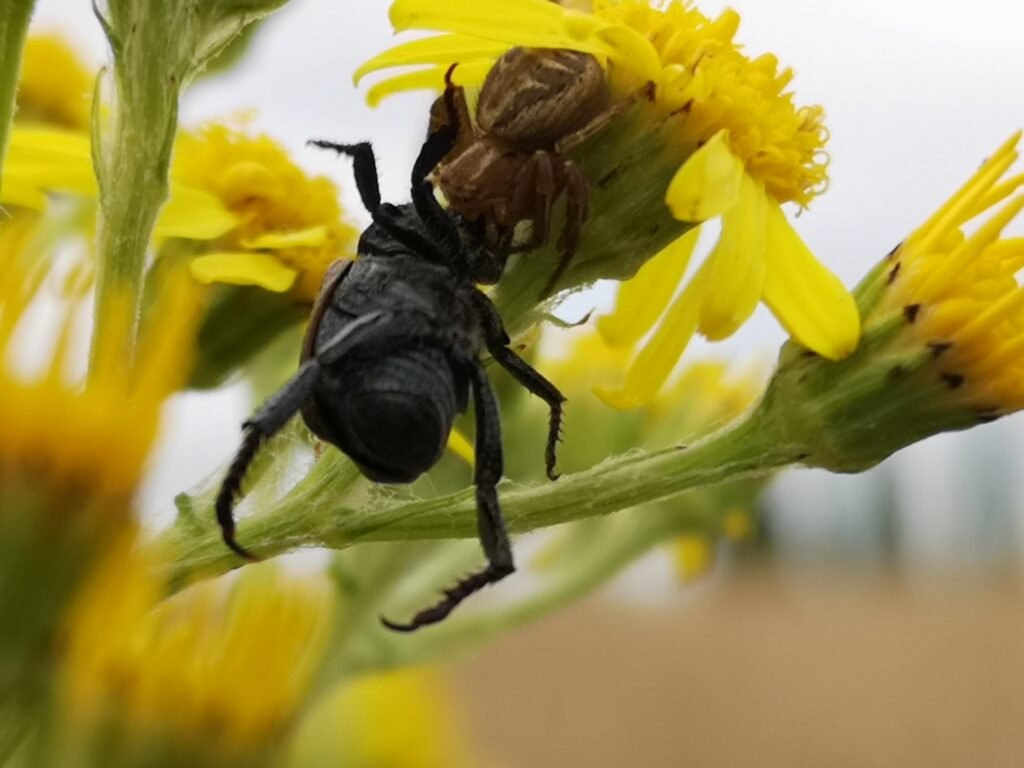
Here’s a photo of a Welsh chafer beetle (Hoplia philanthus) grabbed by a ground crab spider (Xysticus):
To give your eyes a test, look at this photo:
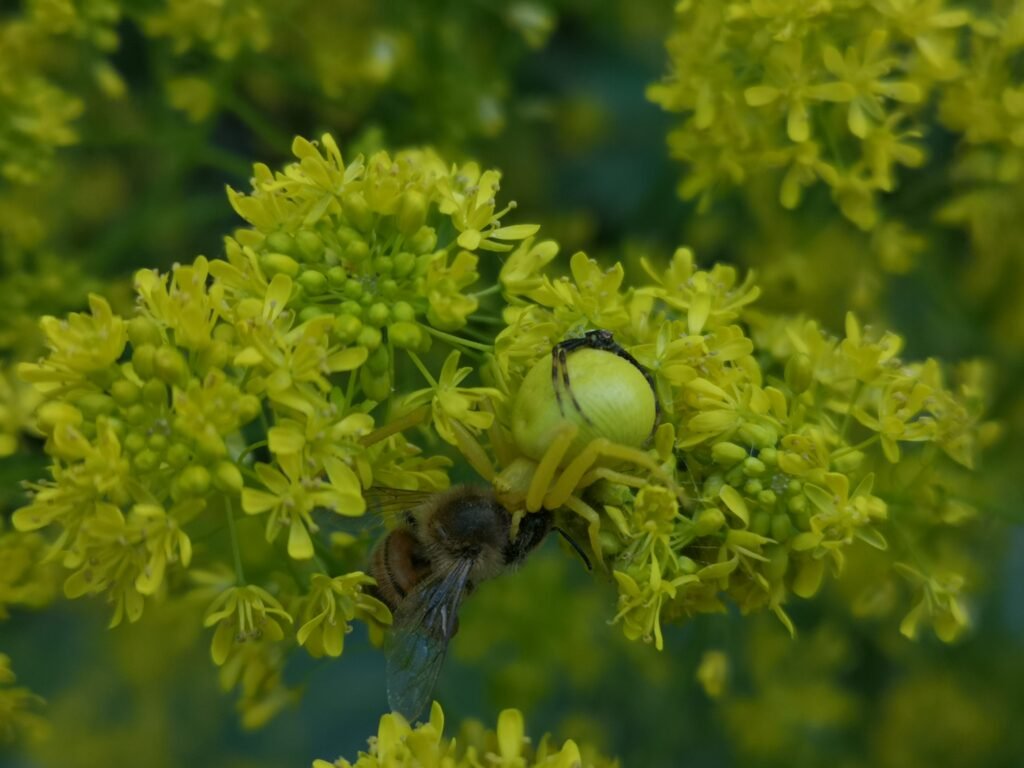
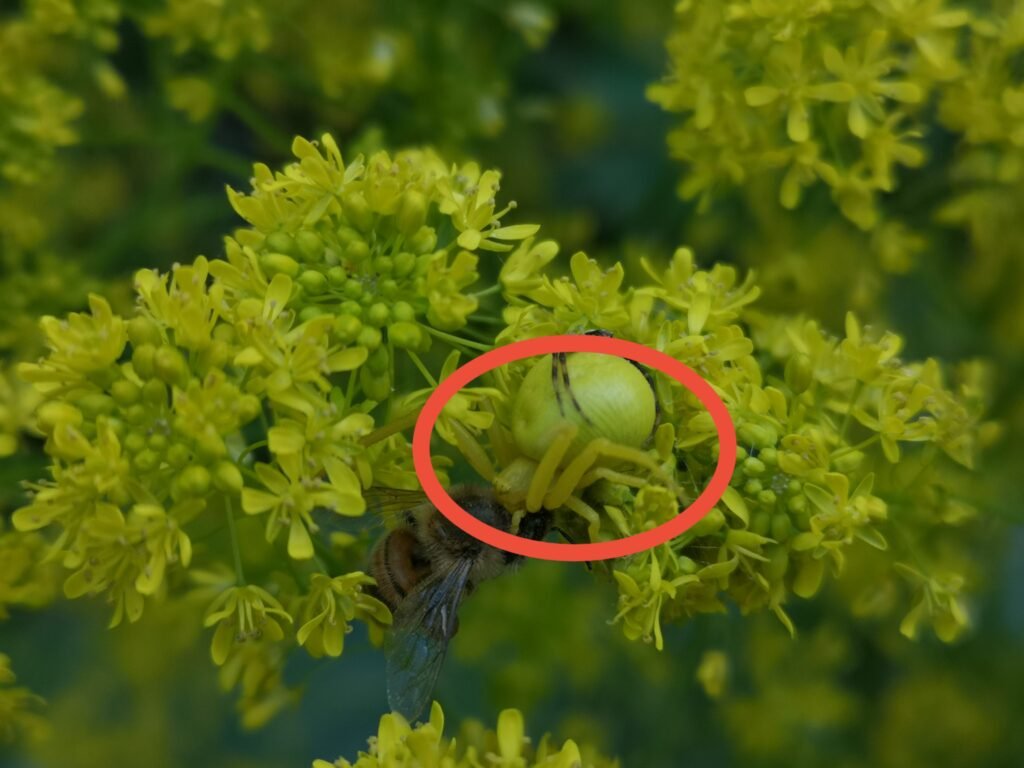
Can you see them? That’s right, there’s more than one in that photo. And the reason I noticed them both is because I saw the hanging honeybee first. The big yellow one with the, shall we say, rotund abdomen is the female.
Meanwhile, the male is the much smaller, darker one who’s hitching a ride on his mate.
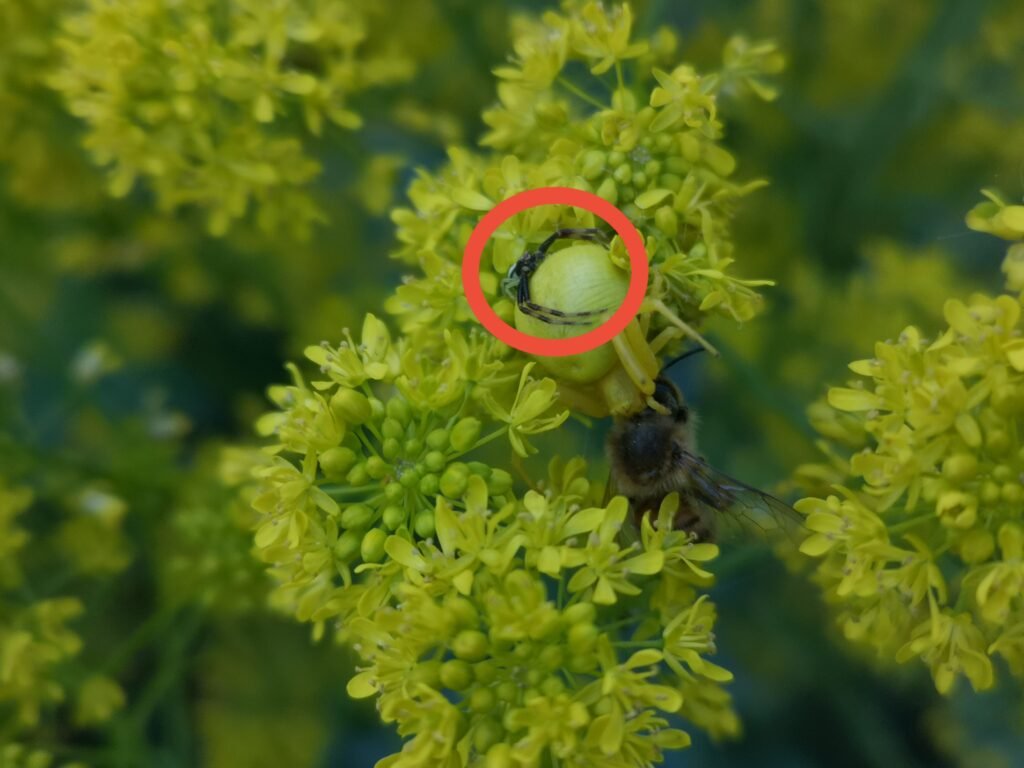
The guy’s gotta have a little fun. He’s a fraction of her size and, for some reason, he can’t change his colour. Only females can. But they aren’t dressed to impress.
5. Nursery web spider (Pisaura mirabilis)
The female nursery web spider (Pisaura mirabilis) is both a girlboss and a tradwife. When she’s not being a fierce hunter feeding on insects (and possibly her partner), she’s busy being a mother.
She carries her eggs in a big, ball-shaped egg-sac with her fangs.
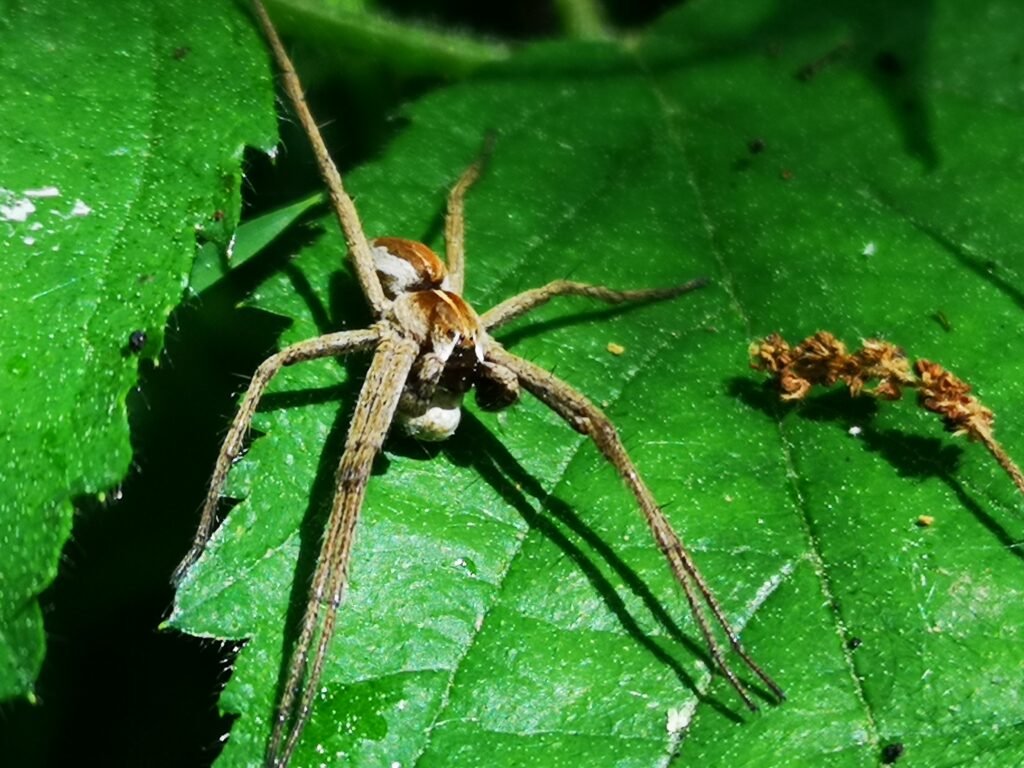
Right before the baby spiders (or spiderlings) hatch, she becomes a devoted homemaker and builds a makeshift nursery among the plants (e.g. bramble, stinging nettle, etc). A nursery made of silk sheets. This shelters the babies until they’re old enough to leave and live on their own.
So she’s super caring about her babies. Her partner, not so much. The male presents her with food as a gift. Whilst playing dead. When she investigates the food, he’ll jump back to life and mate her. This surprise sex is so he doesn’t end up as the food. Getting eaten is not one of his kinks.
The nursery web spider can look similar to wolf spiders. It’s a fairly large, slender spider that’s pale greyish-brown with dark brown and black stripes running across.
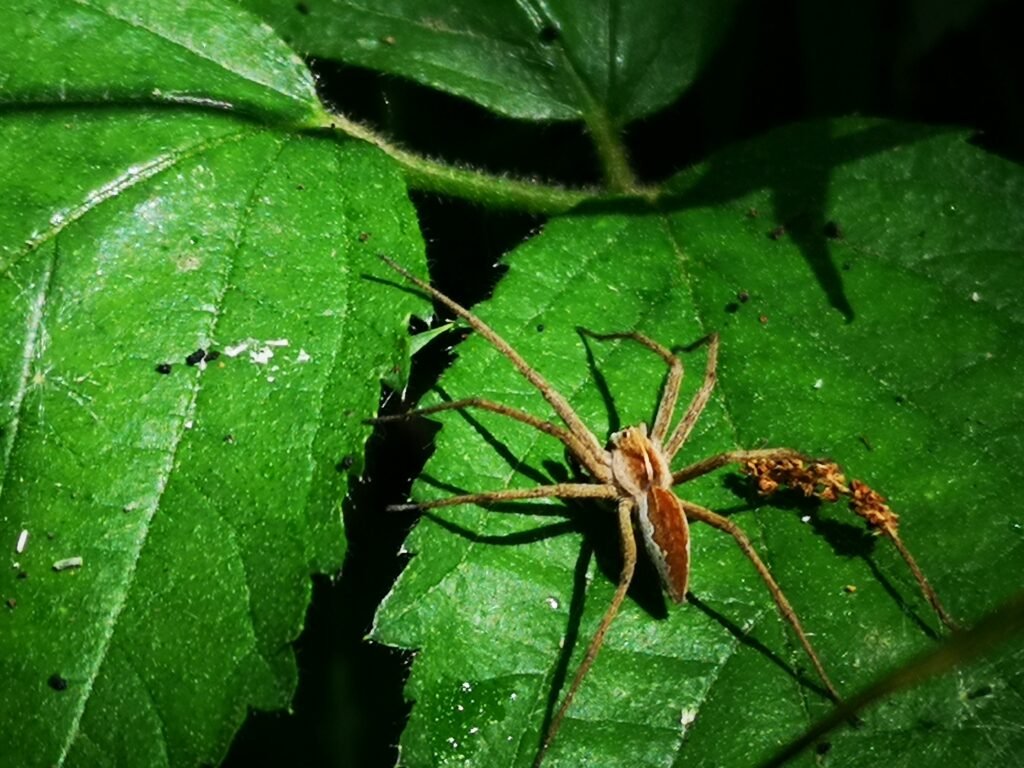
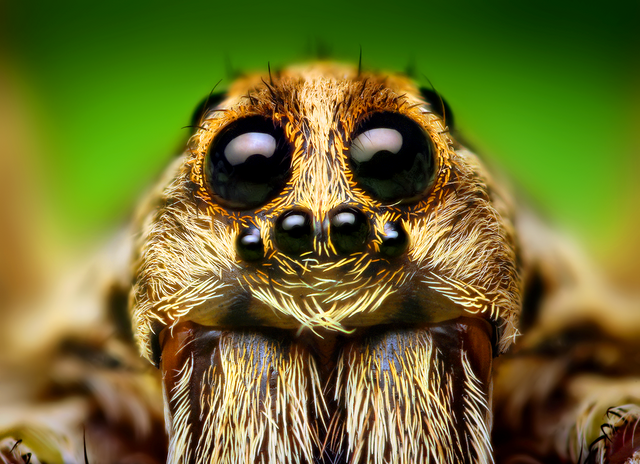
But all eight of the nursery web spider’s eyes are the same size, whereas a wolf spider has two noticeably bigger eyes. Eyes that stare straight into my soul.
6. Cellar spider (Pholcus phalangioides)
Now this is a spider that every British person is familiar with: the cellar spider (Pholcus phalangioides). Known to us Brits by its more famous name, “daddy long-legs”. Yes, that is actually what we call this spider. And it ain’t hard to see why.
It’s a greyish-yellow spider with an abdomen that looks cartoonishly small compared its legs. The legs are ridiculously long and spindly. This thing is 90% leg. It’s like the Slenderman of spiders.
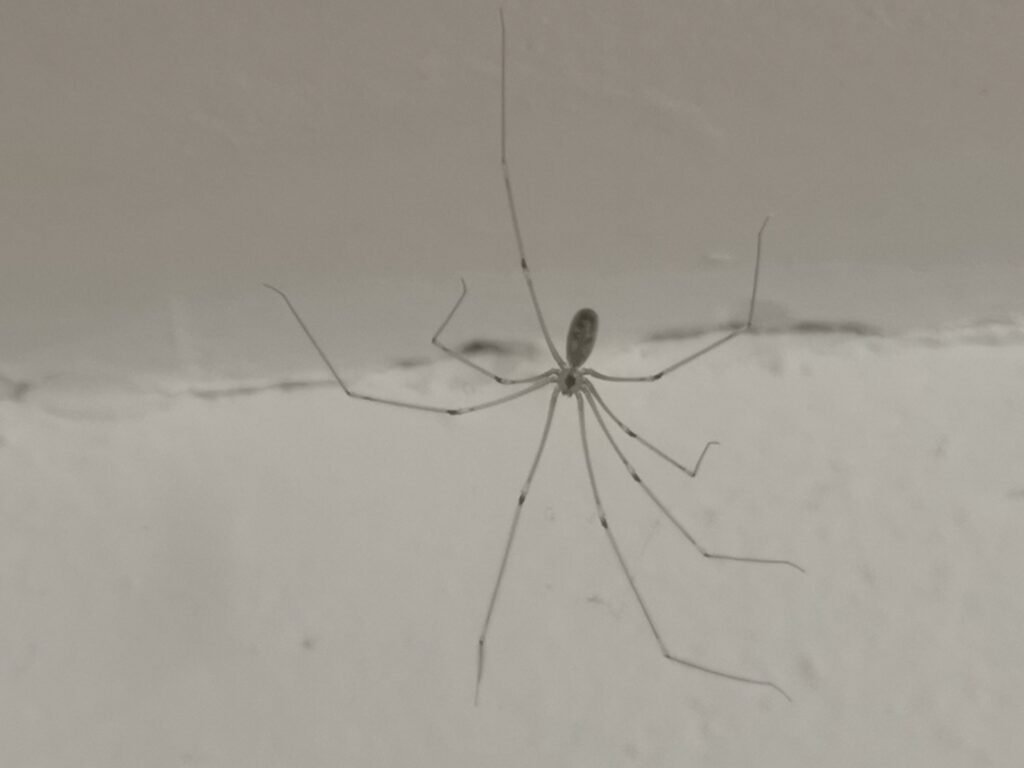
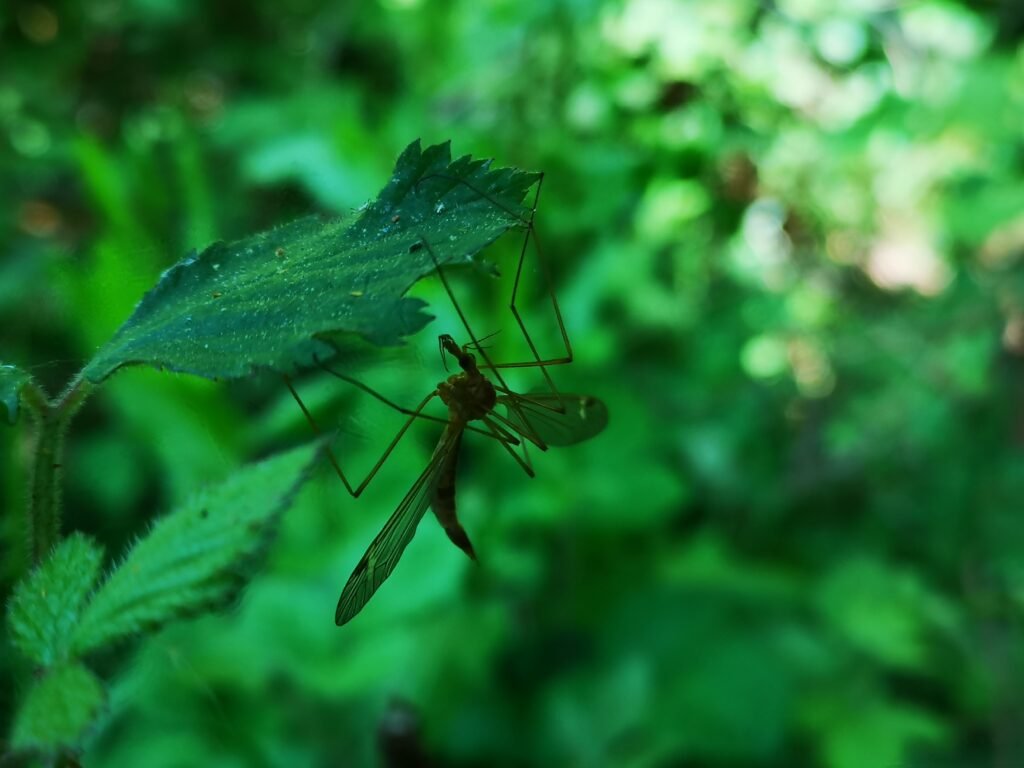
Sometimes people get it confused with other skinny legends such as crane flies (Tipulomorpha).
Or harvestmen (Opiliones), which is what this guy is:
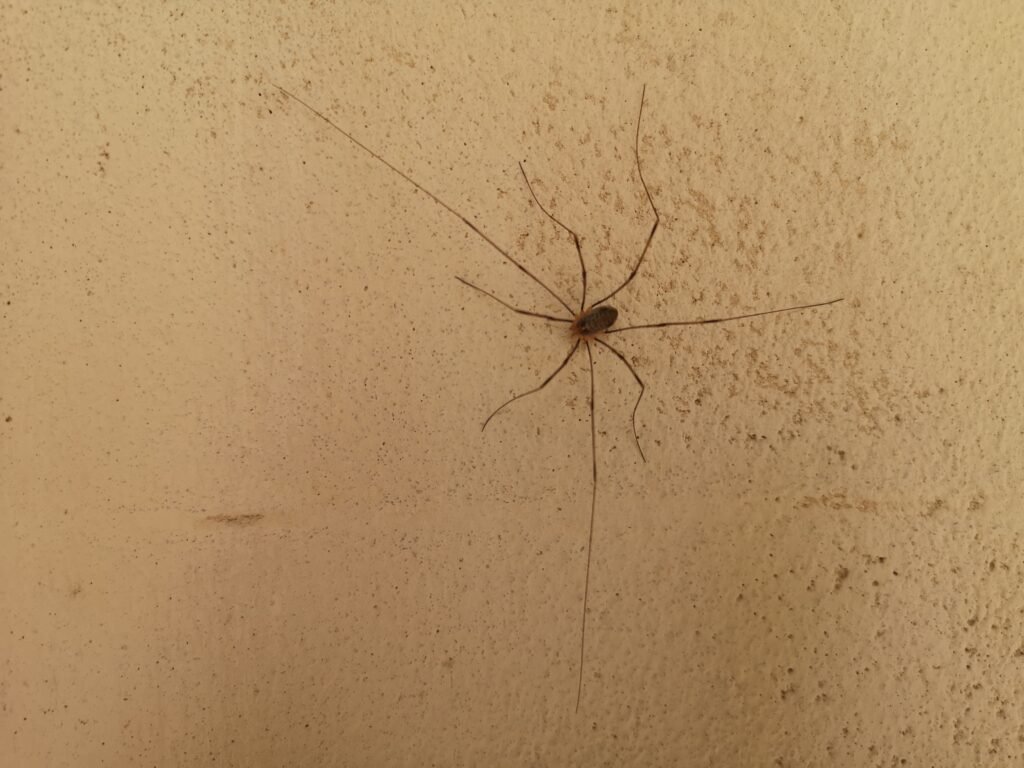
Crane flies are flying insects and harvestmen are arachnids (but not true spiders).
The cellar spider isn’t just found in cellars. It’s found in corners — usually where the walls meet the ceiling — of any indoor room. In fact, it feels like you only ever find it indoors. Not a fan of being outside. Plot twist: it wasn’t always in the UK. It’s a subtropical species; we don’t know exactly where it came from.
But wherever it’s brought to, it’s considered pretty useful for pest control. It eats any insects that come into a home and surprisingly, it eats other spiders. Including the giant house spider.
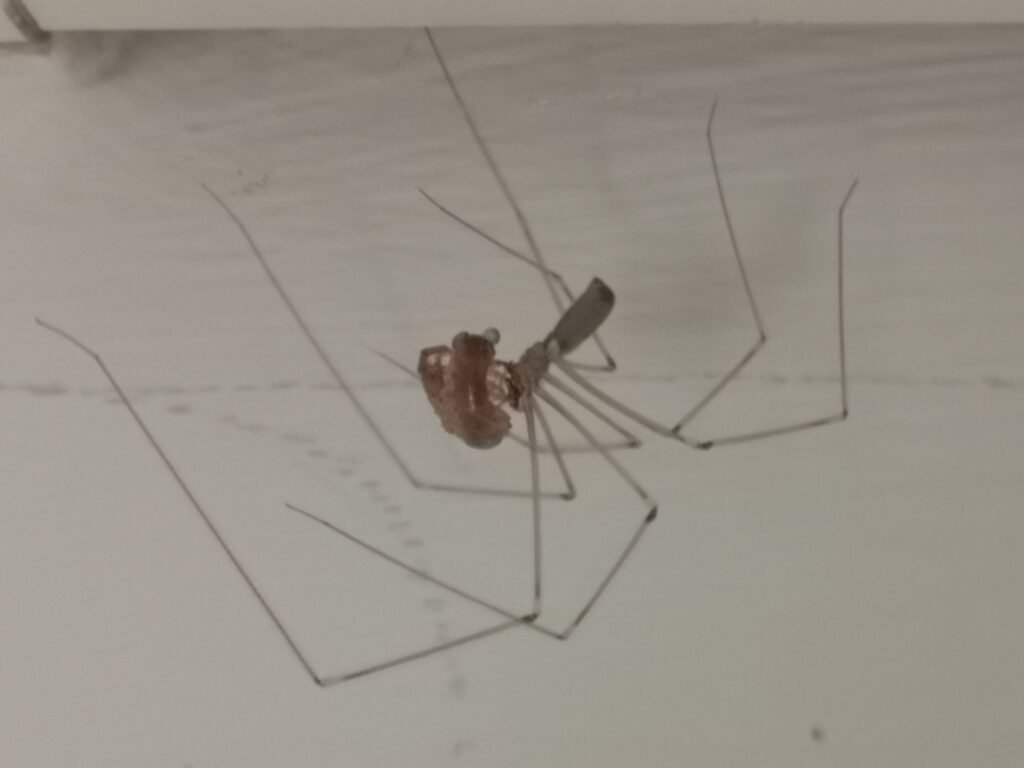
It hunts these spiders by catching them off guard as they rest on their own webs. Poor bastards need to sleep with all eight eyes open.
7. Zebra jumping spider (Salticus scenicus)
Jumping toward the cuter side of spiders is the zebra jumping spider (Salticus scenicus). The jumping spider family (Salticidae) is the biggest family of spiders in the world with more than 6,000 species.
And what all 6,000 have in common is they jump. And man, do these guys jump. Like a lot of its family, the zebra jumping spider is small. Yet it can cover a distance of 10 cm in a single leap. 10 cm doesn’t sound like much but that’s over 14 times its body. That’s like if I jumped onto an 8-story building!
Looking like it wanted to dress up as its namesake for Halloween, the zebra jumping spider has a black-and-white stripe pattern. Not that it helps in IDing since there are several species with a similar patterning.
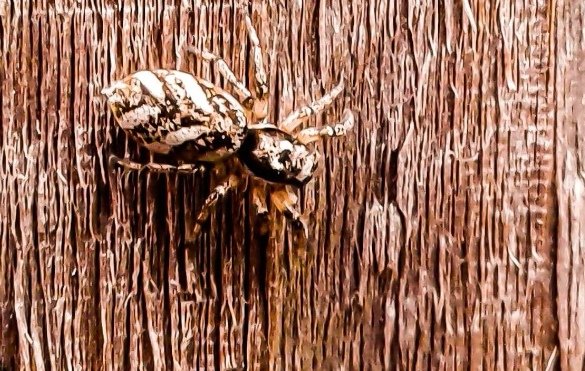
But as a group, jumping spiders do have a certain look to them. They have four pairs of the most adorable puppy dog eyes I’ve seen on a spider.
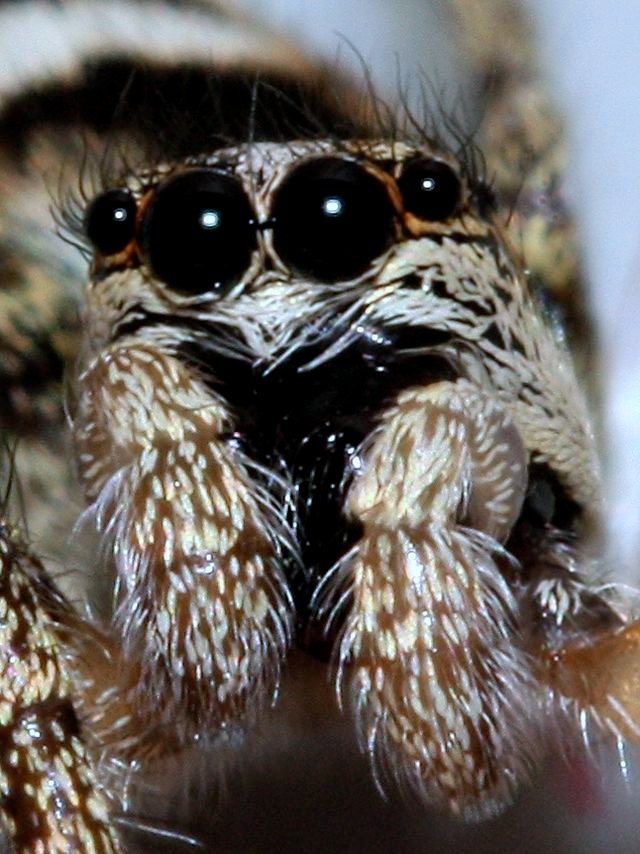
Those eyes aren’t just to look cute. Most spiders have terrible eyesight; not the zebra jumping spider. This species and its family are gifted with some of the best eyesight, even as good as a human’s. It can see in clear detail and in full-colour (jumping spiders have amazing colour vision). Its eyes can register distance and depth perception. It even has 360-degree vision.
The depth perception part is extra important because it has to judge how far it needs to jump for its prey. You can find it resting and hunting in sunny spots on walls and fences. Before it jumps, it attaches a safety line of silk to its perch. So as it’s jumping, the silk reels out. If it misjudges the jump, it can use the silk to climb back to its perch. Mission: Impossible style.
8. Noble false widow (Steatoda nobilis)
Lastly, the most venomous spider in the UK — the noble false widow (Steatoda nobilis). Like the cellar spider, it’s not originally from the UK. Some think it came from the Canary Islands (and Madeira) in banana crates. It’s since spread to Chile, Colombia and the US. Now it’s classed as one of the most invasive species of spider.
Also like the cellar spider, it loves hanging in and around homes. Its web is a messy tangle of threads, normally in corners ~1.5 meters off the ground in kitchens, garages, etc.
I know what question is plaguing your minds. How deadly is this spider? Apparently, not very. It’s not aggressive and actual recorded bites are rare. It bites when someone’s accidentally touched it. Someone like me. It’s story time.
So when I was in nursery (i.e. British kindergarten), we had this garden area to play in. I was playing with this ball. It was about the size of a tennis ball. I can’t remember what I did but it somehow rolled under this old log. I reached to get it and I must’ve squished a spider because there were two tiny puncture marks on the back of my right hand.
For many bite victims, the bite is no worse than a wasp sting. It was a hell of a lot worse for me. I was having a severe allergic reaction. My face swelled up so bad my parents could barely recognise me. I had to get rushed into hospital and put on antibiotics for two weeks afterwards.
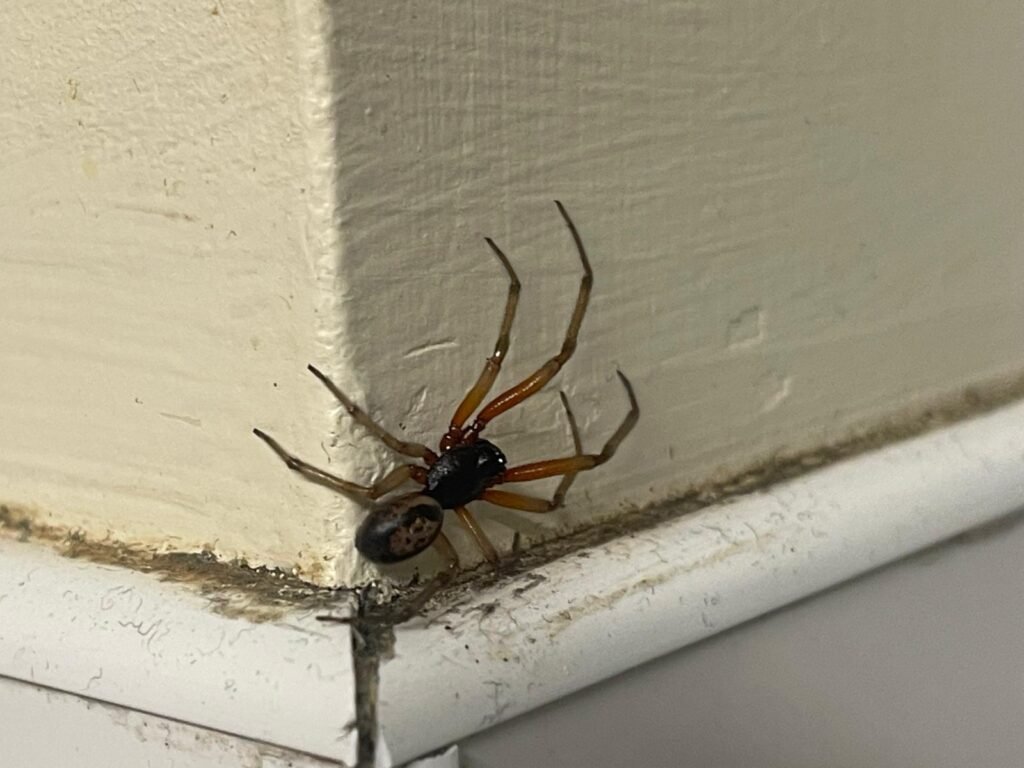
To ID this species, look at the abdomen. The colours can vary but look for patterns of cream and dark brown markings. Sometimes the patterns can look like a badly drawn skull. Rocking the Halloween theme.
Outro:
After reading that scary story, you’d think that would’ve turned me into a huge arachnophobe. Nope. Quite the opposite. Is it because I’m insane? Yes. But also because I’ve grown to learn about spiders and their behaviours. Things tend to be less scary when you know them well enough.
I’ll finish this post off with another childhood story. As a kid obsessed with nature, whenever my mum or I caught a fly in the house I’d bring it to a spider’s web and stick it on. Wouldn’t take the spider long to answer my delivery. Like a budget David Attenborough, I’d observe it wrapping the fly in a silky burrito to eat later.
Moral of the story: don’t give spiders hate. 9 times out of 10, they just wanna chill in their corner. If you really don’t want them in your home, a glass and some paper always works.
See you guys in the next one. Stay straying!